


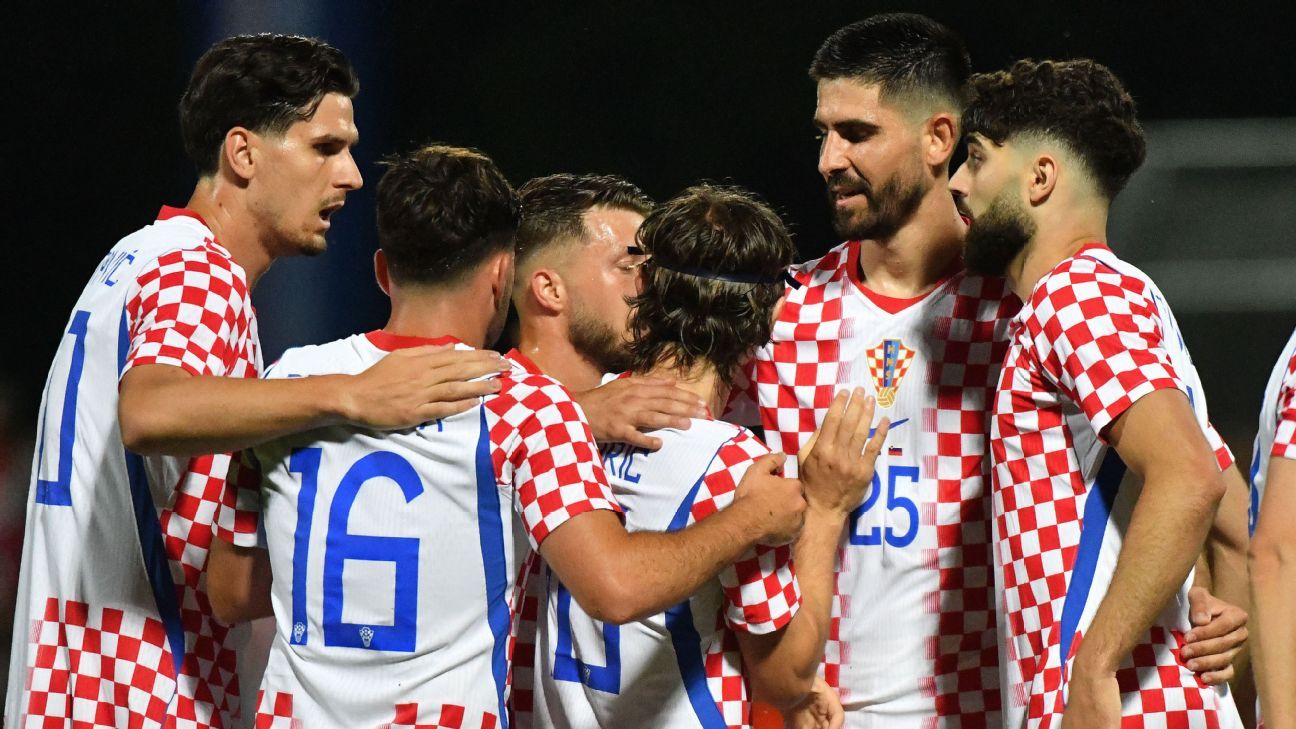
Josko Gvardiol and Ivan Rakitic find themselves grappling with a question that perplexes many: how does a nation of fewer than four million people consistently achieve remarkable success on the global soccer stage? Despite being among the smaller nations, Croatia has not only qualified for the FIFA World Cup multiple times, but it has also surpassed expectations, leaving even its players scratching their heads in wonder.
As Croatia celebrates the 30th anniversary of its debut in international competitions at the 1996 European Championship—just five years after declaring independence from Yugoslavia in 1991—the nation prepares for its fourth consecutive World Cup appearance. Having secured third place in 2022 and second place in 2018, the continued prowess of such a small nation raises questions that even seasoned players like Rakitic and rising stars like Gvardiol struggle to answer.
Success Amidst Adversity
When asked about their secret to success, Gvardiol jokingly suggested food, before acknowledging the challenge of pinpointing a definitive answer. “We have great players, and when you’re part of the national team, you give your all,” he remarked. “Though we are a small country, the unwavering support from our fans fuels our ambition.” In a world where size often dictates capability, Croatia’s position in the tournament hierarchy continues to baffle analysts and fans alike.
As one of only four World Cup qualifiers with a population smaller than Croatia, ranked 20th by UEFA for its domestic league, the nation’s achievements become even more noteworthy. In contrast, traditional soccer powerhouses like Italy, with a population nearing 60 million, have failed to qualify for the last three World Cups and have not progressed past the group stage in two decades.
A Legacy of Excellence
Since becoming a FIFA member in 1992, Croatia has reached the semi-finals three times—matching England, which has competed since 1950. Rakitic, reflecting on national pride, conveyed a sense of unity and passion that fuels Croatia’s success: “This is a soccer-loving country. For us, it’s not just a sport; it’s a vital part of our identity.” He emphasized that while infrastructure may not be on par with larger nations, the resolve of its players and fans marks the difference.
Remarkably, Luka Modric, a revered figure in Croatian soccer, will participate in his sixth World Cup this year. At 40 years old, Modric’s influence extends beyond his on-field performance; he maintains a strong rapport with head coach Zlatko Dalic, contributing to both tactical decisions and team morale. The presence of veteran players such as Dominik Livakovic and Andrej Kramaric adds depth and experience to the squad.
Building on Past Triumphs
Dalic’s tenure, which began unexpectedly in 2017, has established a continuity that the team hopes will replicate the spirit that propelled them through their impressive World Cup runs. Rakitic reflects on the pivotal nature of the 2018 tournament, saying, “The secret lies in our teamwork and the atmosphere. We believed in ourselves, and the coach’s guidance was crucial.” This camaraderie and resilience have become hallmarks of the Croatian style of play.
For emerging talent like Gvardiol, appearing in the World Cup not only serves as a platform for showcasing their skills but also as a catalyst for career advancement. Following his standout performances in Qatar, Gvardiol secured a transfer to Manchester City, highlighting the tournament’s impact on player visibility. Despite overcoming a leg injury earlier in the year, Gvardiol has emerged from the experience with a deeper appreciation for the global stage. “It made me famous, and I’ve come to understand the significance of qualifying for the World Cup,” he noted.
Prospects for the Upcoming Tournament
As Croatia embarks on its World Cup journey this summer, the team faces tough competition in Group L, sharing the stage with England, Panama, and Ghana. Rated as underdogs by bookmakers, they are nonetheless determined to make their mark. Rakitic indicated that the outcome of their opening match against England could offer valuable insight into the team’s prospects: “The group stage is challenging, but we must enjoy every moment.” He underscored that the primary goal is to advance, asserting that stories of unexpected victories often emerge from knockout rounds.
With a history of underdog triumphs, including successful penalty shootouts in previous tournaments, Croatia recognizes that it possesses the quality and experience to intimidate opponents. Rakitic expressed confidence in the preparations led by their coaching staff, confidently stating, “I don’t think teams will be eager to face us. We need to capitalize on that.” Even as a small nation, Croatia has demonstrated remarkable consistency, firmly establishing itself as a formidable contender on the international soccer stage.
