


CSIR Highlights Economic Losses from E-Waste Exports in Africa
The Council for Scientific and Industrial Research (CSIR) has issued a stark warning regarding the economic consequences of e-waste exports from African nations, including South Africa. The organization emphasizes that these countries are missing out on significant economic opportunities by shipping electronic waste abroad rather than processing it domestically.
The think tank reports that a substantial volume of discarded electronic items, including smartphones, computers, batteries, and household appliances, continues to be transported to markets in Europe and Asia. This trend foregoes the potential benefits of local recovery and recycling efforts.
By exporting e-waste, African countries are stifling the growth of local manufacturing, hindering mineral recovery, and failing to create jobs, thus missing out on the advancements of a circular economy. The report underlines that Africa possesses considerable untapped resources in e-waste beneficiation, particularly given the rising global demand for critical minerals and recyclable materials crucial for modern technology and renewable energy.
The CSIR’s alarming findings come at a time when the continent is grappling with escalating e-waste volumes, driven by rapid digital adoption, shorter device lifecycles, and heightened consumer demand for electronics. The situation poses an urgent challenge that necessitates immediate attention and action.
Valuable Components in E-Waste Often Exported
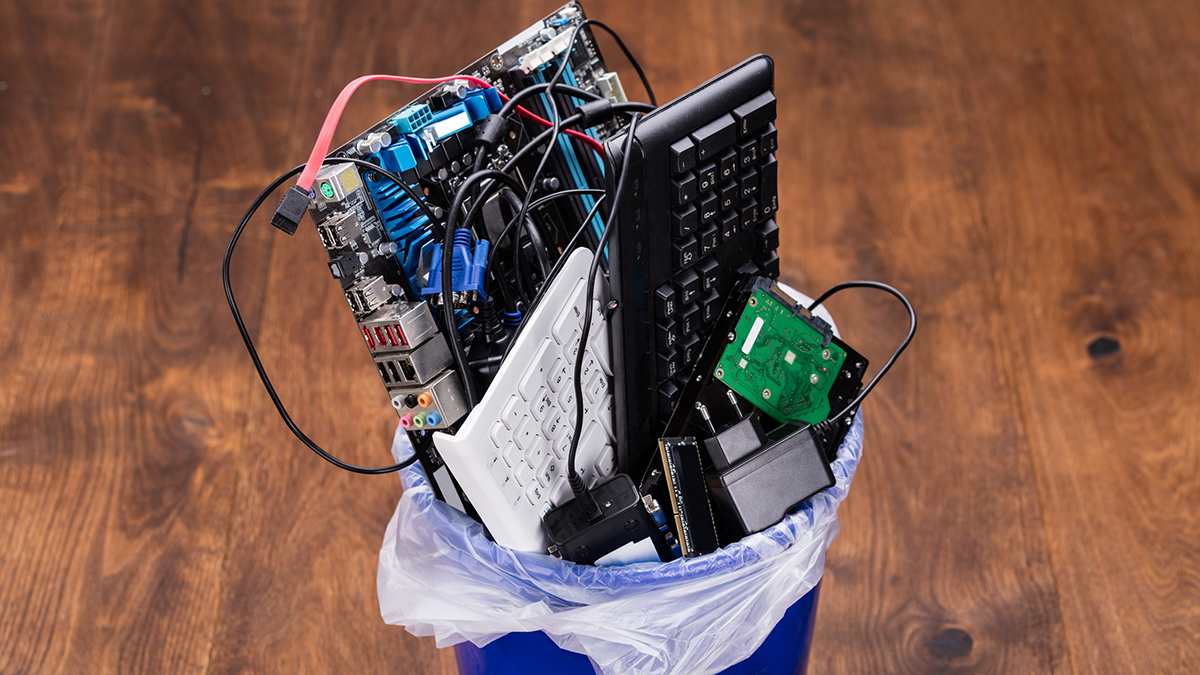
In a recent statement, the CSIR highlighted that printed circuit boards (PCBs) represent one of the most valuable components in the e-waste value chain. Unfortunately, these valuable parts are frequently sent overseas instead of being recovered locally. The institute also noted that many broken electronics are either left to be dumped or dismantled in hazardous conditions, exacerbating the problem.
Dr. Moshe Massonta, an electrical engineer and CSIR leader for the South-South Partnership on Electronic Waste Regulation and Large-Scale Recycling, emphasized that PCBs are found in all electronic devices. Current practices in Africa result in significant economic losses, as most countries ship these materials to Europe or Asia instead of taking advantage of local recycling opportunities.
Collaboration and Policy Development for E-Waste Management
With years of experience in e-waste issues and circular economy projects, CSIR has been instrumental in driving policy changes in South Africa through its Circular Innovation South Africa program. However, as it stands, large-scale PCB dismantling is virtually nonexistent on the continent, resulting in untapped economic potential.
Masonta and other experts from Africa, Asia, and Latin America are working collaboratively to share insights and practical lessons aimed at strengthening e-waste regulation and reporting. This includes promoting extended producer responsibility and facilitating the transition toward a circular economy for electronics. Their efforts are supported by the International Telecommunication Union (ITU) and the Colombian government.
Global E-Waste Statistics and Regulatory Impact
According to ITU research, the world generates roughly 62 million tonnes of e-waste annually, yet only 22.3% of this waste is formally collected and recycled. The report reveals that countries with established e-waste regulations show a markedly better performance, achieving average recovery rates of around 25%. In contrast, nations lacking such frameworks experience recovery rates close to zero.
Anastasia Akhibe, Deputy Director of the National Environmental Standards and Regulatory Enforcement Agency (NESREA) in Nigeria, reported that initial exchanges have revealed that many e-waste challenges are common across Southern countries. She expressed her hopes that the project results will be invaluable for enhancing data management and policy reviews regarding e-waste legislation in Nigeria.
Local Processing Opportunities and Future Directions
The report from South Africa’s Mintec highlights that despite PCBs being the most valuable components produced domestically, approximately 90% are still exported. Valuable materials such as metals and plastics are similarly lost to overseas markets rather than utilized in local recycling efforts. The findings stress that for onsite processing to be economically viable, robust systems must be established for collecting substantial amounts of e-waste.
Masonta noted that industry consultations indicate e-waste dumping has become the norm, yet companies are actively seeking to develop proper recycling systems. The discussions form part of the project’s final ITU study tour, following exchanges in Colombia and India.
Participating nations are exploring strategies to integrate informal waste collectors into formal recovery frameworks for large-scale dismantling and recovery of valuable materials like PCBs. If regional bodies in Africa can collaborate to establish centralized facilities for collecting and processing e-waste, significant economic value could remain within the continent, ultimately building the necessary skills and capabilities for responsible dismantling and recycling.
Masonta cautioned against one-size-fits-all policy approaches, acknowledging that each country faces unique challenges. Instead, the six participating nations are pooling their expertise to create guidelines and toolkits that can assist other countries in formulating their own effective e-waste regulations.
