


South African Court Revokes Approval of Drought-Tolerant GM Maize
In October 2024, the Supreme Court of Appeal in South Africa reversed the approval of MON87460, a genetically modified (GM) drought-tolerant maize variety that has been commercially available since 2016. This decision, made by the court, cited significant regulatory shortcomings, including an inadequate assessment of environmental impacts and a failure to adhere to the precautionary principle. This landmark ruling marks the first instance of judicial review concerning GM crop regulations in South Africa. MON87460 was initially viewed as a vital tool to help farmers cope with increasing drought conditions that threaten crop yields and food security.
Drought’s Persistent Threat to Food Security
Drought remains a major contributor to food insecurity in South Africa, affecting both national and individual households. According to the World Bank, the country has endured 11 significant droughts since 1990, incurring damages exceeding $2.6 billion. The severe El Niño drought of 2015-2016 forced farmers to cultivate nearly one million hectares of maize, leading to a staggering 50% decrease in production compared to the previous five-year average. Additionally, between November 2014 and November 2015, around 22% of South African households struggled to afford food, with the situation particularly dire in provinces like North West and Eastern Cape, where food insecurity rates reached 41% and 32%, respectively. Rising grain prices, notably for maize—a staple food for both humans and livestock—have contributed to increasing hunger, with costs rising by approximately 53.7%.
The Role of GM Crops in Addressing Drought
Historically, GM crops have prioritized traits such as pest resistance, herbicide tolerance, and biofortification. The Water Efficient Maize for Africa (WEMA) project, initiated in 2008 as a collaborative effort led by the African Agricultural Technology Foundation (AATF), aims to alleviate yield variability caused by worsening droughts across the continent. The project seeks to develop and distribute GM drought-tolerant maize varieties that have been shown to yield significantly more than conventional varieties under drought conditions. With a focus on making these varieties royalty-free for smallholder farmers, WEMA is designed to mitigate drought risks and stabilize production levels.
Current Maize Production Landscape
As of 2019, approximately 94.6% of white maize and 85.6% of yellow maize in South Africa were grown under dryland conditions. White maize, primarily for human consumption, accounts for 85% of the nation’s production, while yellow maize, intended for livestock feed, represents the remaining 15%. Given the unpredictable nature of future rainfall patterns, it is crucial to implement sustainable strategies that minimize the impact of climate change on maize agriculture. Droughts and heatwaves pose ongoing threats to food security, particularly in southern Africa, where climate change is expected to exacerbate these challenges.
Consumer Perception and Acceptance of GM Crops
GM crops play a vital role in combating underlying hunger and food insecurity in Africa. While scientific studies illustrate their potential benefits, consumer acceptance remains fraught with complexities. Political uncertainties and public skepticism regarding GM foods create significant barriers to their widespread adoption. Although scientific advancements in GM technology promise numerous advantages, consumer perspectives often vary significantly due to misinformation and fear surrounding new agricultural technologies.
Resilience Amid Drought and Changing Attitudes
Public resistance to genetically modified crops is palpable across Africa, often fueled by apprehensions rooted in the unknown rather than evidence-based concerns. Acceptance of GM technologies, such as genetically modified maize, hinges on consumer awareness and perceptions of their safety. In instances like the recent drought crisis, attitudes can shift; Kenya, for example, lifted its ban on GM crops in October 2022 to mitigate challenges posed by widespread famine, highlighting the impact of external circumstances on public sentiment regarding genetically modified organisms.
Research Focus on GM Traits and Consumer Preferences
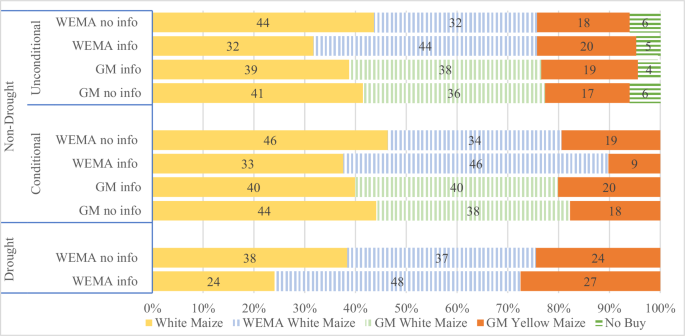
This study aims to explore South African consumers’ views on various GM maize traits, assessing whether they perceive them as interchangeable or distinct based on their functionalities. The inquiry is particularly crucial following the Supreme Court’s 2024 decision to invalidate the commercial release of MON87460. While previous research has extensively covered consumer attitudes toward traditional GM traits, there is a notable gap concerning traits like drought tolerance that specifically address food security challenges. Understanding how consumers differentiate these traits will play a critical role in the successful implementation of GM technologies designed to bolster local food security in the face of climate change.
Historical Context and Future Considerations
South Africa became the first African nation to commercially cultivate GM crops in 1997, beginning with Bt cotton and followed by Bt maize and herbicide-tolerant soybean. However, the majority of African countries remain hampered by regulatory hurdles that stifle the introduction of biotechnology innovations. As of 2024, only six out of Africa’s 54 nations have approved the cultivation of GM food crops. The development and deployment of GM maize varieties like MON87460 hold particular potential for enhancing food security in Southern Africa, yet much depends on overcoming public resistance and ensuring that consumers are well-informed about the benefits and safety of these technologies.
