


Harnessing Data for Improved Agricultural Production
Loretta Phillips, managing director of Blueberry Hill Farm in South Africa’s Eastern Cape province, emphasizes the importance of actionable data in agriculture. “Data collection is only valuable if it can be interpreted and used. Today, if your wastewater, electrical conductivity (EC), or pH levels fall outside predefined targets, you can react considerably faster than you could a decade ago.” This philosophy underpins the farm’s hydroponic pepper production strategy.
Maximizing Efficiency Over Expansion
Rather than rushing to expand its infrastructure, Blueberry Hill Farm aims to optimize performance from its existing facilities through data-driven decision-making and continuous improvement. The farm’s 12.5-hectare greenhouse complex is organized into ten production plots, which have staggered planting dates to ensure a year-round supply while minimizing the risk of pest and disease outbreaks.
Digital Monitoring for Real-Time Decision-Making
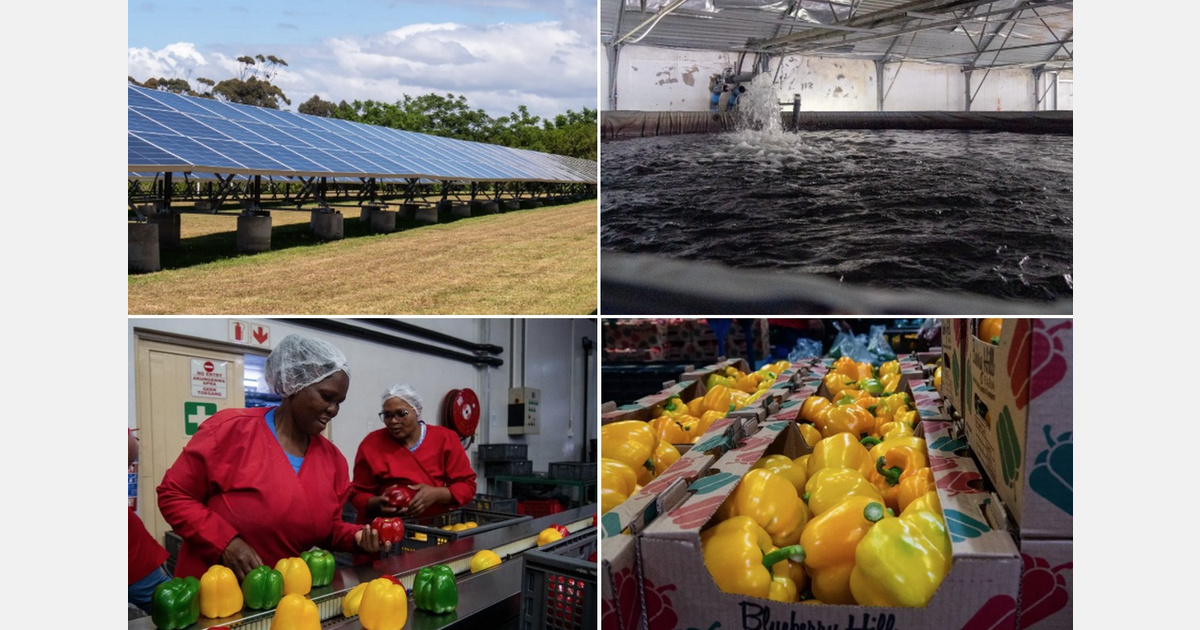
Day-to-day production is supported by rigorous digital data collection. “Each year, we bring on five interns who use mobile devices to record pH, EC, and wastewater readings. These measurements are uploaded in real-time, allowing for management review during daily production meetings,” Phillips shares. Additionally, a dedicated team conducts crop scouting twice a week to enable early intervention in case of any issues.
Technological Adaptations for Risk Management
In greenhouse pepper production, adaptability is crucial. Phillips notes, “Every year presents new challenges—one year it’s whiteflies, the next, thrips. This constant evolution fosters ongoing learning.” The company prioritizes biological crop protection by utilizing beneficial microorganisms and relying on reputable suppliers for inputs, only opting for chemical solutions as a last resort. “This approach helps us meet the stringent compliance and audit requirements from major retailers,” she adds.
Focus on Resource Efficiency
Resource management has become a pivotal focus area, particularly following a severe drought during the 2020-2021 season, which necessitated trucking in water. In response, the farm installed a UV treatment system designed to disinfect and recirculate wastewater. “We now reuse all excess wastewater, achieving around a 30% reduction in both water and fertilizer usage.” Phillips also highlights the integration of solar energy to lessen reliance on grid electricity, thus boosting operational resilience.
Innovations in Production Cycles
The production cycle at Blueberry Hill Farm is aligned with annual harvests. “Our plants typically continue to produce for about a year, after which the greenhouse is disinfected, and new seedlings are transplanted. We’ve implemented a hydraulic trolley and rail system to enhance labor efficiency in our high-wire production during the extended harvest period.” This innovative setup allows the farm to meet year-round growth demands and also contributes heating to nearby homes during winter.
Commitment to Workforce Development
Blueberry Hill Farm employs a workforce of 184, with a strong emphasis on skills development. In addition to its internship program, the farm actively encourages employees to continue their education. “We promote a culture of learning through extensive training, supported by a talented young team,” Phillips remarks.
Adapting to Market Trends
While colored peppers remain the primary crop, the farm has diversified its offerings in response to market demand, now producing snack-sized and tricolor peppers. “Initially, we trialed snack peppers in smaller sections, and they performed remarkably well,” Phillips recalls. Though yields for these peppers are lower than traditional varieties, favorable pricing has made them economically viable. “Ultimately, it’s about producing what consumers want,” she concludes.
For further inquiries:
Blueberry Hill Farm
Loretta Phillips, Managing Director
(email protected)
blueberryhill.co.za
