


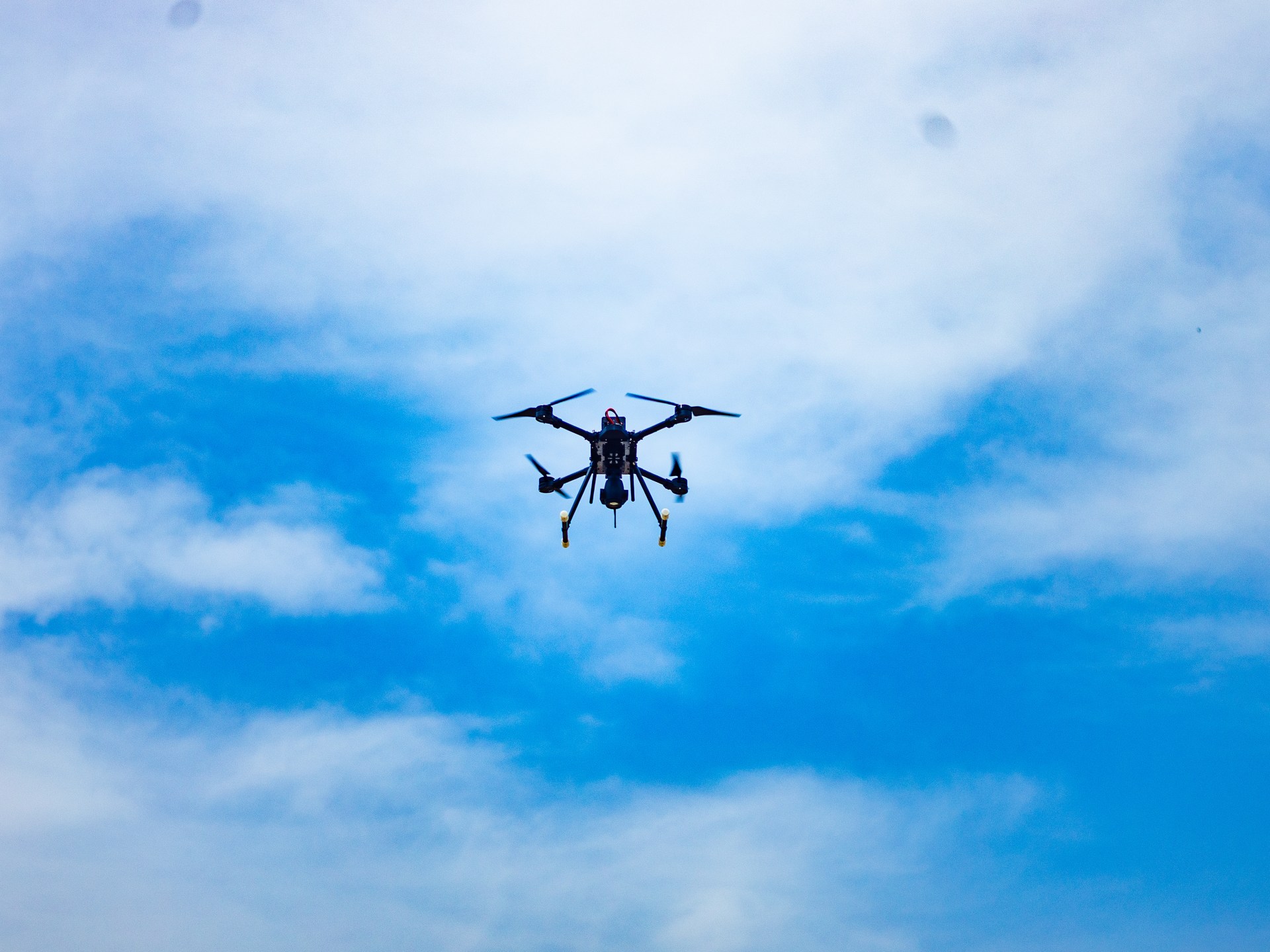
Across Africa, securing borders, monitoring territories, and protecting critical infrastructure heavily relies on foreign suppliers. Turkish drones patrol borders, Chinese surveillance systems monitor cities, and Russian fighter jets serve as the backbone for several air forces on the continent.
For decades, African militaries have depended on overseas sources for essential defense technologies, positioning the continent mainly as a consumer rather than a producer.
However, an Abuja-based startup is poised to transform this dynamic.
Founded in 2024 by Nathan Nwachukwu and Maxwell Maduka, both in their early 20s, Terra Industries designs and manufactures drones, autonomous surveillance towers, and unmanned ground vehicles from facilities in Abuja and Accra.
Unlike many companies that primarily assemble imported components, Terra creates its own software, airframes, propellers, and lithium-ion battery packs. The company asserts that over 70% of its raw materials are sourced locally.
Currently, Terra’s systems are deployed to safeguard approximately $11 billion worth of infrastructure, including power plants, lithium mines, gold mines, refineries, and other strategic assets across eight African countries and Canada.
Enhancing Local Production Capacity
The shift from imported security technology to localized production has become an increasingly important conversation throughout Africa. As governments face insurgencies, porous borders, maritime insecurity, and attacks on critical infrastructure, they are in search of quicker and more adaptable solutions.
Terra’s evolution from civilian infrastructure security to collaboration with Nigeria’s defense sectors illustrates a transforming environment. The company claims its systems are tailored to meet various challenges, including maritime and border surveillance, as well as the protection of energy and mining assets.
In light of piracy and illegal fishing in the Gulf of Guinea, West African coastal nations are emphasizing maritime surveillance, according to CEO Nathan Nwachukwu. Countries dealing with insurgency and porous borders seek continuous aerial surveillance and rapid response capabilities. Others aim to protect pipelines, energy infrastructure, and mining assets, a multifaceted problem that Terra is addressing in Nigeria.
Terra is also preparing for an expansion of its regional footprint. Nwachukwu confirmed that its second production facility in Ghana is set to become Africa’s largest drone manufacturing hub, targeting an annual production capacity of 50,000 units by 2028.
Beyond Africa, the company has long-term ambitions, as the threats its systems are designed to mitigate also exist in the Global South. Governments in South Asia and South America similarly seek to reduce their dependence on foreign suppliers, and Terra intends to serve them as it grows.
Confidence from Investors
The scale of Terra’s investment underscores the growing interest in Africa’s burgeoning defense technology sector. The company successfully raised $34 million in seed funding, which it claims as one of the largest early-stage funding rounds in African technology.
The investment round, led by 8VC—a venture capital firm founded by Palantir Technologies’ co-founder Joe Lonsdale—also included backing from Lux Capital and Valor Equity Partners, who have invested in companies like Anduril and SpaceX.
The funding round closed in less than two weeks, a pace that is uncommon even by global standards, noted Taj Kene Okafor, Terra Industries’ public affairs director. He expressed excitement over having renowned investors like 8VC, Lux Capital, and Valor Equity Partners on board, who have been instrumental in shaping the future of global defense and advanced manufacturing.
Addressing Security Needs
As drones grow central to conflicts in Africa, the demand for companies like Terra is increasing. In the Sahel region, inexpensive commercial drones are transitioning from mere surveillance tools to offensive weapons, creating new challenges for militaries that often lack effective counter-drone technology.
Jamaat Nusrat al-Islam wal-Muslimin (JNIM), an al-Qaeda-affiliated group active in Mali and Burkina Faso, has conducted over 100 drone attacks since 2023, with 2025 set to see the highest incidence on record, according to data from Armed Conflict Location and Event Data (ACLED).
In response to this evolving threat landscape, Terra has developed the Kama interceptor drone, capable of reaching speeds up to 300 kilometers per hour, specifically designed to counter hostile drones in scenarios where traditional air defense systems may be impractical or too costly.
Nonetheless, building defense technology does not equate to achieving defense sovereignty.
Understanding Sovereignty Issues
While nations may establish manufacturing capabilities through investment, engineering talent, and industrial policies, true defense sovereignty necessitates institutions capable of effectively managing procurement, fostering accountability, and sustaining strategic industries over the long term.
Janice Grieber, director of Pan African Sustainable, Innovation and Development Associates (PASIDA), contends that local production cannot address these broader issues alone.
“Until we ascertain who controls the intellectual property and define the parameters of hiring and exclusion, sourcing 70% locally holds limited value,” she remarked. “When private capital arms states without visible civil society oversight, we merely shift our dependence from foreign suppliers to unaccountable domestic capital.”
Terra Industries has demonstrated that sophisticated defense technologies can be both designed and manufactured in Africa. The company’s rapid growth reflects the continent’s advancing technological capabilities and the increasing pressure from deteriorating security conditions.
Whether this leads to genuine defense sovereignty hinges on what transpires beyond the production line: specifically, how governments procure, regulate, and oversee the technologies they aim to cultivate domestically.
Grieber cautions that while manufacturing capacity may be developing, true sovereignty requires structures of accountability that currently remain absent.
