


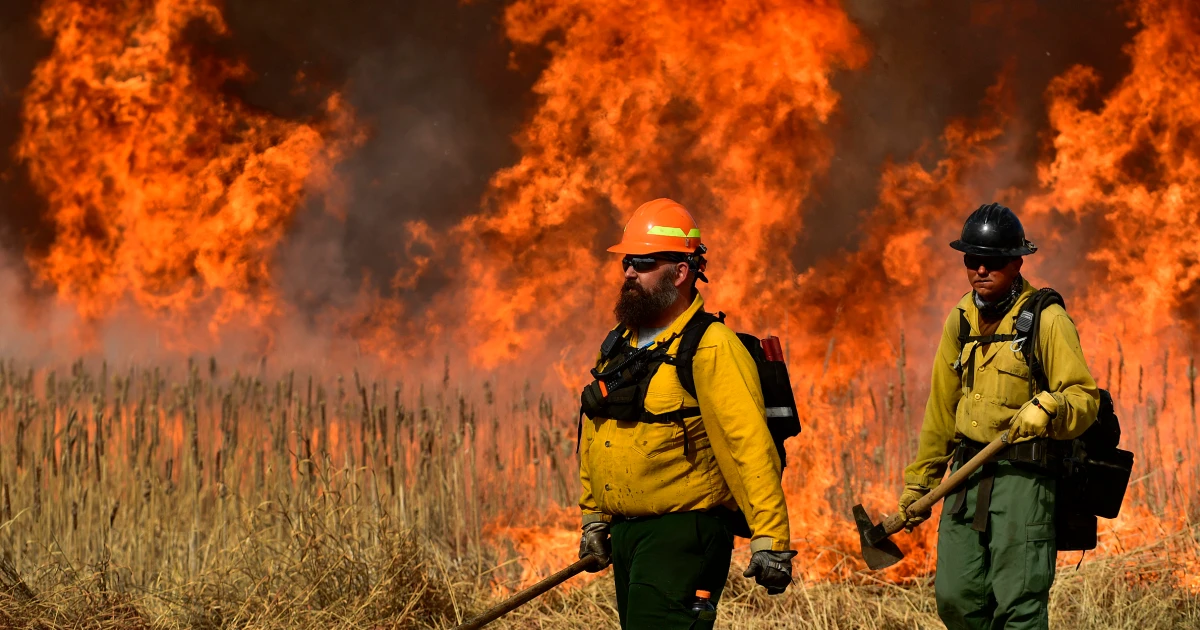
Federal Firefighters Authorized to Use N95 Respirators in Wildland Firefighting
For the first time, federal firefighters will be encouraged to wear respirators to safeguard against the harmful effects of smoke while combating wildland fires. The Forest Service announced on Wednesday that firefighters can now use N95 respirators on fire lines, marking a significant shift in policy after decades of restrictions despite evidence highlighting the health risks associated with wildfire smoke.
Acknowledgment of Health Risks
George Broyles, a veteran Forest Service firefighter and expert on wildfire exposure risks, voiced his support for this change, stating, “It’s been a long time coming.” His comments emphasize the increased susceptibility of firefighters around the globe to serious health issues, including cancer and heart disease, due to their exposure to toxic smoke.
Long-Awaited Policy Change
Broyles views this policy amendment as the Forest Service’s overdue recognition of the toxic nature of wildfire smoke and the pressing need for protective measures for its personnel. Historically, the agency has lagged in addressing the health implications of wildfire smoke and providing adequate protections in settings where fires are difficult to manage.
Health Hazards Linked to Wildfire Smoke
Exposure to wildfire smoke carries serious health risks, as volatile gases and fine particulate matter can infiltrate the lungs and enter the bloodstream. Associated health issues include asthma, lung cancer, and various chronic lung diseases, alongside concerns over premature birth and miscarriage. Research has shown that wildland firefighters are particularly vulnerable, with elevated risks of lung cancer and cardiovascular diseases compared to the general population.
New Cleanup Program for Firefighters
In addition to recommending respirators, the Forest Service will initiate a cleanup program designed to minimize firefighters’ skin exposure to toxic soot and ash. Under this program, firefighters will be compensated for the time spent washing contaminated clothing, cleaning equipment, and showering after active duty on fires.
Progress Toward Comprehensive Protection
The agency explained that this new policy serves as an interim measure while it advances toward a more comprehensive respiratory protection program that meets Occupational Safety and Health Administration (OSHA) guidelines. Forest Service spokesman Evan Birx emphasized the agency’s commitment, stating that N95 masks will offer practical protection while allowing for removal if overheating occurs.
Increased Congressional Oversight
The announcement coincides with heightened scrutiny from Congress regarding the safety and health protections for firefighters. At a recent press conference, Rep. Maxine Dexter, D-Ore., unveiled a bill aimed at establishing a health program specifically for federal wildland firefighters. This proposed legislation seeks to create a task force that would devise strategies for implementing respiratory protection, mitigating skin exposure, and providing ongoing medical monitoring.
Focus on Addressing Health Concerns
Dexter criticized the federal government’s insufficient response to the health risks associated with wildfire smoke, labeling it a “moral failure” and a “government failure.” With wildfires becoming increasingly severe, researchers are under pressure to unravel the health implications of smoke exposure. A study from 2019 indicated that career firefighters have significantly higher mortality rates from lung cancer and cardiovascular disease, further underscoring the need for effective health protections.
Challenges Ahead for Firefighters
Despite the benefits of N95 masks, concerns remain regarding their comfort and practicality during demanding physical activities. While these masks can prevent particles from entering the body, they do not offer protection against toxic gases such as carbon monoxide and formaldehyde. As firefighting conditions evolve, the Forest Service emphasizes the need for proper training and caution in using respirators under challenging circumstances.
This summer is poised to be particularly challenging for wildland firefighters, with over 34,000 wildfires already burning more than 2.7 million acres this year—exceeding the 10-year averages. Contributing factors include record-low snowfall, severe drought conditions, and rising global temperatures due to an ongoing El Niño pattern, leading to above-normal wildfire potential in extensive areas through September.
