


Crime and Law
Federal Immigration Agents Seen at Multiple Cook County Courthouses
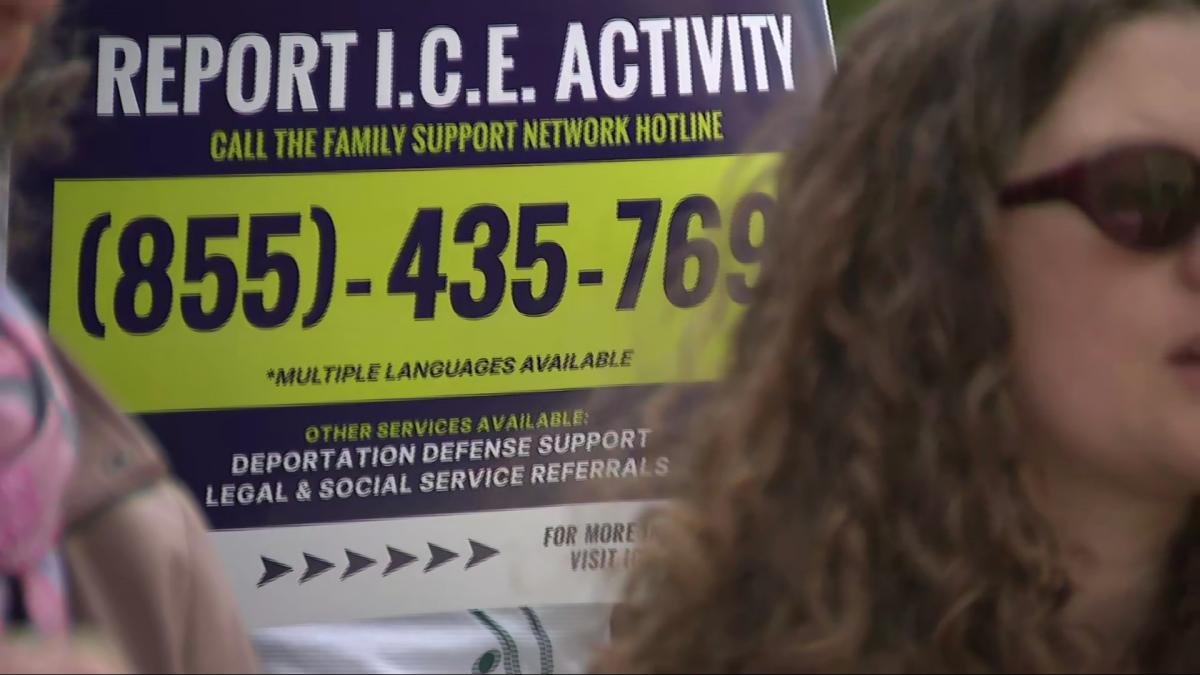
A community organizer holds a placard during a press conference outside Cook County Domestic Violence Court on May 7, 2026
Federal agents were observed at four courthouses in Cook County on Thursday morning, prompting community activists to advocate for a substantial increase in immigration enforcement around Chicago. This visibility of Immigration and Customs Enforcement (ICE) agents raised significant concerns among local groups regarding due process rights for immigrants.
The Illinois Coalition for Immigrant and Refugee Rights disclosed that ICE officials were spotted at several locations, including Domestic Violence Court in Downtown Chicago, and additional courthouses located at 111th Street, Grand, Central, and Maywood. The coalition contended that ICE’s operations in these judicial settings violate both due process and state law.
A representative from the Department of Homeland Security confirmed that agents apprehended Rafal Porewski, a Polish national, as he exited the Grand and Central Courthouse. This arrest serves as a stark reminder of the ongoing tensions between federal immigration policies and local regulations.
The agency stated that Porewski will remain in ICE custody until his deportation is finalized. In response to criticisms regarding ICE’s presence in courthouses, the spokesperson asserted that it is “common sense” for ICE to conduct arrests in such local settings.
Last fall, former Cook County Chief Judge Timothy Evans implemented a directive barring federal immigration agents from executing arrests within or near municipal courts without a warrant. This was reinforced by the Illinois Courtroom Access, Safety, and Participation Act, signed into law by Governor J.B. Pritzker in December, which specifically prohibits civil arrests during certain court proceedings.
Despite these legal protections, ICIRR senior policy adviser Fred Tsao expressed concerns that ICE appears indifferent to existing laws. During a news conference, Tsao emphasized that the agency seems to operate with “blatant disregard” for legal standards, urging the community to remain vigilant.
Kathryn Perec, a supervisor in the Cook County Public Defender’s Office, reported that instances of federal arrests have been documented nearly every week since February, highlighting the precarious situation faced by clients who risk deportation by attending court. She cited the troubling example of a Harrison Courthouse employee who was detained by ICE shortly after their misdemeanor property damage charge was dismissed, illustrating ongoing fears among defendants regarding potential immigration enforcement in judicial spaces.
Perec stressed that using courthouses as locations for immigration enforcement by armed agents creates an atmosphere of danger for both courthouse staff and the public seeking legal recourse. The presence of federal agents in these settings complicates the already challenging environment for many individuals navigating the legal system.
