


FIFA Implements Controversial Red Card Rule for 2026 World Cup
FIFA has rolled out a significant new rule for the 2026 World Cup, penalizing players with a red card for covering their mouths during face-offs. This strict enforcement leaves no room for ambiguity.
Historic First Red Card During Match
Miguel Almiron made history as the first player to be sent off for this infraction, receiving a red card after covering his mouth during a confrontation with Mert Mrdur in the first half of the Group D match between Paraguay and Turkey.
Referees Set a Precedent
Referee Ivan Barton adhered strictly to the new directive, leading to Almiron’s expulsion without hesitation or discussion. Paraguay then had to contend with a man down for over an hour.
Rule’s Origins and Implementation Challenges
This rule stems from FIFA president Gianni Infantino’s response to an incident in the Champions League, where Benfica’s Gianluca Prestiani was accused of making a racist remark towards Real Madrid’s Vinicius Junior. Although the intentions behind the rule were sound, its implementation is facing scrutiny.
Inconsistent Enforcement Sparks Debate
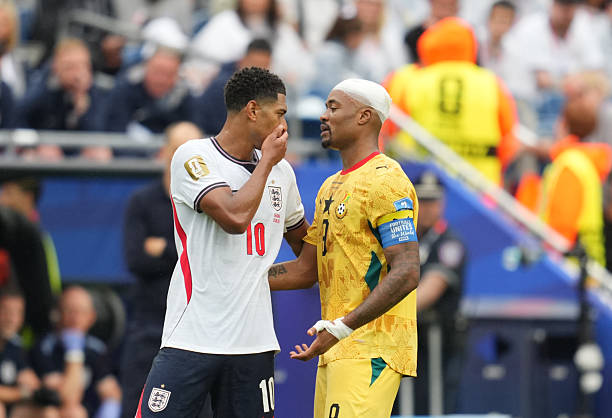
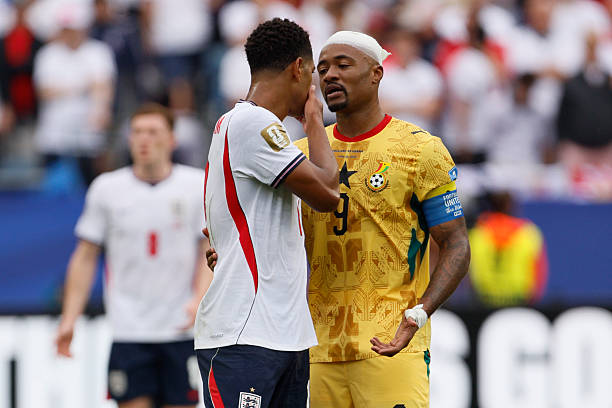
Just three days later at Foxboro, Massachusetts, a similar incident unfolded during the match between England and Ghana. Jude Bellingham, after fouling Jerome Opoku, exchanged words with Ghana’s coach Carlos Queiroz, yet did not receive any penalty for covering his mouth during these interactions.
Coaches Call for Clarity
Frustrated by the inconsistency, Queiroz voiced his displeasure, suggesting that VAR had become ineffective. “It was a clear penalty and a red card,” he remarked following the incident. Meanwhile, Almiron apologized to his teammates for his role in Paraguay’s diminished lineup.
Confusion Over Rule Application
The dichotomy in enforcing this new rule raises troubling questions. While Almiron faced severe consequences for a similar gesture, Bellingham walked away unscathed, leaving fans and analysts alike questioning FIFA’s commitment to fairness. Paraguay’s coach Gustavo Alfaro expressed concern about losing the essence of football amid these controversial rulings.
As the 2026 World Cup approaches, FIFA’s attempt to establish consistency has drawn criticism for fostering a system that appears arbitrary rather than equitable, highlighting the necessity for clearer communication and accountability in officiating.
