


Florida Immigration Enforcement Actions Target Immigrants
MIAMI (AP) — In late March, Florida Fish and Wildlife officers halted a Guatemalan couple during a stroll with their dog in Bonita Springs, an affluent coastal community. According to the wife, the officers demanded her husband’s ID from their car and instructed her to leave the park. Upon reaching the parking lot, officers arrested her husband on questionable charges, as she recounted to The Associated Press on the condition of anonymity, citing concerns over their pending asylum cases.
The wife explained, “He was told he received a ticket for being bitten by a dog, but that wasn’t true since the officer never exited the car. The officer made calls, proceeded with the arrest, and then waited 40 minutes for federal Immigration and Customs Enforcement (ICE) agents to arrive and take my husband away.”
This incident exemplifies the increased tension surrounding immigration enforcement under federal policies. In stark contrast to Democratic-led sanctuary cities, where local residents often seek to shield their immigrant neighbors from federal agents, Florida, a Republican stronghold, has seen a significant uptick in immigration arrests. In fact, 347 state and local agencies, including police departments and even the Florida Lottery, have joined the crackdown, leading to mass detentions across the state.
Significant Increase in Immigration Arrests
Recent data reveals a staggering rise in immigration arrests in Florida. Between January 20, 2025, and March 11, 2026, a 416-day span marking the beginning of President Donald Trump’s second term, nearly 39,000 immigrants were detained. Comparatively, during the prior 416 days under the Biden administration, only 11,088 arrests were made. Florida’s daily average of 93 arrests under Trump ranks second only to Texas, which, sharing the longest border with Mexico, recorded 239 arrests per day.
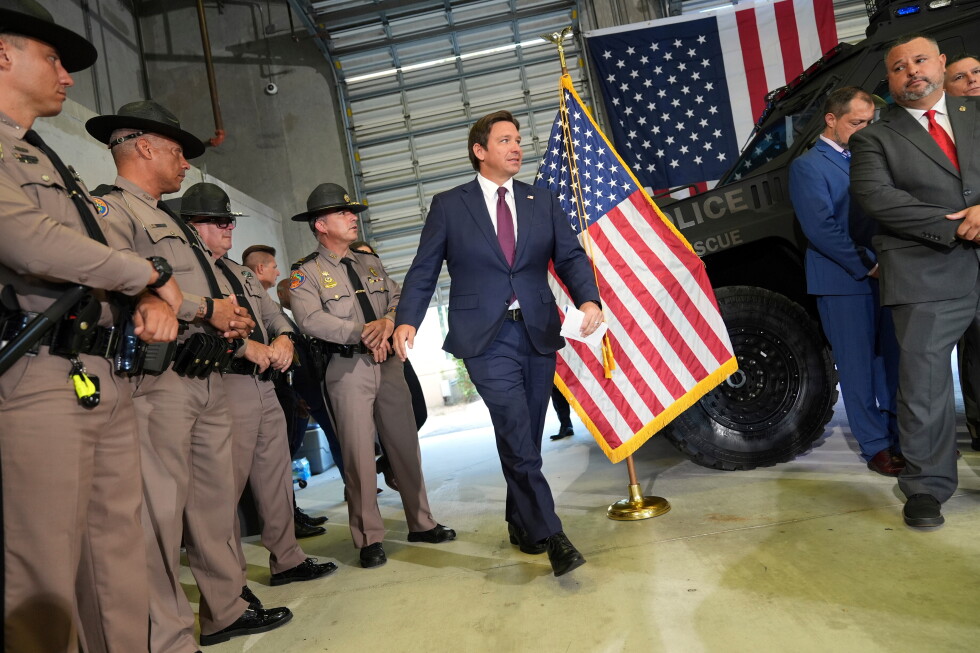
Governor Ron DeSantis has actively endorsed Florida’s aggressive immigration initiatives, collaborating with ICE through 287(g) agreements that empower local law enforcement to enforce immigration laws. This arrangement enables officers to interrogate immigrants in their custody about their immigration status and detain them for potential deportation. Experts suggest that this pressure for tangible results drives law enforcement to apprehend as many individuals as possible.
Disturbing Cases of Deportation
On February 15, Lee County sheriff’s deputies apprehended a 44-year-old Guatemalan man and his 21-year-old son in a Fort Myers parking lot. The wife and mother of the detained men claimed deputies approached them and inaccurately stated that their license plates were expired, forcing them out of their vehicle. In reality, the plates were valid until March 25.
This asylum seeker, wishing to remain anonymous for her family’s safety, described the aftermath: her husband and son were detained and deported back to Guatemala within a week, leaving her to care for their two younger sons and an American daughter. Despite having open immigration cases, including a valid driver’s license and work permit in the son’s case, they were nonetheless arrested. In response, the Department of Homeland Security (DHS) insisted they were in the U.S. unlawfully, citing previous illegal border crossings.
Lack of Transparency from Authorities
In both instances, the Florida agencies involved, including the Fish and Wildlife Commission and the Lee County Sheriff’s Office, have refused to disclose arrest reports or body camera footage to The Associated Press. Officials cited directives from ICE that require inquiries regarding immigrant arrests to be handled through federal channels. DHS has similarly withheld arrest records, arguing that such information is confidential due to ongoing law enforcement processes.
According to an ICE policy directive regarding Florida’s 287(g) partnerships, all data related to arrests is controlled by ICE and cannot be released without federal consent. This stance raises concerns about transparency, as it may contradict Florida’s Sunshine Law, which mandates public access to government records unless explicitly exempted. However, recent legislative shifts have created loopholes that allow for increased secrecy surrounding these actions.
The Broader Scope of Immigration Crackdowns
Florida’s intense focus on immigration enforcement has reached new heights. The state, which has opened an immigration detention center dubbed “Alligator Alcatraz” and a deportation facility, has significantly expanded its participation in the 287(g) program. From just 135 agreements across 20 states at the start of Trump’s administration, this initiative has ballooned to over 1,700 agreements spanning 41 states and territories.
To bolster state and local law enforcement’s involvement, DHS has introduced financial incentives, including reimbursement for officer salaries and funding for new equipment—up to $7,500 for individual police officers and up to $100,000 for agency vehicle purchases. As immigration policies evolve, Florida continues to be a focal point in the national debate over the enforcement of immigration laws.
