


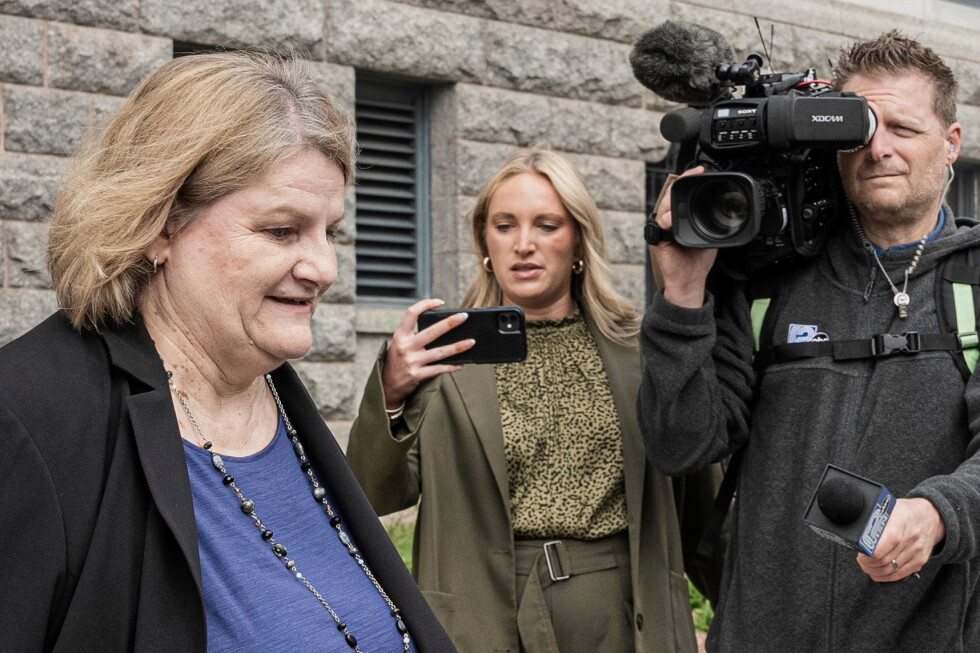
Former Wisconsin Circuit Judge Hannah Dugan is set to face sentencing in federal court on Wednesday, following her conviction for aiding an immigrant in evading federal agents. This case underscores the far-reaching implications of President Donald Trump’s immigration policies.
The Trump administration targeted Dugan as a symbol in the immigration debate
The charges against Dugan were part of the Trump administration’s broader effort to enforce strict immigration regulations. While administration officials characterized her as an activist judge, Dugan’s legal team argued that the government was using her prosecution as a means to intimidate others who might challenge its immigration agenda.
Supporters of Dugan, including immigrant rights advocates, contend that her case serves as a critical flashpoint in the ongoing struggle between federal law enforcement and the judicial system’s responses to President Trump’s immigration crackdown. Following her conviction, Republican Congressman Tom Tiffany, a staunch Trump ally, faced backlash on social media from those calling for her incarceration.
Dugan’s attorney refrained from commenting ahead of the sentencing, though Dugan, who did not testify during the trial, is expected to address the court for the first time in over a year during the hearing.
Prosecutors call for severe consequences
Dugan’s defense team argued that her role as a judge should provide her immunity from prosecution. U.S. District Judge Lynn Adelman, who will determine Dugan’s sentence, denied Dugan’s motion to vacate her obstruction conviction.
In a sentencing memo submitted last week, prosecutors accused Dugan of betraying her judicial oath, thereby endangering both law enforcement and the general public. Assistant U.S. Attorney Richard Frohling emphasized that while judges wield significant discretion, there are clear ethical boundaries they must not cross.
Dugan’s counsel responded by asserting that she has already faced significant repercussions, including her resignation and ongoing threats to her safety. They contended that any prison time beyond her existing detention would be excessive.
Given federal sentencing guidelines, the recommended prison term ranges from 15 to 21 months. However, judges retain the discretion to deviate from these recommendations.
Prosecutors noted that the average sentence for similar obstruction cases typically stands at around 16 months, but they did not provide a specific recommendation for Dugan’s case. Frohling stated, “This is a serious crime and deserves a suitably severe sentence,” signaling his commitment to holding Dugan accountable.
Regardless of the outcome at sentencing, Dugan’s legal representation has indicated plans to appeal the ruling.
Dugan’s trial marks a precedent in Wisconsin
Dugan’s case is unprecedented in Wisconsin, representing the first instance in which a state judge has faced charges for allegedly interfering with immigration officials. While she was acquitted of a separate misdemeanor involving concealment of identity, the primary case against her garnered extensive media attention.
The incident at the heart of the case occurred on April 18, when immigration officers arrived at the Milwaukee County Courthouse to apprehend 31-year-old Eduardo Flores-Ruiz, who had illegally entered the country and was due to appear before Dugan for a state assault hearing.
Dugan confronted the investigators outside the courtroom and subsequently led them to the judge’s chambers. She argued that their administrative warrant did not provide adequate grounds for arresting Flores-Ruiz. After the officers departed, Dugan facilitated Flores-Ruiz’s escape through a private exit alongside his attorney. This led to a foot chase with investigators who ultimately apprehended him outside the courthouse.
A week later, the FBI arrested Dugan inside the courtroom, leading her away in handcuffs. Notably, Flores-Ruiz remains in exile as of November.
