


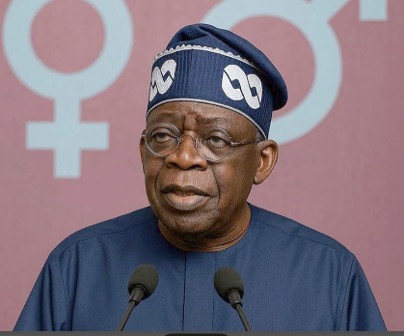
Bola Tinubu’s Pivotal Challenge
When Steve Jobs unveiled the first iPod in October 2001, he didn’t focus on technical details or storage capacity. Instead, he captured the audience’s imagination with a simple yet powerful statement: “1,000 songs in your pocket.” As he pulled the device from his jeans, he transformed a complex product into a relatable narrative, creating a memorable story that still resonates more than two decades later.
Similarly, during a time when electing America’s first Black president seemed improbable, Barack Obama emerged with the succinct phrase: “Yes, we can.” This emotionally charged message galvanized a diverse voter base, turning his campaign into a movement. In 2008, he was honored as Advertising Age’s Marketer of the Year, surpassing established global brands like Apple and Nike.
Nigeria finds itself in a comparable moment of clarity as political activities quietly intensify amid ongoing economic pressures and fragile public trust. Central to this landscape is President Bola Tinubu, who is respected as one of the most astute political strategists of his generation. Yet, he now faces a unique challenge that goes beyond political maneuvering; it’s a challenge of narrative.
While effective policy and reform measures have been introduced, Tinubu has not yet articulated a clear and compelling message that resonates with the everyday lives of ordinary Nigerians. The governmental actions have been notable, but the overarching story that binds these initiatives into a cohesive vision is, unfortunately, lacking.
This disconnect is not merely superficial; it touches the very essence of governance. During uncertain times, citizens seek more than just results—they seek meaning. People want to understand not just what is happening, but why it matters and the implications it holds for their future. When this clarity is missing, it leads to frustration, speculation, and dissent.
Under Tinubu’s administration, meaningful but often difficult decisions have been made—such as eliminating subsidies and adjusting exchange rates. While these decisions may be necessary, they lack the narrative that communicates not only the urgency but also the envisioned outcomes. Nigerians are well aware of what they need to endure; they need to be equally informed about the possibilities that lie ahead.
Failure to craft a resonant narrative risks creating a perception gap, where reformist intentions are overshadowed by a passive image, leaving a presidency characterized more by chaos than change. Historically, leaders are judged not merely by the actions they implement but by the clarity of their visions—for instance, Franklin Roosevelt’s New Deal and Deng Xiaoping’s “reform and opening up” were both pivotal movements instigated by clear communication.
Opportunities Amidst Political Dynamics
While Bola Tinubu still has time to articulate his narrative, the political environment is unforgiving, characterized by rapid developments and decreasing public patience. Early indications of electoral activity are emerging, accompanied by heightened scrutiny and criticism. In such a charged atmosphere, a presidency devoid of a clear and persuasive message faces significant disadvantages and risks exposure to public dissent.
This is not to imply that slogans alone can address Nigeria’s substantive challenges; rather, a well-crafted message has the power to recalibrate expectations, rebuild trust, and create a framework for understanding complex reforms. The question is not whether Tinubu has the potential to succeed but whether he can seize the opportunity to clearly define his administration’s goals and vision for the country.
While it is evident that Tinubu is striving to lead Nigeria through a challenging landscape, without effective communication, there remains a disconnect between governmental intentions and public perception. What is required now is not an outsourcing of messaging but a genuine articulation of Tinubu’s vision—something both direct and compelling.
For the president to regain momentum, he must avoid the sense of detachment that characterized previous missteps, such as the recent Chatham House incident. Leadership, especially in turbulent times, demands not only decisive action but also ownership of the messaging. Steve Jobs demonstrated that clarity is what people remember; Nigeria, too, is in search of its clarity, and whether that clarity is achieved could very well shape the narrative of Tinubu’s presidency.
Emergent Topics in Nigeria
In Lagos State, the appointment of Mr. Lekan Fatodu as Executive Director of the Lagos State Sports Commission has revolutionized sports management. His strategy has transformed countless spectators into active participants, generating substantial interest and Foreign Direct Investment (FDI) in the sector.
Meanwhile, the emergence of a new hantavirus poses public health concerns. Unlike many viruses, hantaviruses can lead to severe respiratory issues, with a recent outbreak aboard an expedition ship raising alarms worldwide. With a tragic loss of lives already reported, the timely response and containment will be crucial.
On a broader scale, Nigeria’s position in the Henley Passport Index is notable. Currently ranked 89th, the Nigerian passport has seen a gradual price increase since 2023. The implications of this ranking could inform understanding of both national reforms and international relationships.
Lastly, the political landscape has seen dramatic changes, notably the swift decline of the African Democratic Congress (ADC). Recent comments from Pastor Tunde Bakare imply a foregone conclusion for the party’s future, suggesting a pressing need for revitalization in Nigeria’s political opposition.
