


France’s World Cup Campaign Comes to an Unexpected End
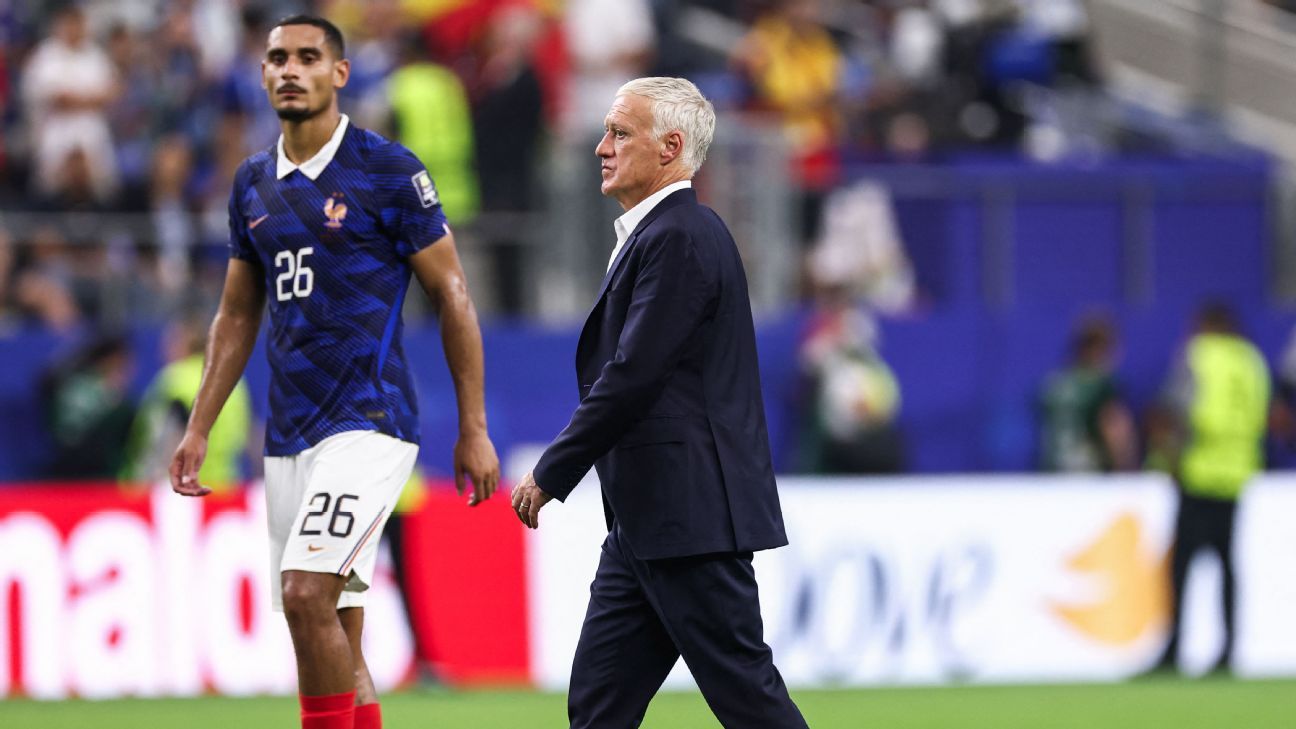
ARLINGTON, Texas — The much-anticipated journey of the French national team at the FIFA World Cup ended in disappointment, as they faced a 0-2 defeat to Spain in Jerry Jones’ imposing stadium. This marked a historic moment for France, as it was their first loss in World Cup history. Their performance was lackluster, leading to questions about their favored status entering the tournament.
End of an Era for Didier Deschamps
For Didier Deschamps, a monumental chapter has come to a close. After 14 years, 184 matches, and leading his team to three major tournament finals—including two World Cups and one European Championship—his tenure has been cast into uncertainty. A promising opportunity to become only the second manager to win multiple World Cups has slipped away, particularly following a disheartening display from his offensive players, who collectively produced a mere 0.04 expected goals in over an hour of play.
Rethinking Tactical Approaches
France was widely regarded as the most formidable team in the tournament, rivaled only by Spain. However, their underwhelming performance raised serious concerns. This defeat marks the third consecutive time that Luis de la Fuente has outmaneuvered Deschamps, following matches in the Euro semi-finals and the Nations League. This trend raises doubts about Deschamps’ ability to adapt against a persistent rival.
Missed Opportunities for Adaptation
Given Spain’s reliance on a possession-based strategy, it was anticipated that France would need to adjust their tactics in response. The primary question was whether they would choose to press Spain and enhance their midfield presence or stick to their original game plan. Unfortunately, Deschamps opted for the latter, a decision that has drawn considerable criticism.
A Missed Tactical Advantage
Deschamps’ approach has generally emphasized maintaining high morale among players and employing straightforward tactics, a strategy that proved successful in previous tournaments. His belief that excessive tactical alterations in low-scoring games can be detrimental is not unfounded. Nevertheless, the inability of highly skilled players to create space and retain possession led to a stagnation that diminished France’s chances on the field.
Challenges in Implementing Adjustments
The reality became evident when tactical flexibility was necessary. Unfortunately, Deschamps struggled to implement meaningful changes during the match. Even his substitutions lacked originality, reflecting a predictable pattern that failed to respond effectively to the game’s dynamics. On days of underperformance, this predictability can amplify frustrations among players and fans alike.
Prospects Under Zidane’s Leadership
The transition to a new managerial era under Zinedine Zidane brings both hope and uncertainty. While Zidane’s stellar record—three UEFA Champions League titles and two La Liga championships—is impressive, his absence from coaching for the last five years raises questions about his current capabilities. Coaching at the international level presents challenges distinct from club management, where constant interaction and control over player rosters are taken for granted.
The Importance of Team Dynamics
While Zidane is likely to have a deep understanding of this French squad and the wealth of attacking talent at his disposal, the key takeaway from Deschamps’ tenure is the necessity of fostering teamwork over reliance on individual skill. Zidane must balance the collective needs of the team while also tapping into the potential of his star players. Achieving this balance will be essential for his success moving forward.
