


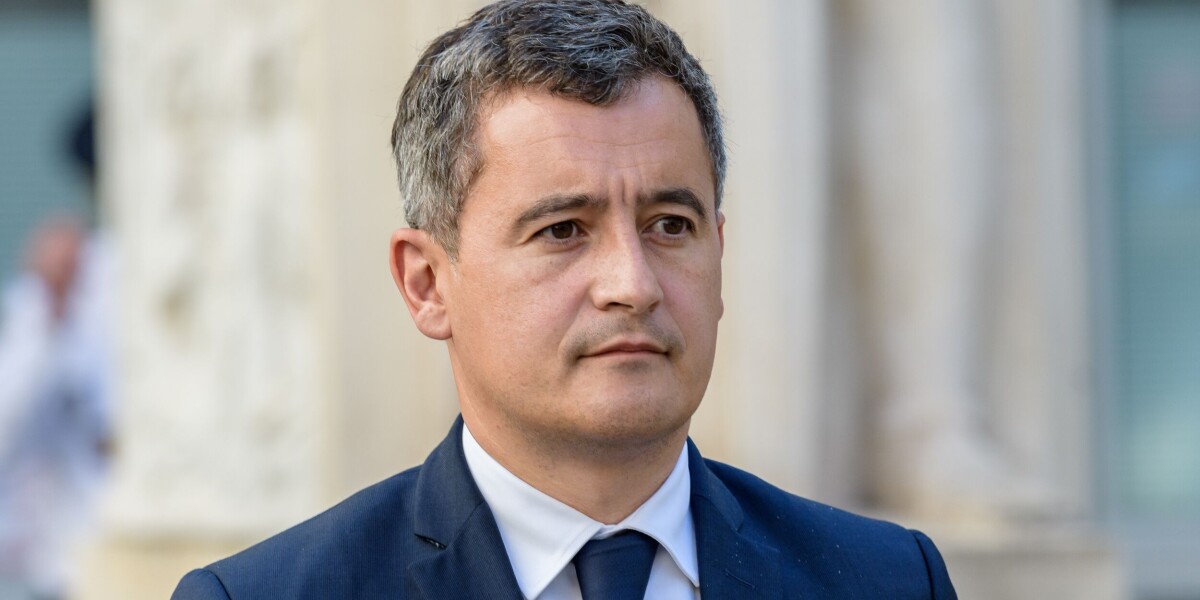
Gerard Darmanin highlights the thresholds of France’s immigration system
French Justice Minister Gerard Darmanin has announced a plan to suspend legal immigration for three years, citing that France has reached its limits in terms of accommodating new immigrants. In an interview with *Journal du Dimanche* on May 24, Darmanin emphasized the need for immigration policy to be a focal point in the upcoming 2027 presidential campaign.
“We must put an end to the immigration that exists today,” he remarked, asserting that France has surpassed its capacity for integration and assimilation. According to statistics from the Ministry of the Interior, the number of first residence permits issued in France surged by 11.2% in 2025, compared to the previous year.
Darmanin is advocating for a halt on certain categories of legal immigration and stricter family reunification rules. He proposed that migrants granted work permits should not automatically gain the right to bring family members to France, signaling a significant shift in immigration policy.
In addition to these proposals, Darmanin has called for constitutional amendments that would empower France to establish binding immigration quotas, replacing the current system governed by EU directives. His comments come in the context of heightened immigration restrictions and border controls both in France and the European Union, particularly following the implementation of the EU’s new Digital Entry/Exit System (EES), which has been aimed at managing overstays since October 2025.
Constitutional Amendments and Referenda on Immigration Policy
Darmanin expressed support for holding a referendum on immigration policy, but acknowledged the necessity of constitutional amendments to facilitate such a process. “I’ve never shied away from giving people a voice,” he stated, emphasizing the need for constitutional change to allow for public input on these significant issues.
Currently, strict constitutional guidelines impede the French president’s ability to pursue a referendum on immigration, and past proposals have encountered various legal and political hurdles. Furthermore, Darmanin, who has held various governmental roles under President Emmanuel Macron since 2017, did not dismiss the idea of running for president himself in 2027, indicating that his decision will be driven by the best interests of the country.
Immigration as a Central Theme Ahead of the 2027 Presidential Election
While Darmanin’s remarks do not translate into an imminent policy shift, they illustrate an evolving discourse among France’s right and center in the lead-up to the 2027 presidential election. Immigration is poised to be a critical issue, as Conservative and far-right factions intensify calls for stricter controls over both legal and illegal immigration.
In this landscape, three individuals from Darmanin’s current and former government circles have already declared their intent to run in the upcoming election. He identified former Prime Minister Edouard Philippe as a prominent candidate who could potentially unify various political factions around a national agenda. Furthermore, he characterized former Prime Minister Gabriel Attal as representative of “progressive social democracy,” while stating that former Interior Minister Bruno Lutailot embodies the “conservative right.”
