


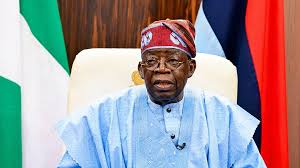
Tinubu Advocates for Economic Reforms Amid Challenges
During the early days of his administration, President Bola Tinubu emphasized the necessity of significant reforms, specifically the abolition of the bunkering scheme and the unification of the foreign exchange market. Addressing these tough decisions, he acknowledged they would bring short-term discomfort but deemed them essential for the sustainability of Nigeria’s economy. Drawing an analogy to childbirth, Tinubu explained that while the path to a healthier economy might be painful, it is ultimately rewarding for future generations.
In a recent discussion at the Africa CEO Forum in Kigali, Rwanda, the President highlighted the long-term repercussions of maintaining outdated subsidy systems, warning that such policies could burden future generations with debt. “It is a false reality to believe that reckless subsidies can persist in a global economy,” he stated, highlighting that such practices encourage corruption and smuggling, thereby endangering the country’s stability.
Reflecting on the dire consequences of the previous subsidy regime, Tinubu noted that many states struggled to meet their financial obligations, including salary payments for public workers. “Among our 36 states, 27 are unable to pay their employees,” he said, pointing to the simultaneous production of oil and the lack of functioning refineries as indicators of a systemic issue that needed urgent addressing.
Looking forward, Tinubu expressed that if re-elected in 2027, his focus would be on intensified efforts to tackle existing challenges. “We must continue to reset, rethink, and challenge ourselves as a government,” he remarked, reinforcing his philosophy of decisive governance aimed at delivering tangible improvements for the populace. He underscored that a transformational leader must be willing to make necessary decisions for the collective good, even when those choices are difficult.
While discussing taxation as a critical driver of development, Tinubu acknowledged the discomfort associated with paying taxes but argued that citizens must contribute to fund modern infrastructure and social services. “Everyone wants progress, but many resist the idea of how to finance it,” he noted. He framed tax payment as a civic duty essential for securing a stable and developed future for the country.
Highlighting the initial positive outcomes of recent economic reforms, Tinubu noted increased stability and predictability within the economy, which he believes will facilitate better planning for businesses and households alike. “There is now a clearer outlook for the economy, making it easier for planners to prepare reasonable budgets,” he commented, adding that the government is also implementing direct cash transfers to low-income households to improve educational opportunities.
In his drive to stimulate domestic production, the President stated that his administration’s industrial policy is more about support than mere protectionism, citing successful local enterprises like Dangote Refinery and BUA Group as examples. He further clarified that the government has approved crude oil sales to refineries in Naira to alleviate financial constraints and alleviate pressure on the exchange rate. Additionally, he defended the ongoing Lagos-Calabar coastal road project as part of a larger strategy for national integration and economic inclusion, aiming to boost tourism and investment along the coastline.
On the subject of national unity, Tinubu encouraged Nigerians to view the country’s diversity as a strength rather than a point of division, asserting that patriotism should transcend ethnic differences. He reaffirmed Nigeria’s role in regional and global diplomacy, stressing that cooperative partnerships are vital for addressing persistent security challenges. “We cannot face these issues in isolation,” he stated, underscoring Nigeria’s significant influence and leadership role within West Africa and the continent at large.
