


Trump Administration’s Immigration Strategy Fuels Tech Boom
PHOENIX — The Trump administration’s push for mass deportation and a militarized response to drug cartels is poised to create substantial financial opportunities. The recent Border Expo showcased technological advancements shaping the future of immigration enforcement, featuring innovative equipment to enhance border security.
Revolutionary Technology in Immigration Enforcement
The expo highlighted an array of surveillance tools, including radar systems adept at detecting human presence in the harsh Sonoran Desert, unmanned off-road vehicles capable of tracking individuals over long distances, and rapidly deployable tents designed for containment in large encampments. Drones of various sizes were also prominently displayed, ranging from agile unmanned aerial vehicles to larger models equipped with Gatling-style machine guns. One salesperson even humorously described a massive drone’s ability to deliver 300-pound “payloads” — a term often associated with military operations.
DHS Workforce Expansion and Technological Innovations
The Department of Homeland Security’s Immigration and Border Enforcement Division has expanded its workforce by over 12,000 this year. The expo served as a demonstration of how technological innovations will bolster enforcement efforts, fulfilling President Trump’s commitment to curtail unauthorized border crossings and deportations, often minimizing the need for human operatives.
Autonomous Solutions Take Center Stage
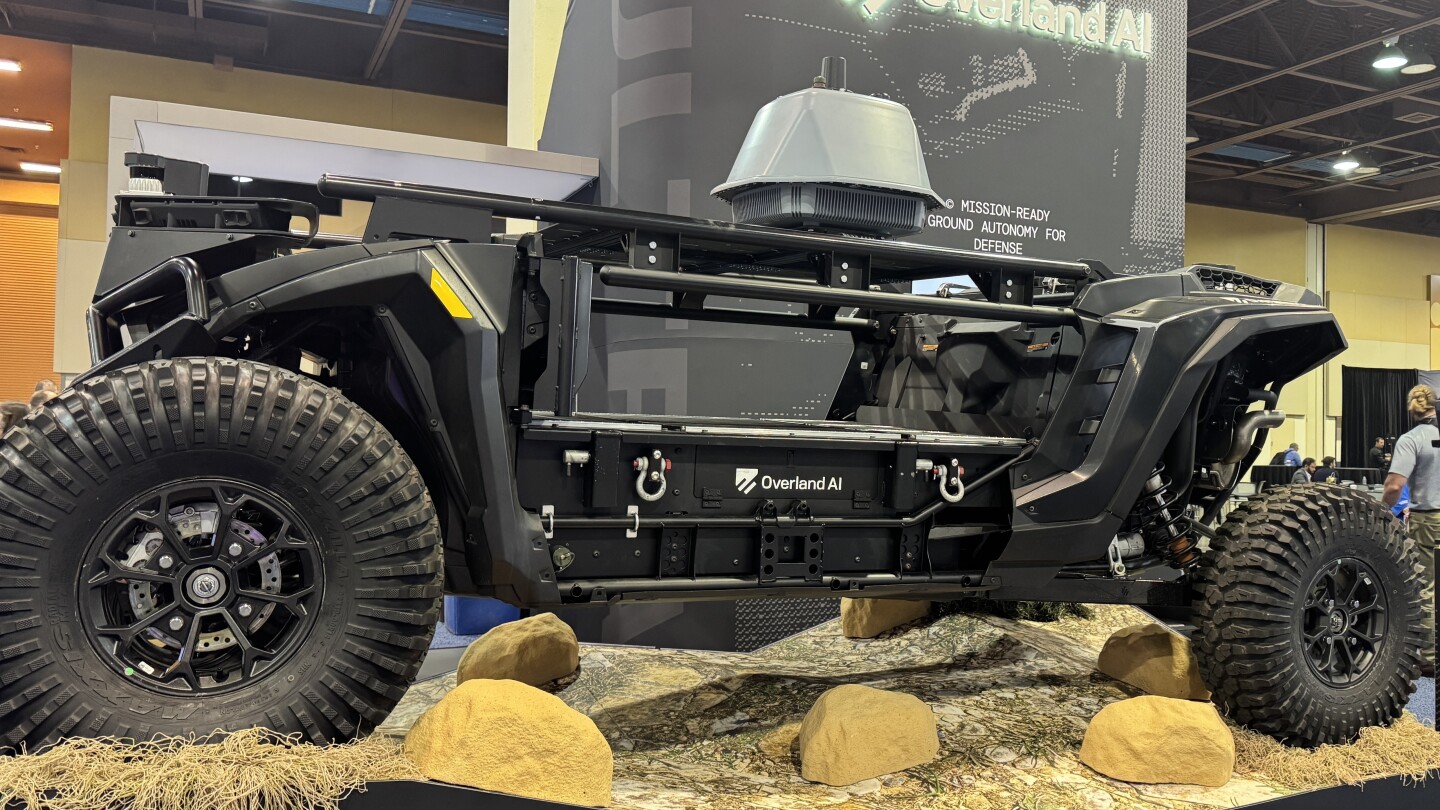
A standout attraction was Overland AI’s Ultra, a fully autonomous tactical vehicle resembling an SUV, weighing 3,500 pounds. Designed to navigate rugged terrain potentially contaminated with biological and chemical weapons, this autonomous unit was showcased for its reconnaissance and combat capabilities, reflecting an aggressive approach to border security.
The Rise of Artificial Intelligence in Border Control
Artificial intelligence emerged as a key theme at this year’s expo, with numerous exhibitors highlighting its role in expediting data classification. IBM notably featured a substantial booth dedicated to demonstrating how AI can streamline operations within the border security framework. Still, a significant portion of the showcase was dedicated to various combat technologies.
Combating Threats: Defense and Training Technologies
Among the defensive technologies on display was a bulletproof glass panel produced by Dana Safety Supply, designed to protect Border Patrol agents from potential gunfire. Additionally, training technology was prominently featured, including an immersive room by VirTra that simulated intense combat situations for law enforcement personnel. With Customs and Border Protection acquiring multiple simulators, the integration of these technologies aims to enhance readiness among agents across the nation.
Controversial Equipment and Political Implications
While much of the technology was tailored for border security, many companies also offered products intended for use in urban areas. Riot gear and bulletproof helmets were showcased for civilian “operatives” engaged in protests against deportation policies. The expo also drew attention to unique offerings, such as challenge coins exhibited by Point Emblem, including a controversial design featuring a former sheriff holding both the U.S. Constitution and an AR-15.
Challenges and Concerns in Implementation
Several vendors expressed uncertainty about how their products would be deployed. Joe Thomas of FORTS highlighted his mobile medical pods stationed at a controversial immigration camp, although he quickly distanced himself from the specifics of their application. Similarly, conversations turned to more global issues, with representatives from Aaltos discussing their technologies aimed at neutralizing enemy drones, underscoring a growing interest in defense applications that extend beyond the U.S.-Mexico border.
Economic Repercussions of the Immigration Initiative
Senator Frank Carroll from Arizona expressed concerns over the economic and logistical implications of the surge in security technology. After exploring the expo, he noted the financial burden on distributors to acquire these new tools, as well as the ongoing costs associated with maintenance and IT support. He downplayed moral dilemmas surrounding the use of such technology for mass detentions, framing the conversation instead around the responsibilities of deportation officials and the necessity of private-sector solutions if state-initiated facilities fall short.
