


China’s Expanding Influence in Africa Presents Challenges for the U.S.
The United States must address the widening influence of China in Africa, particularly through its substantial investments in information technology infrastructure. This expanding presence presents a direct challenge to U.S. influence on the continent. African nations are increasingly offering the People’s Liberation Army (PLA) access and logistical support, which significantly enhances China’s strategic foothold. Furthermore, China aims to leverage its influence to tap into African countries’ data reserves, thereby refining its military intelligence capabilities. To counter this trend and assert itself as the partner of choice in Africa, the United States needs a coherent and proactive strategy.
China’s Technological Collaborations in Africa
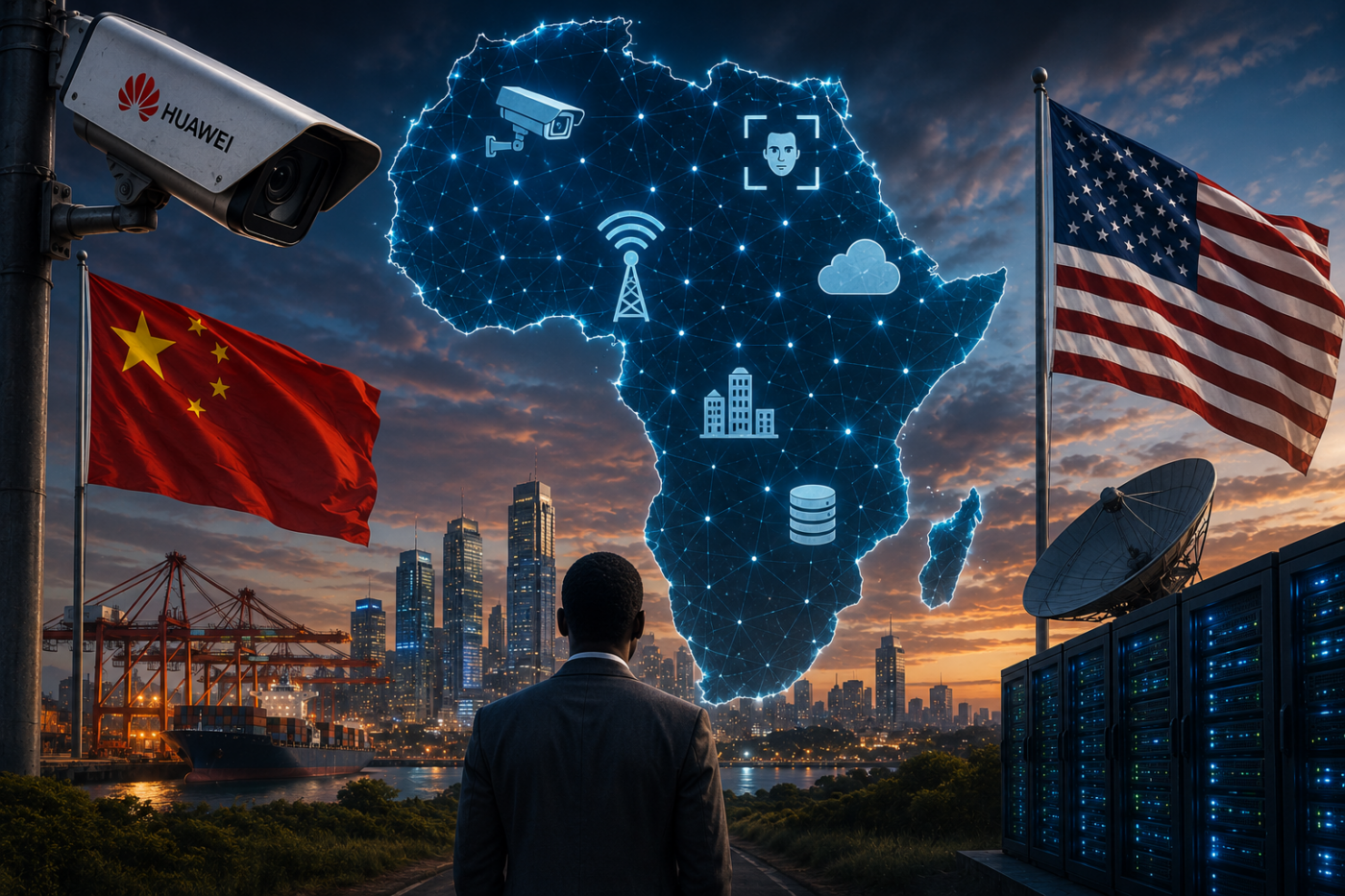
In early 2017, an agreement between China and Djibouti exemplified China’s growing foothold; the Chinese government pledged $20 million for the Djibouti Urban Safety Surveillance System. This initiative led to the installation of hundreds of CCTV cameras equipped with facial recognition technology, establishing a sophisticated surveillance system across the nation. Such projects illustrate China’s strategy of collaborating with state governments to promote infrastructure investment and development, serving both to solidify ties in Africa and to expand its own operational intelligence capabilities. This dual approach allows China to effectively compete with U.S. interests on the continent.
Digital Silk Road Initiative Drives Growth
China’s Digital Silk Road initiative, outlined in a 2015 government white paper, focuses on enhancing information technology infrastructure in developing countries. As of 2021, Chinese tech giant Huawei has constructed over 70% of Africa’s 4G networks and is actively working to implement 5G infrastructure. China’s digital investments have spawned smart cities throughout the continent—urban centers that integrate automated technologies and artificial intelligence for advanced development. Countries like Djibouti are embracing these initiatives to bolster their urban infrastructure, borrowing the technologies vital for their national advancement.
One noteworthy example is Kenya’s Konza City project, which began in 2013. Funded with approximately $166.6 million in concessional financing from the Export-Import Bank of China, the project aims to establish a comprehensive technology and research hub. Huawei’s role as the lead contractor underscores the interdependence of Chinese financing and infrastructure expertise. Similarly, Zimbabwe’s recent collaboration with CloudWalk Technology to deploy a nationwide facial recognition system showcases China’s growing involvement in security and law enforcement across Africa, while Uganda has also invested heavily in similar surveillance technologies.
Geopolitical Ramifications of Chinese Investments
The influx of Chinese investment is yielding tangible benefits for African nations, fostering a deeper integration of Chinese influence within their governments. In 2017, China established its first overseas military base in Djibouti, located strategically near U.S. installations. Such moves solidify China’s military presence and safeguard its commercial and national interests on the continent. However, the financial dependency that arises from these loans raises significant concerns over the long-term economic stability of these nations and their susceptibility to external influences.
Moreover, the introduction of Chinese technological frameworks poses security risks for African nations. Under China’s 2017 National Intelligence Law, companies like Huawei must comply with state intelligence directives, even when operating overseas. Reports suggest that sensitive data from the Chinese-constructed African Union headquarters has been transmitted to servers in Shanghai, igniting fears about privacy and security. These developments raise critical questions about the sustainability of Africa’s relationships with China, given the potential for increased debt dependency and compromised sovereignty.
The United States’ Strategic Response
To effectively counter China’s growing influence in Africa, the United States must engage with African nations in a comprehensive manner. In December 2022, the U.S. launched the Digital Transformation with Africa initiative, committing over $350 million toward developing digital infrastructure. Additionally, a partnership with the African Union was established in January 2026 to form an investment working group that connects U.S. businesses with African states. While these initiatives are a positive step, they must contend with China’s significant lead in financing, as China has already extended about $500 million to African governments as of 2023.
The U.S. should also enhance military collaboration with African partners, transcending existing joint exercises to include intelligence-sharing frameworks that strengthen resilience against Chinese coercion. Improving collaboration on issues related to smart city frameworks and technology vulnerabilities is essential. For any potential partnership, assessing ties to China and working collaboratively to mitigate that influence would be beneficial for both the U.S. and its African counterparts.
The multifaceted challenges posed by China’s investments require the U.S. to adopt a proactive and sustained engagement strategy. By positioning itself as a reliable alternative to Chinese loans and integrating values of cooperation and development, the United States can begin to reshape perceptions and foster a more balanced ecosystem in Africa’s geopolitical landscape.
Disclaimer: The views expressed are those of the authors and do not reflect the official policy or position of the U.S. Army, Department of Defense, or the U.S. Government.
