


Nigerian Flour Milling Company Urged to Boost Sugar Production Capacity
Senator John Owan Enoh, the Minister of State for Industries, has challenged the management of the Nigerian Flour Milling Company to enhance the annual production capacity of its subsidiary, Golden Sugar Company (GSC), to 300,000 tonnes by 2030. This directive emphasizes the government’s commitment to achieving self-sufficiency in sugar production in Nigeria.
Minister’s Visit Reinforces Commitment to Sugar Industry
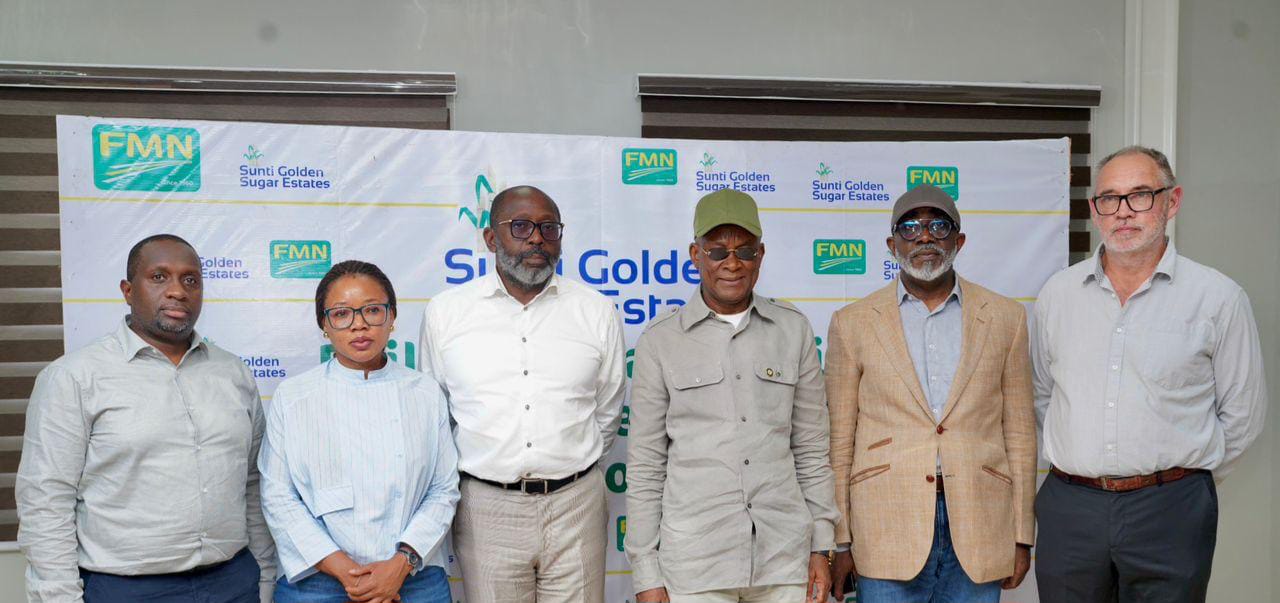
The minister delivered his message during a recent visit to the GSC complex in Sunti, Niger State, where he was accompanied by Kamal Bakrin, the Director-General of the National Sugar Development Council (NSDC). This visit marks the third in a series of strategic inspections of sugar projects as part of President Bola Ahmed Tinubu’s initiative to accelerate sugar self-sufficiency.
Ongoing Efforts to Meet Sugar Demand
During their tour on December 15, 2025, the Minister and NSDC Secretary-General also visited the Lafiaji Sugar Manufacturing Company (LASUCO) in Kwara State, followed by a stop at the Dangote Sugar Refinery (DSR) complex on April 8, 2026. Minister Enoh highlighted that Nigeria’s current domestic sugar production is significantly below the annual consumption of 1.8 million tonnes, underscoring the critical need for GSC to contribute meaningfully to this gap by 2030.
Impressive Developments at Golden Sugar Company
Despite current production levels, the minister expressed optimism about the ongoing activities within the GSC complex. He praised the facility’s considerable added value and its adherence to the government’s Backward Integration Program (BIP). Enoh noted the complex’s role in generating employment, indicating that it provides jobs for approximately 4,500 workers at peak times.
Progress and Future Aspirations
The minister acknowledged the impressive production processes observed on-site, illustrating the potential for the country, businesses, and industries to achieve their objectives. While he commended the progress made under the BIP, Enoh stressed that the journey is far from complete. “There is an ambitious plan to ramp up annual production to 300,000 tonnes by 2030,” he affirmed.
Government’s Commitment to Industrialization
Reinforcing the government’s dedication to industrial development, Enoh assured continued support for entrepreneurs through financial incentives and funding opportunities. He emphasized that while there is still work to be done, the momentum toward industrialization is evident.
Division of Responsibilities in Sugar Development
Kamal Bakrin, the NSDC chief, recognized the significant advancements made by Golden Sugar Company but cautioned that much work lies ahead. He noted the importance of accountability among stakeholders, emphasizing the need for results to be delivered efficiently and effectively. “We are focused on continuous improvement while working collaboratively to meet our ambitious goals,” he stated.
Ambitious Production Goals of Golden Sugar Company
Mr. Boye Olusanya, Group Chief Executive Officer of Golden Sugar Company, shared that the company currently cultivates sugar across approximately 6,600 hectares and produces around 20,000 tonnes annually. He announced plans to ramp up production to 290,000 tonnes by 2030. The recent delegation tour of the farm and factory facilities culminated in the commissioning of a new sugar training school, further enhancing the complex’s commitment to education and skill development in the sugar industry.
