


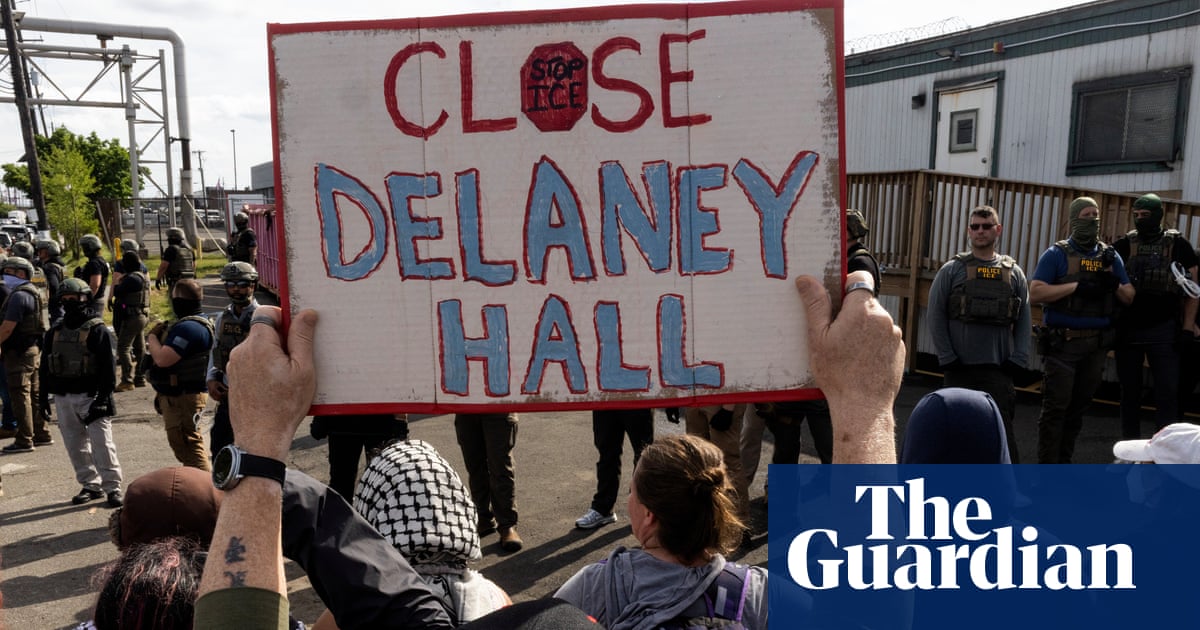
Detainees at Delaney Hall Launch Hunger and Labor Strikes Amid Dire Conditions
More than 300 detainees have been engaged in hunger and labor strikes at Delaney Hall Immigration Detention Center in Newark, New Jersey, for over two weeks. They describe conditions at the facility as “horrible,” reporting issues such as spoiled food, inadequate medical care, and unsatisfactory living conditions. Numerous detainees have also alleged physical abuse from guards, including beatings and pepper-spraying by riot police, which has led to several individuals requiring hospitalization. In response, they have demanded a meeting with New Jersey Governor Mikie Sherrill to facilitate their immediate release from the 1,000-bed private facility. Currently, the Department of Homeland Security has resumed limited family visitation and released a pregnant detainee.
Conflict Erupts Between Protesters and Law Enforcement
Protests surrounding Delaney Hall have escalated, with confrontations occurring between demonstrators and law enforcement. Immigration and Customs Enforcement (ICE) agents have been seen brandishing batons and using pepper spray and stun guns against protesters, journalists, and even U.S. senators. Federal authorities have made multiple arrests, charging individuals with assaults on law enforcement officers, while Governor Sherrill has deployed New Jersey State Police to manage the protests, resulting in over 60 arrests overnight. Further complicating the situation, ICE agents unexpectedly removed Martin Soto, suspected of leading the strike, from solitary confinement.
The Historical Context of Immigrant Detention and Resistance
Jessica Aldous, a historian and professor of ethnic studies at the University of Colorado Boulder, sheds light on the historical connections between immigrant detention and resistance. Aldous, author of “The Shadow of El Centro: A History of Immigrant Detention Centers and Solidarity,” notes that Soto’s experience and those of the striking detainees reflect a long-standing pattern of immigrant incarceration in the U.S. Strikes have also been reported in other facilities across the nation, including locations in New Mexico and California, where detainees are protesting issues related to water quality, mold, and inadequate medical care.
Longstanding Issues in the Immigration System
“The situation we see today has existed for generations,” Aldous remarked. “There have always been protests from within, but the story has remained the same: the immigration system is not being curtailed.” She emphasized the persistence of adverse conditions within the detention system, where inadequate medical treatment and substandard living conditions continue to plague detainees.
The Evolution of Resistance Tactics Among Detainees
Aldous elaborates on the historical context of protests, noting that resistance has taken various forms over the years, including hunger strikes and labor actions. The genesis of organized protests in immigrant detention facilities can be traced back to the mid-1800s when anti-immigrant legislation began targeting specific demographics. The treatment of detainees has often mirrored this historical neglect, further fueling the current wave of protests.
The Role of Food and Labor in the Detention Experience
Food quality has been a critical issue for detainees throughout history, with low-quality, often insufficient provisions being commonplace. Aldous explains that during the Bracero Program—a labor initiative allowing Mexican workers to enter the U.S. under short-term contracts—detainees at centers like El Centro expressed grievances relating to food quality. Many detainees today face similar conditions, where nutrition is deprived and food is often used as a form of punishment.
The Need for Structural Change in Immigration Policy
Aldous suggests that systemic change is necessary to address the root causes of migration and the ongoing mistreatment of detainees. She emphasizes the importance of understanding the broader context in which these issues exist, particularly the historical actions of the U.S. government in relation to immigration. The movement to abolish ICE, while gaining traction, may not fully address the complexities of the current immigration landscape. Greater awareness and dialogue surrounding the underlying causes of migration and detention can pave the way for more effective solutions to these long-standing problems.
