


Faithful Response Immigrant Meeting Showcases Commitment to Justice
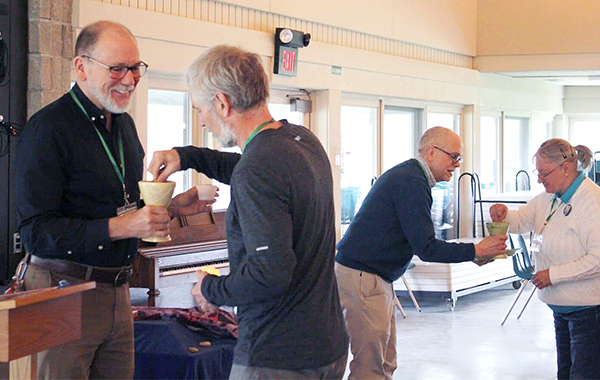
The Faithful Response Immigrant Meeting, which took place from March 17 to 19 at Camp Christian in Marysville, Ohio, brought together participants from four sponsoring denominations and various immigration ministries dedicated to justice and advocacy.
This interfaith gathering was organized by leaders committed to immigrant justice from the Church of the Brethren, United Church of Christ, Disciples of Christ, and Mennonite Church USA. Attendees included members of the Deportation Defense Response Team and nine pastors from the Church of the Brethren, such as Anna Lisa Gross, Ervin Heischman, Cliff Kindy, Kimberly Kokzan, and Bruce Rosenberger.
Kokzan reflected on the retreat, stating, “It was not only a platform for valuable information and training but also a source of spiritual nourishment. The participants and mentors provided inspiration that energized my commitment to immigrant justice, particularly during these challenging times.”
Cliff Kindy emphasized the purpose of their gathering, asserting that their engagement with immigrant communities embodies a resistance against policies that dehumanize neighbors. He described their collective mission as a “coup d’état of active resistance,” rooted in love, compassion, and community support.
During the meeting, Gross identified the pursuit of justice as a spiritual practice, underscoring the importance of shared experiences—core prayers, journaling, storytelling, and communal worship—as vital aspects of their journey towards collective faith.
Reporting on the event, Kayla Barkey from the United Church of Christ National Mission News Team highlighted the personal narrative of Irvin Heishman, a Brethren pastor from Tipp City, Ohio. Heishman shared his recent trip to Honduras, where he visited two deported church members, Armando and Marlon. Although they complied with U.S. immigration procedures, they faced severe consequences, including detention and deportation under troubling circumstances, illustrating the harsh realities of the current immigration system.
The full account of the meeting, along with video testimonials from participating faith leaders, can be accessed through the United Church of Christ’s website, illuminating the gravity of the issues at hand and the relatable, human stories that emerged from this impactful gathering.
Action-Oriented Gathering Inspires Advocacy
The Faithful Response Immigrant Meeting also included a compelling keynote address by Iman Ayman Soliman, who shared his harrowing journey from Egypt to the U.S. Soliman’s asylum status was terminated, leading to his detention for 73 days before he regained his freedom through public and media advocacy efforts. His experiences shed light on the adversities faced by many asylum seekers who endure dehumanizing treatment within the immigration system.
Soliman detailed the toll of his time in detention, reflecting on the emotional and physical challenges that deeply impacted his faith. Despite his circumstances, he emphasized the support he received from diverse faith communities, marking the significance of collective action in providing solace and hope to those suffering.
This year’s gathering was not just a time for reflection but also a launchpad for future activism. Rev. Grace Kozak, Deputy Director of Immigrant and Refugee Response, remarked on the necessity of solidarity among faith communities, highlighting how such events foster relationships essential for addressing the critical issues facing immigrants.
In that spirit, UCC Minister of Refugee and Immigrant Services, Megan Burgert, underscored the need for an expanding coalition committed to justice, emphasizing that every contribution, no matter how small, strengthens the cause.
Workshops offered during the gathering addressed practical strategies for churches affected by immigration issues, including pastoral care and community engagement. The Rev. Esther Robles led a session focused on supporting immigrant congregations, creating a space for acknowledging shared struggles and the importance of communal healing.
The Faithful Response gathering served as an essential confluence of spiritual enrichment and practical activism, enabling participants to forge meaningful relationships aimed at tackling the challenges surrounding immigration and justice. As attendees left, they carried with them renewed hope and the conviction that when united, communities of faith can make a profound impact in advocating for those on the margins.
