


BIA Ruling Alters DACA’s Impact on Deportation Cases
The Board of Immigration Appeals (BIA) has ruled that DACA status no longer serves as an automatic shield against deportation. This decision places hundreds of thousands of undocumented immigrants, often referred to as “Dreamers,” into a more complex legal landscape.
As part of the Department of Justice, the BIA has instructed immigration judges to evaluate all factors in deportation cases, moving beyond the simple fact that an individual was granted deferred action upon their arrival as children. This shift in focus could significantly affect the outcomes of many cases.
The BIA’s ruling overturns a previous decision made by a lower judge who had viewed DACA as an unfavorable factor in deportation proceedings. In the BIA’s opinion, Judge Roman Chaban remarked that the immigration judge had incorrectly terminated removal proceedings solely based on the respondent’s DACA protection, neglecting to consider other objections to termination.
DACA’s Origins and Legal Vulnerabilities
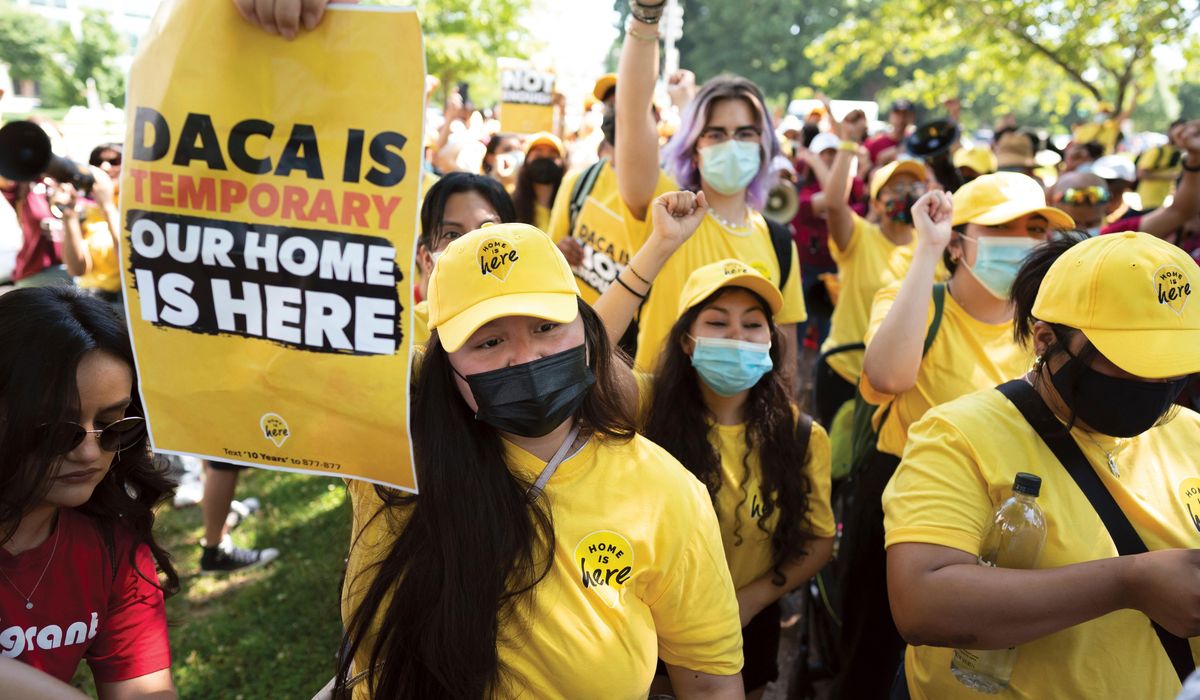
Established by President Obama in 2012, DACA was intended to provide amnesty to undocumented immigrants who met specific criteria. The program aimed to support young individuals—known as “Dreamers”—who were striving for education, had maintained relatively clean criminal records, and sought to lay deeper roots in society.
At its height, DACA protected around 800,000 individuals, and it still serves over 500,000 today. However, legal experts have long pointed out the vulnerabilities inherent in the program, both regarding its creation and its limited scope of protection.
Responses from Lawmakers and Legal Community
Senator Richard Durbin, the leading Democrat on the Senate Judiciary Committee and a vocal advocate for Dreamers, condemned Friday’s decision. He expressed that the ruling was “callous” and urged Congress to enact laws that would fortify the legal standing of DACA recipients.
Durbin emphasized the issue as one of fairness and justice, stating, “This is a simple American fairness and justice issue.” His remarks reflect a growing concern among lawmakers and advocates regarding the uncertain future of many undocumented immigrants.
Case Background: Catalina Santiago-Santiago
The case that sparked the BIA’s latest ruling involved Catalina Santiago-Santiago, who was arrested last August, igniting a series of legal challenges. Santiago, a DACA recipient since the program’s inception, immigrated to the United States at the age of eight. Her DACA qualifications require renewal every few years, with her most recent approval expiring this month.
In her legal battles, Santiago argued in both immigration and federal district courts that DACA constituted a contractual agreement with the government, which should protect her from deportation as long as she adhered to program guidelines. An immigration judge initially agreed with her argument and terminated her deportation case.
Implications of the BIA’s Decision
In October, a federal judge ordered Santiago’s release from immigration detention, emphasizing the complexities involved in her situation. However, Friday’s ruling reverses the immigration judge’s decision and reopens her case for further scrutiny.
Additionally, the BIA’s ruling directed that Santiago’s case be reassigned to another immigration judge, implying that the judge who made the original decision could have been biased in their adjudication.
