


Challenges Faced by Small Business Owners in Johannesburg
In a narrow alley in Fordsburg, central Johannesburg, Junaid Mohammed* operates a family-owned shop that has served the community for generations. Initially established as a general dealer by his father, the business is now primarily reliant on inexpensive imports from China to remain afloat amid declining profits.
While Junaid prefers to frame the situation as one of survival rather than decline, he acknowledges that the challenges faced extend beyond mere economics—it impacts his workforce. Currently, he only hires foreign nationals for positions such as store clerks and packers. This decision, he explains, was not intentional but rather a consequence of escalating operational costs.
Junaid admits that employing local workers has become prohibitively expensive. With South Africa’s minimum wage set at approximately $1.87 per hour, or $324 per month, he finds it difficult to sustain such labor costs. To adapt, he opts to pay about $12 a day, which falls below the legal minimum, and only hires additional staff when business permits.
“When business is thriving, I can afford to hire more workers. However, in slower periods, I have to make difficult staffing decisions,” he explains, evidencing the precarious balance between profitability and compliance.
Increased Tensions Outside the Business
Junaid’s circumstances are reflective of broader tensions in South Africa, where vigilantism is on the rise. Groups such as Operation Dudula and the Three Marches Movement are conducting “civic raids” on businesses accused of employing foreign nationals, often resulting in violent confrontations.
Simultaneously, the South African government is intensifying its efforts to enforce labor laws. President Cyril Ramaphosa has condemned these acts of vigilantism and pledged the hiring of 10,000 labor inspectors. For business owners like Junaid, this dual pressure creates a challenging environment.
Noncompliance with labor regulations can lead to severe repercussions, including termination. “I find myself in a difficult position and am unsure how to proceed,” he shares, highlighting the complex interplay of economic necessities and legal obligations.
Growing Anti-Immigrant Sentiment and Its Implications
The public sentiment towards immigrants is becoming increasingly hostile, with many blaming undocumented migrants for the high unemployment rates in the country. The government asserts that their enforcement efforts aim to ensure legality rather than engage in politically motivated action.
Deputy Minister of Labor Jomo Sibiya remarked that several companies exploit illegal workers to cut labor costs. “This creates an environment of exploitation that prioritizes profit over humane working conditions,” he explained, emphasizing the risks associated with hiring undocumented workers.
While he underscores the importance of legal employment, he advocates for a balanced approach that recognizes the value foreigners can bring. “We are not opposed to foreign workers; rather, we cannot allow our citizens to be deprived of job opportunities due to illegal employment,” he stated.
With South Africa’s unemployment rate hovering around 33%, and youth unemployment exceeding 60% among those aged 15 to 24, the stakes are high. Government officials argue that the ongoing labor crisis necessitates stringent immigration policies as part of a broader economic strategy.
Dynamics of the Inner-City Economy
Within Johannesburg’s inner city, the narrative of immigrant labor is more complex. According to Lauren Landau, an immigration expert at the University of Oxford, illegal labor often thrives in areas where regulatory oversight is lacking. “Employing foreigners can seem beneficial for employers because it allows them to circumvent regulations,” she noted.
Landau cautions against oversimplifying the issue as a choice fueled solely by preference; rather, it reflects a strategy aimed at maximizing profits and minimizing risks. The shifting policies are now increasingly focused on promoting lawful employment practices, but this has not gone unnoticed within the community.
The draft proposal includes hefty fines of up to 1 million South African rand ($61,700) for employing illegal workers. Deputy Minister Sibiya argues that curtailing demand for undocumented labor is key to ending the cycle of illegal immigration.
Impact of Immigration Policy on Urban Dynamics
Despite the enforcement actions being undertaken, immigrants remain integral to the informal economy of Johannesburg, driving businesses, trading goods, and revitalizing neighborhoods. Urban planner Tanya Zak emphasizes the critical contributions of immigrants to struggling urban centers. “The economic activity generated by immigrants in sectors such as fast fashion can significantly benefit local economies,” she said.
Zak contends that the narrative of immigrants being outside the tax system is inaccurate, as many engage with modern financial tools. “The informal economy is evolving, utilizing digital banking and payment systems,” she explained, suggesting that cities are transforming regardless of top-down policy changes.
Enforcement Actions and Ongoing Struggles
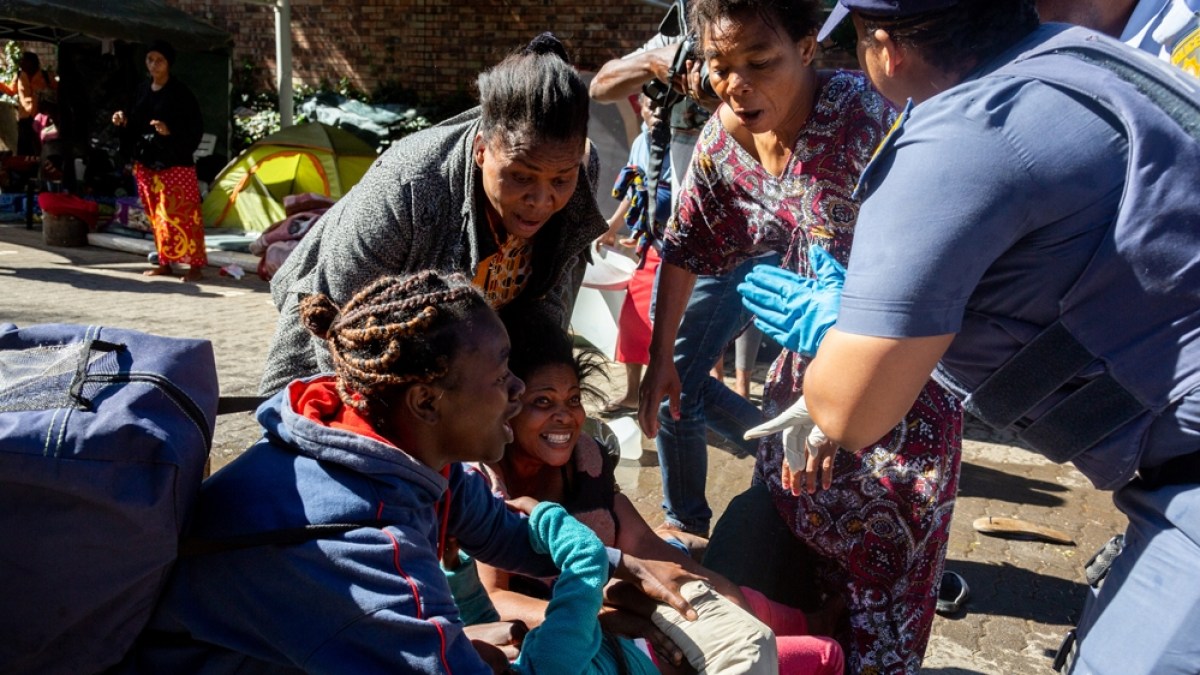
On the street level, the crackdown on illegal immigration has manifested through raids, arrests, and deportations, further emboldening anti-immigrant factions. Yet, the overall situation feels unresolved.
Landau observes that the cyclical nature of these tensions contributes to an escalating conflict. “Even after President Ramaphosa’s announcements, groups like Operation Dudula continue their activities, suggesting that law enforcement measures alone may not effectively address the underlying issues,” he remarked.
*The name Junaid Mohammed is a pseudonym.
