


Nigeria’s Non-Oil Export Sector Faces Challenges Amid Growth Potential
The Nigerian non-oil export sector is grappling with significant challenges related to logistics and energy costs, despite demonstrating substantial growth opportunities, according to a recent report. The “3T Impex Non-Oil Export Index Report 2026,” published on Wednesday, highlights contradictions within Nigeria’s international trade landscape.
Insights from the 3T Impex Trade Consulting Report
Prepared by 3T Impex Trade Consulting, the report synthesizes data from 87,824 export transactions conducted between 2021 and 2025, alongside sentiment analysis from 94 active non-oil exporters across Nigeria’s six geopolitical zones. While exporter confidence remains high, buoyed by global demand, the report identifies significant structural bottlenecks that are undermining these gains. Rising logistics and energy costs are particularly threatening the viability of smaller exporters, forcing many out of the market.
Disparities Between Ambition and Reality
A stark 75-point disparity exists between market ambitions and the operational realities faced by exporters. The Business Confidence Index reached a notable 87.8 out of 100, with 75.5% of exporters reporting actual sales increases and 91.5% anticipating an uptick in global demand. This optimism is echoed in the Forecast Outlook Index, which scored an impressive 92.8, with 83.0% of respondents indicating plans to invest and expand production capacity.
Logistics Challenges Undermine Export Optimism
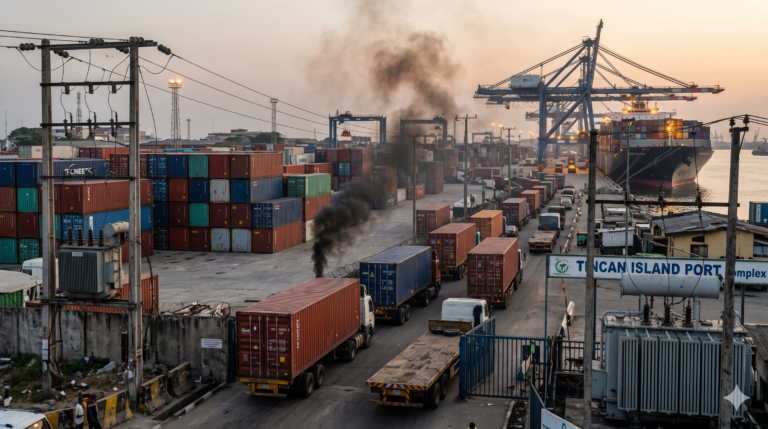
Despite this promising outlook, the Logistics Benchmark Index alarmingly fell to a mere 12.8 out of 100, marking the lowest index in the entire survey. Notably, 77.7% of exporters reported an increase in costs associated with inland transportation and port handling during this timeframe. The report emphasizes that while Nigeria’s non-oil export sector exhibits confidence and growth potential, the logistics benchmark’s dismal score represents a critical structural emergency rather than a mere policy issue.
Operational Hurdles Impede Growth
The report identifies operational hurdles as the primary impediments to scaling up non-oil exports, rather than market demand. It found that 51.1% of exporters regard high energy and processing costs as the largest barrier, prompting a regression to exporting raw goods instead of value-added products. Additionally, 28.7% of respondents cited inadequate quality and standardization as their biggest constraint, underscoring the pressing need for improved certification infrastructure to meet international standards such as the EU Deforestation Regulation (EUDR).
Worsening National Export Risks
Looking ahead, the report warns of increasing national risks, noting that a staggering 71.7% of total exports currently originate from just two Lagos ports—Tincan Island and Apapa. The report projects that Tincan will account for 45.9% of total exports by 2025. While total exports surged by 93% over the past five years, reaching $6.17 billion in 2025, the actual number of transactions declined from 18,280 in 2021 to 16,683 in 2025. This trend indicates that micro, small, and medium enterprises (MSMEs) are increasingly being excluded from the formal export system due to prohibitive logistics costs.
Call to Action for Policymakers
The report highlights several critical indicators revealing a stagnant business environment, including a “Regulatory Efficiency Index” score of 54.8. This suggests that the regulatory framework acts as a passive constraint on export growth. With a Financial Health Index of 52.7, the report indicates that current export growth is occurring amidst a lack of robust support from the financial sector. The authors urge policymakers and financial institutions to undertake immediate actions to address high export costs and support distressed businesses.
The report recommends diversifying export port infrastructure by revitalizing Onne Port to alleviate pressure on Lagos, enhancing grid power reliability in export regions, expanding the NEXIM export credit insurance program, and instituting logistics-related pre-export financing. Additionally, exporters are encouraged to consolidate shipments and prioritize compliance with quality standards. With actionable insights to track exporter sentiment and performance, the report aims to accelerate Nigeria’s efforts toward export diversification and sustainable economic growth.
