


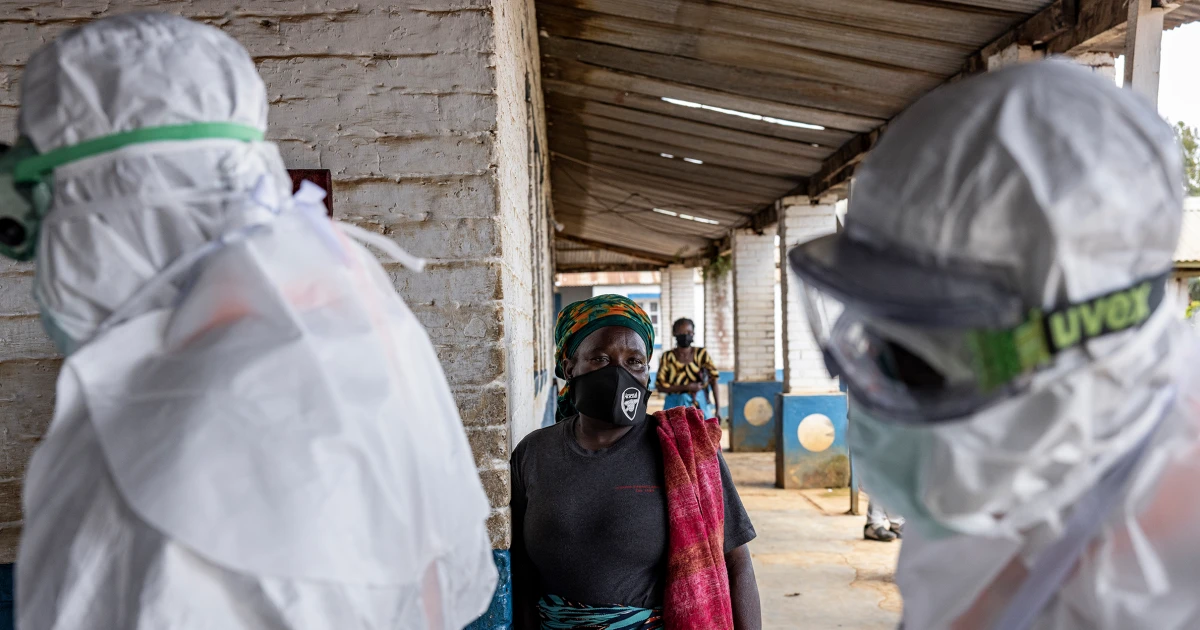
Tragic Loss of Red Cross Volunteers in Ebola Outbreak
In March, the International Federation of Red Cross and Red Crescent Societies (IFRC) mourned the loss of three volunteers believed to have contracted Ebola hemorrhagic fever while providing humanitarian assistance in the Democratic Republic of the Congo. The news underscores the severe risks faced by aid workers in regions affected by infectious diseases.
The volunteers—Arikana Udumushi Augustin, Sezabo Katanabo, and Ajiko Chandil Vivian—died between early May and mid-May. Augustin passed away on May 16, Katanabo followed on May 15, and Vibene succumbed to the virus on May 5.
The IFRC noted that these individuals were among the first reported victims of the outbreak, as the community was largely unaware of the Ebola situation at the time the virus spread. The organization emphasized that these volunteers were engaged in essential work, which included corpse management activities unrelated to the Ebola outbreak.
The volunteers worked with the Mombwar branch of the Red Cross in the Ituri region, identified as the epicenter of the current Ebola epidemic. The IFRC issued a heartfelt statement offering condolences to their families and friends, highlighting the courage and humanity displayed by the volunteers in their service to the community.
Ebola Virus Reaches Uganda
On May 17, the World Health Organization (WHO) declared the virus, originating in Congo, a public health emergency of international concern as it began spreading to Uganda. As of recent reports, there have been 746 suspected cases within Congo, resulting in 176 deaths, adding to the urgency of the situation.
According to the WHO, at least 88 individuals have been confirmed to have the virus, with a reported 10 fatalities, including one in Uganda. Among the affected is an American surgeon who was treated in Germany after contracting the virus during his work in Congo.
Uganda’s Ministry of Health disclosed that the number of infections had risen to five, including a driver who transported the first confirmed case and a health worker exposed while treating him. The recent cases also include a Congolese woman who presented mild abdominal symptoms upon entering Uganda.
Concern Over Rapid Infection Spread
WHO Director-General Tedros Adhanom Ghebreyesus expressed alarm regarding the situation, labeling the outbreak in Congo as “very concerning.” He noted that improving surveillance and clinical testing may alter the case numbers, yet violence and insecurity are hindering effective public health responses.
In response to the outbreak, numerous regional and international organizations, including WHO and the US Centers for Disease Control and Prevention (CDC), have mobilized resources and personnel for emergency support. The US Department of State has committed $23 million in foreign aid to combat the crisis.
The current outbreak is attributed to a strain of the Ebola virus known as Bundibugyo, which is characterized by causing hemorrhagic fever. Unfortunately, there is no approved vaccine or treatment available, further complicating containment efforts. In a precautionary measure, the CDC recently issued a directive restricting entry into the U.S. for foreign nationals who have visited Congo, Uganda, or South Sudan within 21 days prior to arrival.
While U.S. citizens and permanent residents are still permitted entry, they are subject to increased public health screenings at designated airports, particularly in Washington D.C. and Atlanta. Fortunately, the CDC reports that, to date, there have been no suspected or confirmed cases of Ebola in this latest outbreak within the United States.
