


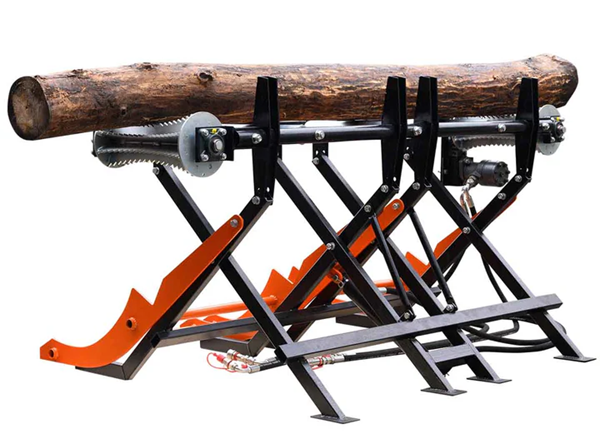
Efficiency in Rural Heating: The Role of Hydraulic Log Lifts
In rural Canada, wood heating remains a prevalent and economically viable method for warming homes and workplaces during the long winter months. Traditional firewood processing involves manually lifting heavy logs, positioning them for splitting, and stacking them into organized piles. Repeatedly lifting logs weighing between 80 and 100 pounds can place significant strain on the lower back and shoulders. Hydraulic log lifts simplify the most physically demanding aspects of this task, enabling landowners to transform fallen trees and storm debris into usable firewood while minimizing physical stress and injury risk.
Real-World Applications
During a harsh winter in Ontario, one property owner employed a hydraulic log lift to process ten logs harvested from storm-damaged trees. These electric lifts eliminate the need for manual lifting, allowing homeowners to complete their tasks without straining their bodies. Many owners noted that the lift quickly pays for itself by reducing potential medical expenses, often within just two seasons.
Design and Mechanism
Hydraulic log lifts are specifically engineered to work alongside standard log splitters. The operator rolls the log onto an elevated lift platform, where a hydraulic cylinder elevates the platform to the appropriate height for splitting. A chain drive infeed then precisely positions the log for splitting. Control is achieved through levers or foot pedals, keeping hands safely away from pinch points. This streamlined two-step process means that tasks typically requiring two people can often be managed by just one.
Key Features of Hydraulic Log Lifts
- Hydraulic lifting mechanism
- Chain drive infeed for accurate positioning
- Foot pedal or lever control for enhanced safety
- Compatibility with most log splitters
- Durable steel construction
- Improved efficiency and reduced physical strain
Impact on Physical Strain
Manual processing of firewood typically entails lifting each log multiple times: first from the ground to the splitting surface and then again for stacking. Handling 100-pound logs multiple times in a season can lead to substantial physical stress. Hydraulic log lifts alleviate this burden, allowing operators to focus on the controlled splitting process. For facilities that process several logs annually, utilizing a hydraulic lift can eliminate over 20,000 pounds of heavy lifting each season. This reduction in physical exertion enables homeowners to continue managing their firewood needs well into older age without the risk of injury.
Safety Practices for Hydraulic Log Lifts
Ensuring safe operation of hydraulic log lifts involves adhering to several essential practices:
- Keep hands away from the lift mechanism to avoid injuries
- Do not exceed the rated lifting capacity
- Inspect hydraulic hoses for leaks prior to use
- Ensure logs are stable on the lift platform during operation
- Lower the lift mechanism when not in use to prevent accidents
Growing Demand and Future Trends
As the rural population ages, the demand for equipment that alleviates the physical demands of outdoor work continues to rise. Hydraulic log lifts empower older homeowners to independently manage their firewood needs while reducing the risk of back injuries. Future designs may introduce features like automatic centering for logs and wireless remote operation. Those engaged in firewood processing should consider hydraulic log lifts as a viable option for managing heavy logs, making the process more efficient and accessible across various scenarios in Canada.
