


Understanding the Roots of Violence in Northern Nigeria
Nigeria often appears in international reports as a nation grappling with instability—a broad label that fails to convey the complexity of its regional crises. Clarifying the country’s security situation requires a nuanced understanding of the specific actors involved. Over the past decade, I have conducted extensive research across Nigeria, particularly in the north, including interviews with victims, local leaders, survivors, and witnesses. My findings challenge the generalized narrative of violence and point to identifiable groups largely responsible for the unrest, particularly in two key regions: the northwest and the north-central areas.
Data from the Observatory for Religious Freedom in Africa (ORFA) reveals a significant number of Christian casualties, even in the predominantly Muslim northwestern provinces. This suggests that the violence stems from deeper issues beyond mere ethnic or economic conflict. It is essential to recognize this crisis as ethno-religious in nature, deeply rooted in ethnic identity while also reflecting religious motivations that warrant serious acknowledgment.
Armed Groups in the Northwest: More Than Just Bandits
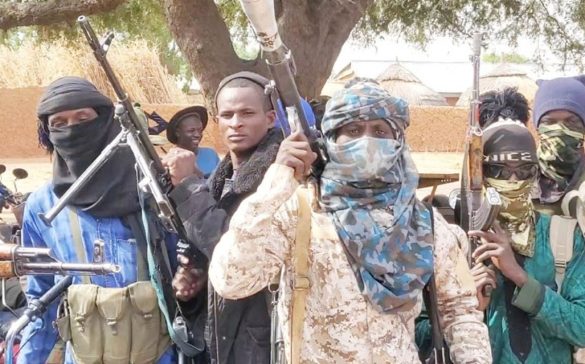
In northwestern Nigeria, encompassing states such as Zamfara, Katsina, Sokoto, Kebbi, and Kaduna, armed groups known colloquially as “bandits” are the primary perpetrators of mass violence. However, this term is insufficient in capturing the complexity of these groups’ operations, ethnic makeup, and religious affiliations.
My research, which includes over a decade of interviews within victim communities, shows that approximately 95% of these perpetrators identify as Fulani. This statistic aligns with findings from credible international and national organizations. It is estimated that around 30,000 Fulani bandits operate in the region, organized into groups varying from ten to about 1,000 members. Rather than being disorganized mobs, these are structured networks that control territory, impose illegal taxes on rural villages, and respond to resistance with lethal force.
The awareness of their ethnic and religious identity was candidly confirmed by Aminu Bello Masari, the former Governor of Katsina State and a Fulani himself. In a September 2021 interview, he openly stated that the bandits are “people like me” and share “the same language and religious beliefs.” His acknowledgment highlights a reality long documented by field researchers and affected communities.
What intensifies the threat posed by these groups is their level of weaponry. Remarkably, a group of bandits even shot down a Nigerian Air Force Alpha Jet on July 18, 2021, showcasing their advanced military capabilities. This does not resemble conventional criminal activity but mirrors rebel operations.
Unpacking the Religious Dimensions in the Northwest
To frame the violence in the northwest purely as criminal or ethnic dispossession overlooks critical demographic factors. ORFA data indicates that northern states with a Christian minority, such as Kaduna and Sokoto, have seen disproportionately high numbers of Christian deaths. The patterns of these attacks are not random; churches have been targeted, and numerous witnesses report assailants chanting “Allahu Akbar” during assaults. While not every attack may be officially designated as a religious conflict, the presence of religion often serves as a defining factor in determining who is victimized.
The historical context of the Usman Dan Fodio Jihad from the early 19th century still resonates within segments of the Fulani community. This does not equate all Fulani herdsmen with jihadists, but it underscores the ethno-religious character of the violence. Ethnicity and religion reinforce each other both in motivations and execution, making the term “ethno-religious war” far more accurate than labels like “religious warfare” or simple crime. In specific locales like Faskari Local Government Area in Katsina State, the documented deaths of Christians highlight a systematic targeting rather than random violence.
Additionally, the connection of bandit groups with declared jihadist networks complicates an already precarious situation. Outfits such as ISWAP and Boko Haram have claimed attacks in the northwest, suggesting some bandit factions maintain links with jihadist organizations.
Middle Belt: A Different Framework for Violence
In Nigeria’s Middle Belt, which includes states like Plateau, Benue, Nasarawa, Taraba, Niger, and Kwara, the narrative shifts slightly, although the identity of the perpetrators remains similar. Here, armed groups are often labeled as “armed herdsmen.” My decade-long research in this region leads to conclusions that mirror those found in the northwest: at least 95% of the attackers are of Fulani descent.
The recent attacks in Plateau State, which left at least 200 people dead, and the brutal June 2025 attack in Benue State, where at least 258 Christians were murdered, are indicative of a disturbing trend. These assaults are part of an ongoing and escalating cycle of violence against settled rural communities, particularly those that are predominantly Christian.
Nasarawa State’s Role in the Violence
Investigations suggest that some of the most dangerous Fulani extremist groups do not merely originate within the affected states. Several armed factions operate from known encampments in Nasarawa State, facilitating coordinated raids in Plateau, Benue, and other Middle Belt locations. This cross-border operational pattern complicates local security responses, allowing extremist networks to launch attacks while evading jurisdictional constraints.
Ethno-Religious Motivations Behind Attacks
The ethno-religious nature of the violence in the Middle Belt is well-documented. Survivors and witnesses affirm that attacks often include the burning of churches, intentional targeting of Christian places of worship, and the chanting of religious phrases during assaults. Moreover, clergy and their families frequently find themselves targeted, indicating motives that transcend mere disputes over land and resources.
The Need for a Focused Response
Understanding the precise nature of the violence in northern Nigeria is crucial for policymakers, humanitarian organizations, and international observers. The crises are not faceless nor random; they are driven by organized groups, primarily of Fulani origin, with sophisticated weaponry and clear ethnoreligious motivations. This complexity cannot be distilled into simplistic labels like “peasant-herder conflict.”
Framing the situation merely as ethnic or agricultural disputes undermines the reality of targeted violence and obscures the systematic nature of attacks on civilian populations. Data from ORFA clearly illustrates that Christian communities suffer the majority of fatalities, disproving any narrative of mutual fault between factions. For effective intervention and to save lives, it is essential to acknowledge the specific perpetrators and the underlying motives driving this ethno-religious violence.
Stephen Cefas has dedicated over ten years to field research in northern Nigeria. Data referenced from ORFA (Observatory for Religious Freedom in Africa) is available at www.orfa.africa. For previous reports on these communities, visit the author’s articles at www.middlebelttimes.com.
