


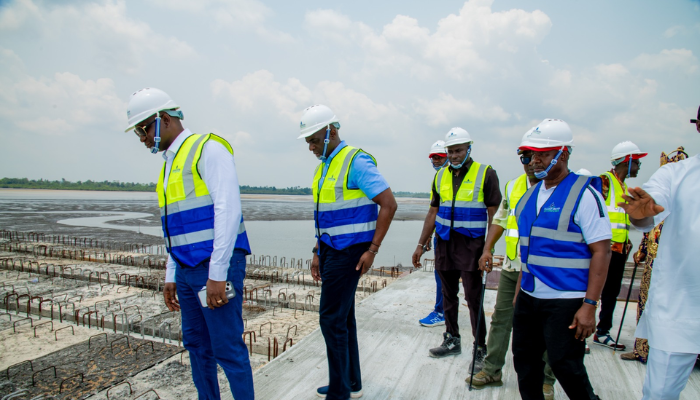
NDDC Leadership Visits Kaa Ataba Bridge Project
Samuel Ogbuku, the Managing Director of the Niger Delta Development Commission (NDDC), along with Board Chairman Chiedu Ebie, inspected the ongoing construction of the Kaa Ataba Bridge, a significant infrastructure project for the Niger Delta region.
NDDC Prioritizes Legacy Infrastructure Projects
In recent discussions, critics have urged the NDDC to concentrate on major initiatives that could leave a lasting impact on the oil-rich region, addressing gaps where other governmental tiers have not. Such efforts are already underway in various projects, including the Nembe Road Project, Bonny Ring Road, and the Okrika-Borokiri Bridge, along with power initiatives across the region.
Kaa Ataba Bridge: A Vital Connection
The Kaa Ataba Bridge stands as a prime example of the NDDC’s commitment to legacy infrastructure. For years, the only means of transport between Karna in Khana Local Government Area and Ataba in the Andoni LGA of Rivers State were boats. Merchants, farmers, students, and patients often risked their lives crossing the rivers, facing multiple hazards. However, construction of the Kaa Ataba Bridge, one of the European Commission’s most significant projects in the region, is nearing completion.
Technical Challenges and Project Overview
Spanning 1.2 kilometers, the bridge will connect the Khana and Andoni LGAs, integrated into a larger 2-kilometer dual-lane roadway designed to enhance development in the adjacent riverside communities of Ogoni and Andoni. The project has faced challenges due to the difficult wetland soil conditions, necessitating extensive dredging and advanced soil stabilization techniques for foundational stability.
NDDC’s Commitment to Development
The current NDDC Board has fast-tracked this multi-billion-naira project, with Ogbuku describing it as “one of our most ambitious legacy projects,” and noting it is the longest bridge in the Niger Delta and one of the longest nationwide. He emphasized the board’s resolve to realize the Federal Government’s New Hope Agenda within the Niger Delta, affirming a commitment to meeting the President’s expectations.
Community Impact and Expectations
Ogbuku believes that the timely inauguration of the bridge by President Bola Ahmed Tinubu could coincide with his third anniversary in office. To ensure adherence to quality and timelines, close collaboration with site engineers has been established. The NDDC is confident that the contractors’ commitment will result in successful and on-schedule delivery of the bridge.
Local Support and Future Prospects
The Chairman, Chiedu Ebie, underscored the project’s significance as a testament to the Federal Government’s commitment to the Niger Delta. He reiterated that the contractor is on track to meet scheduled completion in 2026. Local leaders, including King Benson Egwenle of the Ataba people, expressed their optimism, recognizing the bridge’s potential to transform socio-economic conditions in their communities.
Enhancing Economic and Social Connectivity
The Kaa Ataba Bridge symbolizes more than just infrastructure; it represents improved safety, trade, and access for local residents. With the completion of the bridge, farmers will have better access to markets, and health care services can reach communities faster. Both community leaders have pledged their support for the project, ensuring cooperation with contractors to guarantee timely completion. This infrastructure development marks a significant step toward fulfilling the aspirations laid out by the Willinks Commission in the 1960s, connecting remote riverside communities with urban centers and enhancing overall regional safety and economic activity.
