


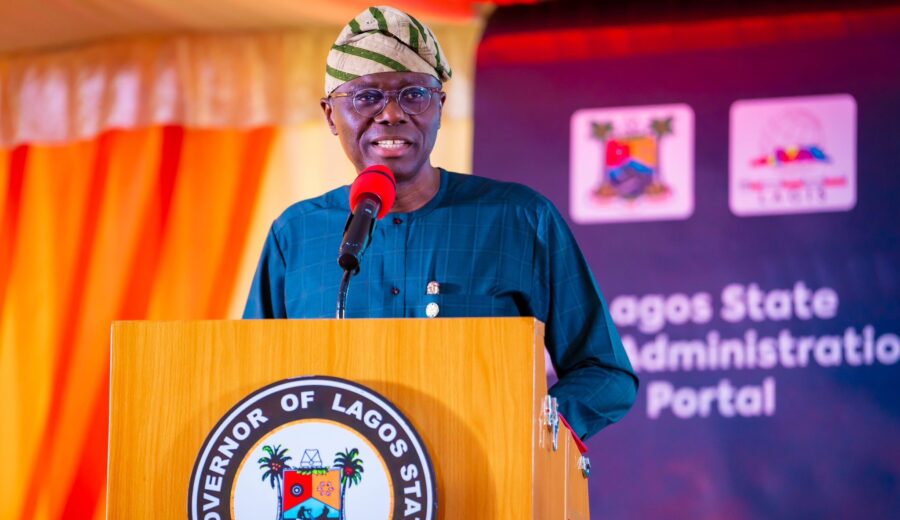
Lagos State Government Establishes Leadership for Independent Electricity System Operator
The Lagos State Government has officially inaugurated the leadership team of the Lagos State Independent System Operator (LAISO), a pivotal entity designed to enhance the efficiency, reliability, transparency, and security of the electricity market in Lagos.
This announcement was made by the Lagos State Ministry of Energy and Mineral Resources, detailing the formation of LAISO’s board and management team. LAISO was established in accordance with the Lagos State Electricity Law (LSEL) 2024, which underscores a commitment to reforming the energy sector in the state.
This initiative represents a significant step forward in the ongoing power sector reforms in Lagos, following Governor Babajide Sanwo-Olu’s endorsement of the Lagos Electricity Bill 2024 in December. The newly established law aims to foster a more autonomous and effective electricity market, positioning Lagos closer to achieving its ambitious goal of a 24-hour electricity supply.
Significance of LAISO’s Role in Energy Supply
The state government has indicated that LAISO will be crucial in ensuring the reliability of electricity throughout Lagos by overseeing the power grid and managing the wholesale electricity market. This operational framework is vital for the effective functioning of the Lagos electricity market and includes various essential market activities.
To lead the organization, a board of directors has been appointed. The board will be chaired by Mr. Biodun Ogunleye, a former Commissioner for Energy and Mineral Resources in Lagos, with Professor Lanre Fagbohun serving as vice-chairman. Additional board members include Mr. Abayomi Oluyomi, Mr. Ibilola Kasunmu, Mr. Mukhtar Tijani, and Mr. Oladimeji Esa Taiwo, who will also be the managing directors of LAISO.
Strategic Direction and Governance
The board is tasked with providing strategic guidance, overseeing policies, and ensuring strong corporate governance for LAISO. The collective expertise of board members in engineering, finance, law, regulation, and risk management is expected to facilitate the successful operation of the organization.
As part of its governance framework, LAISO aims to establish a sector group committee that includes licensed users of the Lagos electricity grid and registered market participants. This committee will serve as a platform for stakeholder engagement, promoting collaboration among generation companies, distribution firms, embedded generators, and other market participants.
Operational Management Team with Extensive Experience
The management team responsible for LAISO’s daily operations will include Oladimeji Esa Taiwo as Managing Director, Adetunji Bashir Adesanya as System Operator, and Bunmi Benson as Market Operator. Taiwo boasts over three decades of experience in financial system regulation and corporate leadership, including tenures at the Central Bank of Nigeria. Mr. Adesanya brings more than 35 years of expertise in power transmission operations, while Mr. Benson’s background encompasses energy regulation and market governance.
The formation of the board and management team marks a significant milestone in the development of the Lagos State Electricity Market. This governance structure reaffirms the state’s commitment to creating a reliable, competitive, transparent, and investor-friendly power sector, which is essential for attracting investments and fostering economic growth.
Context of Ongoing Electricity Reforms in Nigeria
This recent wave of electricity reforms aligns with the Electricity Act signed by President Bola Tinubu in June 2023, which established a legal framework permitting states to regulate their electricity generation, transmission, distribution, and supply. Lagos State has since taken steps, alongside other regions, to create its regulatory framework for the local electricity market, as noted by the Nigerian Electricity Regulatory Commission (NERC).
The ratification of the Lagos Electricity Act in December 2024 has initiated extensive implementation activities, further engaging the private sector in the state’s energy landscape. Additionally, the government has entered into power purchase and concession agreements with three independent power producers (IPPs), aiming to bolster electricity generation capacity from 200 MW to 400 MW in the immediate future.
