


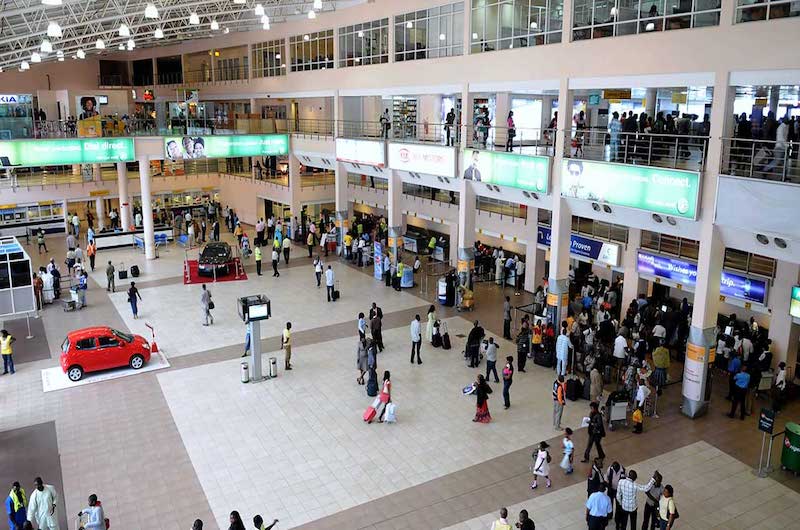
Nigeria’s Murtala Muhammed International Airport Among Africa’s Busiest
Murtala Muhammed International Airport (LOS) in Lagos has emerged as one of Africa’s top 10 busiest airports. In June 2026, the airport achieved the highest year-on-year growth rate across the continent, driven by a remarkable increase in domestic travel demand.
Significant Capacity Increases Highlight Nigeria’s Growth
Data released by global aviation analytics firm OAG revealed that Nigeria experienced Africa’s largest capacity increase in absolute terms, adding 130,200 seats to its domestic network. This surge translates to a 21.7 percent year-on-year growth in domestic capacity, reflecting an unrelenting appetite for air travel despite ongoing economic challenges in the region.
Lagos Secures a Top 10 Spot in Continental Rankings
The robust domestic demand propelled Lagos into the continental top 10, securing the 10th position. According to OAG, the airport saw a 16.7 percent increase in total airline seat capacity, with available seats rising from 357,799 in June 2025 to 417,622 in June 2026.
Steady Growth Among Other Major Airports in Africa
Cairo International Airport (CAI) in Egypt retained its status as Africa’s busiest gateway, managing 1,655,250 seats—a 4.0 percent year-on-year increase, primarily fueled by the growth of EgyptAir and local low-cost airlines. Meanwhile, Addis Ababa Bole International Airport (ADD) in Ethiopia recorded strong growth of 8.9 percent, handling 1,135,516 seats and securing the second position.
Southern Africa’s Aviation Hub Maintaining Momentum
Tambo International Airport (JNB) in Johannesburg, the region’s main economic center, held steady in third place with 1,066,582 seats, marking a modest increase of 2.4 percent. South Africa continues to dominate the continent’s domestic market, offering 1.5 million seats in June.
Significant Seat Growth Across Various Airports
Mohammed V International Airport (CMN) in Casablanca, Morocco, observed a 6.1 percent increase, reaching 665,922 seats, further establishing its key role in connecting Africa with Europe and the Americas. Meanwhile, Houari Boumediene International Airport (ALG) in Algiers climbed to fifth place with 532,381 seats, backed by an 11.2 percent capacity increase from Air Algeria.
Increasing Demand from Tourists Fuels Growth
Cape Town International Airport (CPT) recorded 515,746 seats, marking a 4.1 percent rise. Marrakech Menara Airport (RAK) also benefited from a surge in holiday travel, with seat capacity increasing by 7.5 percent to 496,926. Jomo Kenyatta International Airport (NBO) in Nairobi retained its eighth position with 486,910 seats, despite facing an 18.7 percent decrease in Kenya’s domestic market.
Local Airlines Capitalizing on Domestic Demand
The competition among Africa’s airlines is reflected in the expanding capacities of these airports. Ethiopian Airlines remains the leading carrier, offering 2 million seats this month alone—a 10 percent increase compared to last year. North African airlines like Air Algeria and Royal Air Maroc are closing in, with annual growth rates of 11.2 percent and 10.8 percent, respectively.
Nigeria’s impressive 21.7 percent growth in domestic seat capacity underscores how local airlines are actively seeking to meet rising demand. As Lagos establishes itself among Africa’s top 10 aviation hubs, attention must turn to enhancing terminal infrastructure to prevent logistical bottlenecks and ensure seamless travel experiences.
