


Immigration Advocates Celebrate Legislative Wins in Maryland
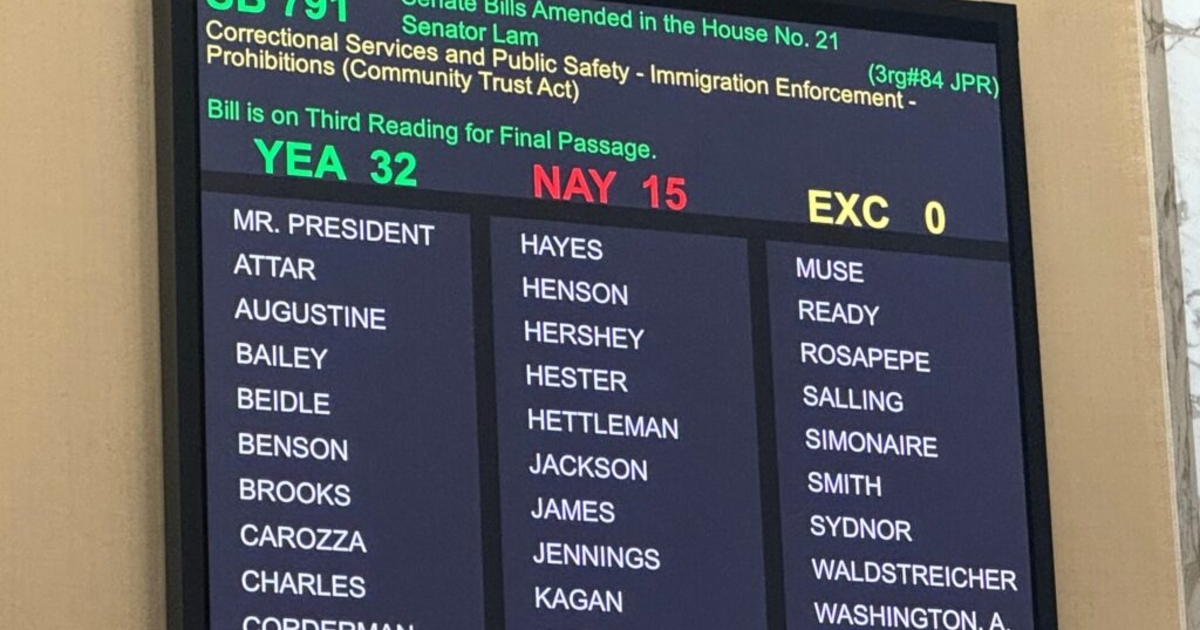
A year after facing significant setbacks during the 2025 legislative session, immigration advocates in Maryland experienced a surge of support for their initiatives on Monday night. In a notable development, the Senate approved House amendments to Senate Bill 791 with a 32-15 vote, designating the bill as an emergency measure that would take effect immediately upon the governor’s signature, rather than on October 1. The primary focus of this legislation is to further limit state and local agencies’ cooperation with Immigration and Customs Enforcement (ICE).
Legislative Progress on Critical Bills
In addition to SB 791, lawmakers granted final approval to legislation that makes it a civil violation for law enforcement officers to wear masks in most instances while on duty. Another bill introduced safeguards to prevent the release of personal information to immigration authorities.
A Journey Through High-profile Deliberations
The passage of SB 791, known as the Community Act, culminated five days of intense discussions. The Senate Judiciary Proceedings Committee initially approved the bill last Thursday after it had stalled in committee for some time. Following its passage in the Senate on Friday, the House made amendments during a lengthy session on Saturday before sending it back to the Senate, which subsequently accepted these changes and forwarded the bill to the governor.
Political Divide in the Senate
While the bill found bipartisan support, two Democrats—Sen. Carl Jackson of Baltimore County and Sen. Mary Dulaney James of Harford—joined all 13 Republicans in opposing it. Nevertheless, the legislation surpassed the three-fifths threshold of 29 votes required for the passage of emergency measures in the 47-member Senate.
Grassroots Advocacy Fuels Momentum
This vote came shortly after a rally outside the state Capitol led by the immigrant advocacy group We Are CASA. The rally aimed to urge Congress to pass the Community Trust Act, pushing the momentum for legislative progress. CASA staff and members, including Executive Director George Escobar, consistently attended sessions in Annapolis to advocate for the bill’s passage through both chambers of Congress.
Community Trust Act’s Significance
Escobar emphasized the importance of the Community Trust Act, stating that it would significantly reduce instances of illegal cooperation, which he claims amplified negative aspects of the previous administration’s initiatives. He expressed optimism that the legislation would foster trust within communities toward law enforcement and local officials.
Opposition Voices Concerns Over Public Safety
Senate Republicans voiced strong opposition to the bill during a nearly 40-minute debate before the final vote. Senator Johnny Mautz from Middle Shore characterized the legislation as detrimental to public safety. Despite these concerns, supporters argue that the bill effectively closes loopholes in existing law, particularly those allowing local law enforcement and jails to detain individuals based solely on their immigration status or requests from ICE.
New Requirements for Federal Detention
The approved legislation specifies who may be detained based on immigration status in local or state correctional facilities, detailing four scenarios involving serious criminal convictions. Furthermore, it mandates that federal officers present judicial warrants for detentions, a step up from the administrative warrants currently in circulation. Critics, including Sen. Jack Bailey from Calvert and St. Mary’s, argue that this measure will hinder collaboration between local law enforcement and federal agencies that work together to combat crime effectively.
