


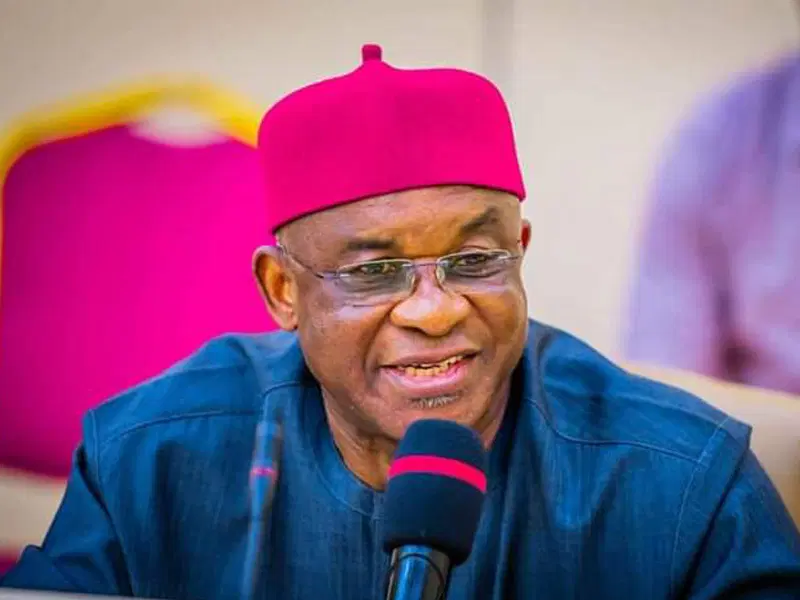
David Mark Criticizes APC Performance at National Opposition Summit
Former Senate President and National Chairman of the African Democratic Congress (ADC), David Mark, delivered a sharp critique of the ruling All Progressives Congress (APC) on Saturday, describing its governance as a failure. His remarks came during the National Opposition Summit held in Ibadan, where he highlighted the administration’s shortcomings.
Mark expressed his deep concerns regarding the current state of elections in Nigeria and warned that the Independent National Electoral Commission (INEC) risks presiding over what could become the most discredited electoral process in the nation’s history. His comments underscored a growing apprehension about the integrity of the electoral framework.
According to Mark, the APC’s tenure has been characterized by a pervasive reliance on propaganda rather than tangible achievements, which, he argued, detracts from genuine governance. “The record of the APC government illustrates a reliance on misinformation and persistent attacks on dissenting voices,” he stated. He emphasized that the opposition would not engage in the “propaganda race,” insisting that integrity and truth must prevail.
Mark criticized the administration’s communication strategy, suggesting that it is marked by a significant lack of accountability and integrity. “Nigerians are observing closely and are not misled by the smokescreens and fabrications,” he added. He noted that there is a palpable sense of disillusionment among the populace, who feel that their struggles have been met with indifference.
In a broader context, Mark indicated that the ongoing challenges extend beyond typical partisan disputes, suggesting that ordinary Nigerians have emerged as a de facto opposition to the current leadership. “This isn’t just a conventional political battle; it is a conflict between the APC and the Nigerian people, who feel ignored and marginalized,” he stated.
Mark further analyzed the implications of the recent cabinet reshuffle, arguing that it serves as a tacit acknowledgment of policy failures. He remarked, “Effective systems do not necessitate such late adjustments. Changes at this juncture cannot shield the government from the judgment of the electorate.” His comments reflect a significant concern regarding the stability and effectiveness of the current administration.
On the topic of electoral integrity, Mark raised alarms about a perceptible decline in public trust towards INEC. He claimed that the credibility and legitimacy of the electoral process hinge on the neutrality of the commission, warning that any visible bias could have dire ramifications. “For our democracy to flourish, we must have an INEC that is an impartial arbiter; otherwise, public confidence will continue to erode,” he cautioned.
In an appeal for unity among opposition parties, Mark urged leaders to prioritize the national interest over personal ambitions during this pivotal time in Nigeria’s political landscape. He stated, “Now is the time for us to unite, sacrifice, and place our nation above individual aspirations.” Mark expressed hope that the discussions initiated at the Ibadan summit could ignite a robust movement aimed at rejuvenating democratic ideals and reinforcing national institutions.
He concluded by condemning government efforts to undermine opposition strength, labeling such tactics as undemocratic. “We must remain vigilant; the forces seeking to divide us will persist. Unity, transparency, and trust are essential to our success,” he stressed, introducing a clarion call for a cohesive front among opposition stakeholders as they navigate these turbulent political waters.
