


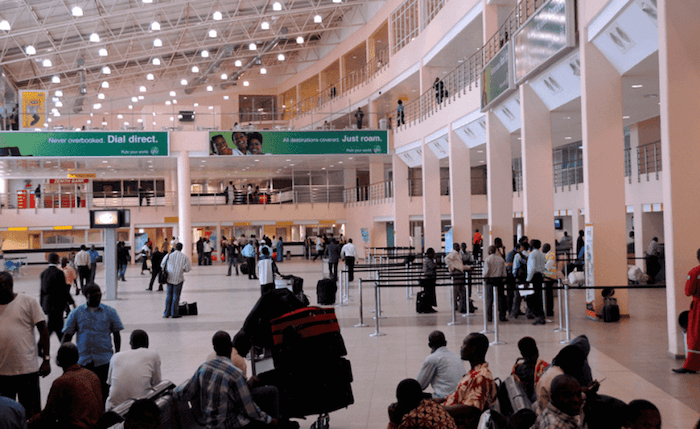
Murtala Muhammed Airport Terminal 2 Launch Brings New Hope Amid Infrastructure Concerns
The long-anticipated launch of regional operations at Murtala Muhammed Airport Terminal 2 (MMA2) is seen as a welcome development for Lagos, aiming to alleviate the chronic congestion at Nigeria’s busiest international airport. This change promises to provide passengers with increased options and improve the airport’s overall flow as it grapples with a substantial rise in air traffic, projected to grow by 11.8% in 2025, the highest rate recorded in Africa.
However, officials in the aviation sector caution that inadequate infrastructure may pose challenges to this initiative’s success. Currently, Murtala Muhammed International Airport (MMIA) accommodates over 4.3 million international passengers annually, yet it struggles with persistent apron constraints and terminal overcrowding.
A recent 20-year legal settlement between the federal government and Bycourtney Aviation Services Limited was designed to provide immediate relief, yet concerns regarding MMA2’s operational readiness linger. Seyi Adewale, CEO of Mainstream Cargo Limited, provides a more optimistic view, highlighting that relocating regional flights to MMA2 is likely to ease congestion in the existing international terminal.
Shifts in Airline Operations and Passenger Accessibility
“Some airlines might opt to operate in the international sector, while others may transition to the domestic sector based on their economic viability,” noted Adewale. He emphasized that MMA2 is aiming to attract airlines that frequently operate regional flights, thus improving passenger access to transportation options and local roadways, in stark contrast to the restrictive international wing.
In a significant development last year, United Nigeria Airlines inaugurated its first flight to Accra, Ghana, marking its third entry into West Coast operations, joining Air Peace and Ibom Air. United Nigeria utilized Bombardier CRJ 900s for this route but plans to transition to Embraer E145s, which each seat 50 passengers.
Competition among foreign airlines for regional flight routes is also intensifying. For instance, Accra-based Africa World Airlines (AWA) currently offers two daily flights to Lagos and is set to increase this number to three. Meanwhile, Air Peace currently services at least nine regional destinations in West and Central Africa, connecting cities such as Abidjan, Banjul, Dakar, Douala, Freetown, and Monrovia.
Despite Air Peace’s broad network, the ease of connections offered by Asky Airways, which operates from an airport without a separate domestic terminal, sets a benchmark for efficiency. Officials assert that the introduction of this facility will significantly enhance travel to various African destinations as regional flight traffic accelerates.
Concerns over Infrastructure and Transfer Inefficiencies
Critics have raised concerns about potential bottlenecks due to the absence of dedicated remote parking and airside connectivity at MMA2. Alex Nwuba, President of the Aircraft Owners and Pilots Association of Nigeria, warned of a frustrating “transfer trap” for international passengers.
Currently, travelers transferring from international to regional flights at MMA2 must clear immigration, retrieve their baggage, and physically exit the terminal before re-entering the domestic terminal. This cumbersome process prolongs travel times and detracts from the convenience offered by modern airport hubs in cities like Accra and Lomé.
Nwuba explained that while relocating some flights to MMA2 may relieve certain pressures within Lagos International Airport, it does not address the core congestion issues. International arrivals will continue to be processed at the existing terminal, perpetuating crowding and stress in the arrival areas and baggage handling systems.
Resolution of Bi-Courtney’s Concession Dispute
The concession agreement with Bi-Courtney has been a contentious issue for years. Despite the airline’s considerable investment exceeding 600 million naira, its authorization to operate regional flights was rescinded under former President Goodluck Jonathan. Aviation Minister Festus Keyamo recently announced developments following a Federal Executive Committee (FEC) meeting.
Keyamo revealed that the agreement with Bycourtney’s leader, Wale Babalakin, effectively settled disputes arising since 2003, primarily revolving around the concession’s claimed coverage of the adjacent MMA1 domestic terminal, an assertion supported by the Supreme Court.
Revised Terms and Financial Arrangements
The newly reached agreement sees Bycourtney waiving debts, relinquishing control of MMA1 back to federal authorities, and eliminating exclusivity clauses. In exchange, the government will reinstate concessions related to a stalled hotel and conference center project near MMA2, fostering revenue sharing between the federal government and the airport’s concessionaires.
“As of today, the federal government will start benefitting from operations at MMA2,” Keyamo announced. However, industry expert John Ojikutu, CEO of Centurion Aviation Security & Safety Consult, advised that effective management is crucial for the terminals to relieve congestion in the international sector.
Ojikutu highlighted that while facilitating regional air links was part of the concessions established in 2006, the current issues stem from political delays rather than straightforward policy challenges. He compared the situation to discrepancies surrounding the sale of the Port Harcourt refinery, asserting that personal profit, rather than national progress, often drives developments within Nigeria’s civil aviation sector.
