


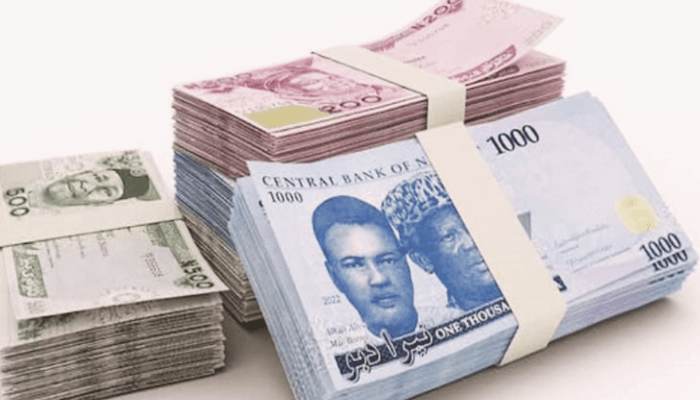
Naira Sees Modest Gains Against the US Dollar Amidst Low Trading Volume
On Thursday, the Naira experienced a slight uptick against the US dollar in the official foreign exchange (FX) market, despite a complete lack of trading activity on the Nigerian Foreign Exchange Market (NFEM).
Data from the Central Bank of Nigeria (CBN) indicates that the Naira appreciated by 4.52 Naira, bringing the dollar exchange rate to 1,374.94 Naira. This marks a 0.33% increase from the previous day’s rate of 1,379.46 Naira at the NFEM.
Stability in Parallel Market with Growing Exchange Rate Discrepancy
In the parallel market, commonly referred to as the black market, the local currency remained steady at 1,400 Naira to the dollar, consistent with last week’s rate. Consequently, the gap between the official exchange rate and the parallel market rate widened to 26 Naira from 21 Naira the prior day.
Decline in Foreign Exchange Reserves Raises Concerns
Nigeria’s foreign exchange reserves, which provide a buffer for the central bank, continued their downward trend, falling to $48.36 billion as of April 29, 2026, according to data from the apex bank.
Liquidity Crunch Evident as Market Activity Dwindles
The market faced a sharp slowdown, with no trades recorded on the NFEM for Thursday, a stark decline from 393 trades the previous day. The total sales from official channels plummeted from $802.44 million to zero, underscoring a significant liquidity crisis. Without any trades executed at official counters, price formation was solely reliant on the interbank sector, which also saw a marked decrease in turnover—from $249.91 million to $58.03 million—indicating widespread liquidity challenges within the foreign exchange market.
Analysts Cautious About Naira’s Rise Under Thin Trading Conditions
Market analysts caution that the Naira’s rise amid such limited trading conditions may not genuinely indicate market strength. Instead, it reflects the effects of restricted trading in an illiquid environment, which can distort pricing.
Structural Changes in Nigeria’s Financial Markets Seek Greater Transparency
Meanwhile, Nigeria’s financial markets are undergoing significant structural changes aimed at enhancing transparency and pricing efficiency. The introduction of the Nigerian Overnight Financing Rate (NOFR) serves as a benchmark designed to align local practices with international standards. Analysts from the Financial Market Dealers Association (FMDA) assert that benchmark interest rates are foundational for establishing other interest rates. Just as fluctuations in fuel prices impact transportation and food costs, shifts in benchmark rates affect loan prices, asset valuations, and financing costs within the financial ecosystem.
Clarification on NOFR’s Role in Loan Pricing
The Central Bank of Nigeria has clarified that the NOFR will not dictate loan interest margins or the overall cost of borrowing, which remains influenced by factors such as credit risk, tenor, and specific contract terms. While the NOFR provides a useful reference point, the ultimate pricing of each trade will still depend on the unique risk profile and structure of that transaction.
