


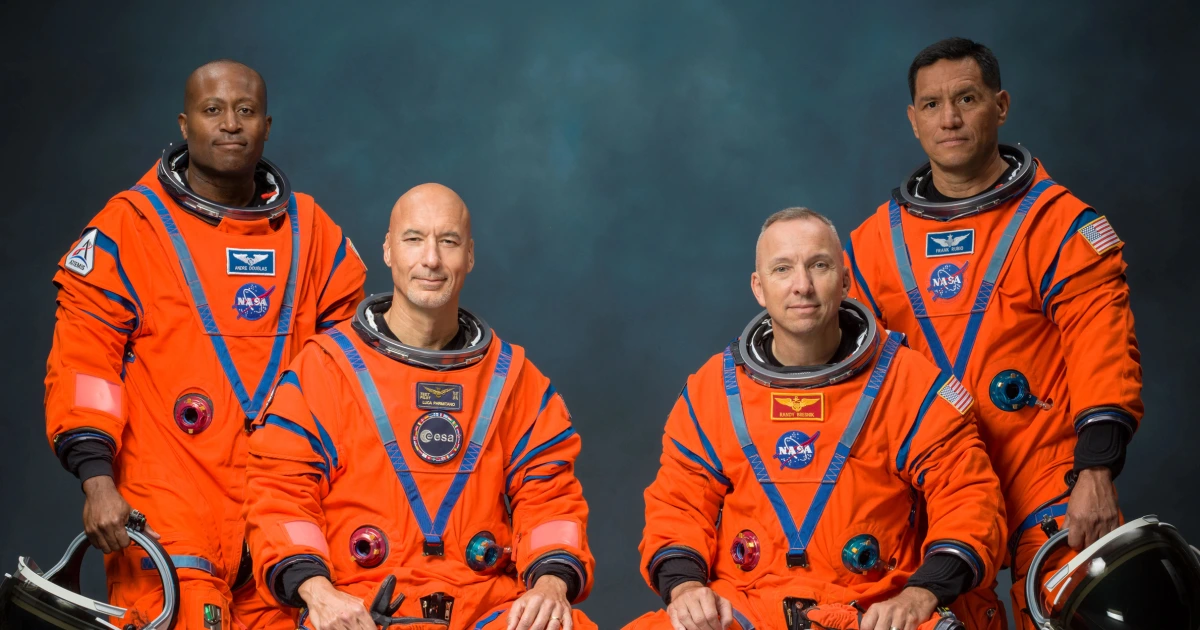
NASA Announces Artemis III Astronaut Crew
NASA has officially named the four astronauts who will participate in the upcoming Artemis III mission, marking a significant milestone in its initiative to return humans to the moon.
Astronauts Assigned to Lunar Mission
Scheduled for launch next year, astronauts Randy Bresnik, Luca Parmitano, Frank Rubio, and Andre Douglas will orbit Earth to evaluate two commercial lunar landers being developed for a potential moon landing in 2028. Bresnik will act as mission commander, while Parmitano, representing the European Space Agency, will serve as the pilot. Douglas and Rubio are designated as mission specialists, with Bob Hines training as a backup crew member.
Commercial Competitive Landscape
Elon Musk’s SpaceX and Jeff Bezos’ Blue Origin are vying to create the lunar lander that Artemis III will put to the test. Both companies have provided optimistic updates regarding their progress on the lander design.
Mission Objectives and Pilot Operations
This test flight is a crucial opportunity for NASA to demonstrate its ability to execute meticulously planned missions in a complex space environment. Jeremy Parsons, NASA’s Artemis program manager, emphasized the importance of this mission in validating hardware interfaces, software systems, and crew life support functionalities.
Planned Duration of Artemis III Mission
Expected to last approximately two weeks, Artemis III will extend for four days longer than the Artemis II mission, which successfully orbited the moon earlier this year. This mission serves as the final preparatory step for Artemis, with NASA aiming to achieve a lunar landing during Artemis IV.
Building Towards a Sustained Lunar Presence
Nasa’s long-term goal is to establish a permanent human presence on the moon. This year, the agency revealed plans to invest $20 billion in constructing a lunar base. Initially envisioned as a direct lunar landing mission, the Artemis III plans were restructured under NASA Administrator Jared Isaacman, who accelerated mission timelines and added extra milestones.
Recent Setbacks and Future Expectations
Despite recent challenges—including an explosion of a Blue Origin rocket during engine tests—optimism persists regarding the timeline for spacecraft readiness. John Coulis, the company’s senior vice president for lunar permanence, reported that efforts are on track for the completion of the Artemis III vehicle by 2027. NASA is also preparing for unmanned missions later this year to scout the moon’s south pole in anticipation of future crewed missions.
Launch Preparations for Artemis III
For the Artemis III launch, NASA plans to replicate the successful configuration used in Artemis II. The crew will embark aboard the Orion spacecraft, which will be launched atop a Space Launch System rocket from the Kennedy Space Center in Cape Canaveral, Florida, paving the way for humanity’s return to the moon after over five decades.
