


Nigeria’s Absence from BRICS Membership Raises Concerns
Despite not expressing a clear interest in joining BRICS, a coalition devised to facilitate rapid development among its member countries, the prospect of membership could significantly benefit Nigeria. Such inclusion would bolster Nigeria’s stature as a valuable player on the global stage. However, for Nigeria to aspire to this membership, a substantial improvement in its social, economic, and political conditions is essential.
The Shift Towards a Multipolar World Order
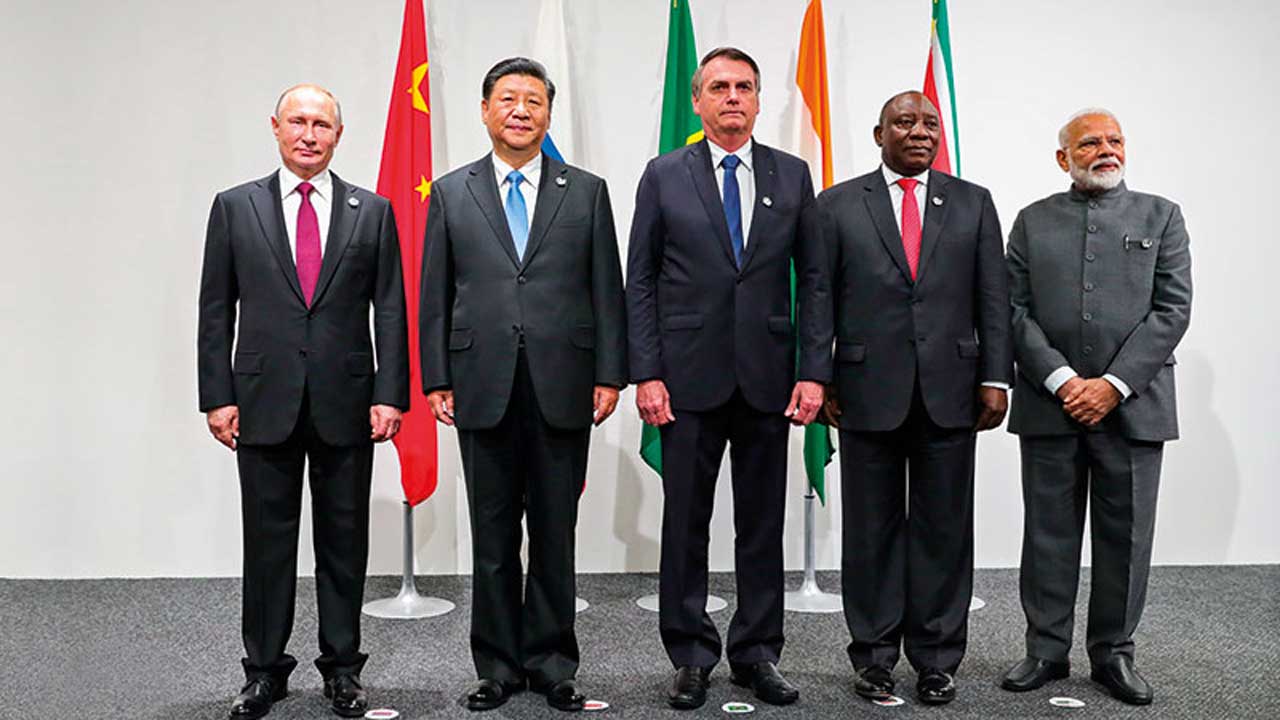
The global landscape is undergoing a transition towards a more decentralized and multipolar world, challenging the long-established power dynamics stemming from post-World War II and the Cold War era. Emerging economies—including Brazil, China, India, and Russia—are gaining prominence and forming a counterpoint to the traditional Western consensus led by the United States. The formation of BRIC in 2009, which later became BRICS with the addition of South Africa in 2011, exemplifies this shift, as these nations unite to foster economic power independent of Western influence.
Objectives and Economic Significance of BRICS
BRICS seeks to promote peace, security, and development through cooperative efforts unbound by the constraints imposed by dominant global powers. The goals include contributing significantly to global development and crafting a more equitable world. Collectively, BRICS nations represent considerable economic weight, with China, Brazil, Russia, and South Africa being influential global players—with China being the second-largest economy and Brazil ranking sixth. Together, these countries project that their share of global production could rise to one-third by 2030.
Challenges Facing Nigeria’s BRICS Aspirations
Unfortunately, Nigeria’s potential membership in BRICS is complicated by its economic fundamentals, which currently do not align with the criteria expected from BRICS nations. Given that the core countries of BRICS are industrialized, the question arises: what can Nigeria contribute? Its economy is disproportionately reliant on oil, a sector plagued by challenges such as theft, which undermines its production capacity far below its OPEC quota of 1.8 million barrels per day.
Evaluating Nigeria’s Global Engagement
The lack of active engagement in international organizations highlights a troubling disconnect between Nigeria’s aspirations and its current realities. Former Finance Minister Ngozi Okonjo-Iweala acknowledged Nigeria’s merits as a potential BRICS candidate, emphasizing its massive population and resource potential. Nevertheless, despite such optimism, Nigeria’s economic conditions have left it struggling to establish itself among aspirant nations like Iran and Argentina, further tightening the competition as other countries express interest in BRICS membership.
Nigeria’s Foreign Policy Decline
The current ambiguity surrounding Nigeria’s foreign policy objectives raises critical questions about its national priorities and strategies. Observers have noted disarray and inconsistency in Nigeria’s external engagements, especially given its historical role as a leader in Africa during pivotal moments, such as the fight against apartheid. Despite a glorious past marked by peacekeeping efforts and support for liberation movements, the country is now grappling with internal challenges that obscure its international vision.
A Call to Action for Nigeria’s Leadership
The intersection of internal political disputes and economic instability has created a troubling scenario where Nigeria’s regional and global influence is compromised. Weak governance and widespread corruption only exacerbate this predicament. For Nigeria to regain its position as a credible candidate for BRICS and other global partnerships, it must address these underlying issues. The current leadership, under President Muhammadu Buhari, thus faces an urgent need for a cohesive strategy aimed at rebuilding its soft and hard power capabilities.
