


Nigeria’s Stock Market Faces Correction of Nearly N10 Trillion
Nigeria’s stock market has experienced a sharp decline of nearly N10 trillion this month as investors quickly moved to secure profits following an extended bull run. Nevertheless, this market correction has not significantly affected Nigeria’s standing as Africa’s leading equity market.
Strong Year-to-Date Performance Amid Market Fluctuations
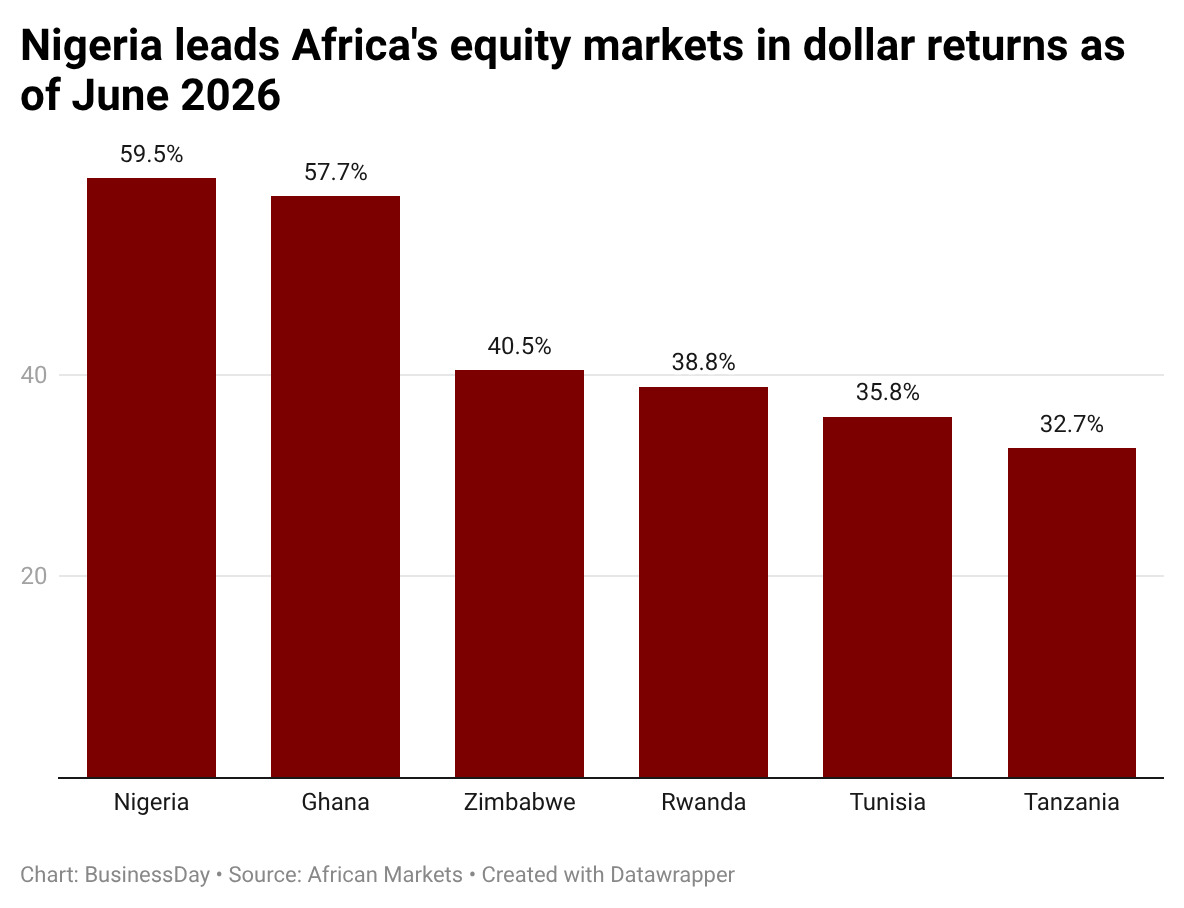
An analysis by Business Day, utilizing data from the real-time market intelligence platform African Markets, reveals that the Nigerian Exchange Limited (NGX) achieved a remarkable year-to-date return of 59.5% in US dollar terms as of June 24, 2026. This impressive figure places Nigeria at the forefront of the continent’s 17 stock exchanges, cementing its position as leader for the third consecutive week. This performance underscores how macroeconomic reforms and a more stable naira are redefining Nigeria’s investment landscape.
Regional Comparisons Highlight Nigeria’s Dominance
Ghana follows closely with a dollar return of 57.7%, while Zimbabwe (40.5%), Rwanda (38.8%), Tunisia (35.8%), and Tanzania (32.7%) complete the list. In local currency terms, Nigeria remains highly competitive, reporting a 51.1% increase, second only to Ghana’s impressive 69.2%.
Nigeria’s Market Resilience Amid Economic Challenges
This trend of outperforming other markets is not new; Nigeria has often led the continent’s stock performance this year. Earlier, in February, the NGX was recognized as the best-performing stock exchange with a return of 34.4%, and it has consistently fortified its position into June.
Macroeconomic Reforms Fueling Investor Confidence
The rankings reflect a revival in a market that was struggling just a year ago, grappling with currency fluctuations and dwindling confidence from foreign investors. Analysts point out that robust corporate profits and banking sector reforms are driving stock price increases, but the most significant factor this year is the stability of the naira.
The Naira’s Strength Bolsters Foreign Investment Appeal
Unlike past bull markets that were hampered by sharp currency depreciation, the current stability of the naira has enabled stock prices to appreciate in dollar terms. This shift makes Nigerian assets increasingly appealing to foreign investors, who prioritize returns measured in dollars. Gbolahan Ologunro, associate portfolio manager at First Asset Management, noted that the strengthened naira has enhanced dollar returns for investors.
Impact of Global Factors and Domestic Reforms
The naira’s performance has proven resilient against the backdrop of economic instability across Africa. The ongoing conflict in the Middle East has exacerbated volatility in global oil markets, yet Nigeria has shown remarkable stability, largely due to the Dangote refinery’s role in diminishing reliance on imported oil products. The reduction of fuel imports has alleviated pressure on foreign currency demand, further supporting the naira’s strength.
Macroeconomic Indicators Point to Bright Future
Improving economic conditions are attracting considerable capital inflows into Nigeria, with the country reporting capital imports of $10.4 billion in the first quarter, an 83.8% year-on-year surge. Portfolio investments accounted for over 95% of these inflows, representing a record high for foreign portfolio investment in a single quarter. Additionally, Nigeria’s foreign exchange reserves have reached over $51 billion, the highest level in 17 years, which enhances the capacity of the Central Bank of Nigeria to maintain liquidity and instill investor confidence.
Market Correction Leads to Healthy Consolidation
Despite recent market corrections, which have seen the NGX lose N9.8 trillion (6.2%) in market capitalization as investors took profits after significant gains, analysts argue that these declines reflect a natural consolidation rather than fundamental weaknesses. Major corporations, including Dangote Cement and BUA Cement, have faced substantial losses, yet the overall market sentiment remains optimistic due to supportive reforms that have recalibrated investor perceptions. Macroeconomic stability, record foreign inflows, and reduced currency risks assure Nigeria’s continued dominance in Africa’s equity landscape.
