


Nigeria Collaborates with U.S. to Conduct Christmas Day Airstrike
LAGOS, Nigeria — By openly partnering with the United States for a Christmas Day airstrike, Nigeria’s government has potentially sidestepped the unilateral military action that President Donald Trump threatened just a month prior. The cooperation has sparked discussions about the ongoing threats posed by Islamic extremists in the region.
Security experts express uncertainty about whether such airstrikes will significantly impede the activities of Islamic militants who have long endangered local communities. On Thursday, Trump announced via Truth Social that U.S. military forces had initiated operations against Islamic State militants in northwestern Nigeria at the request of the Nigerian administration.
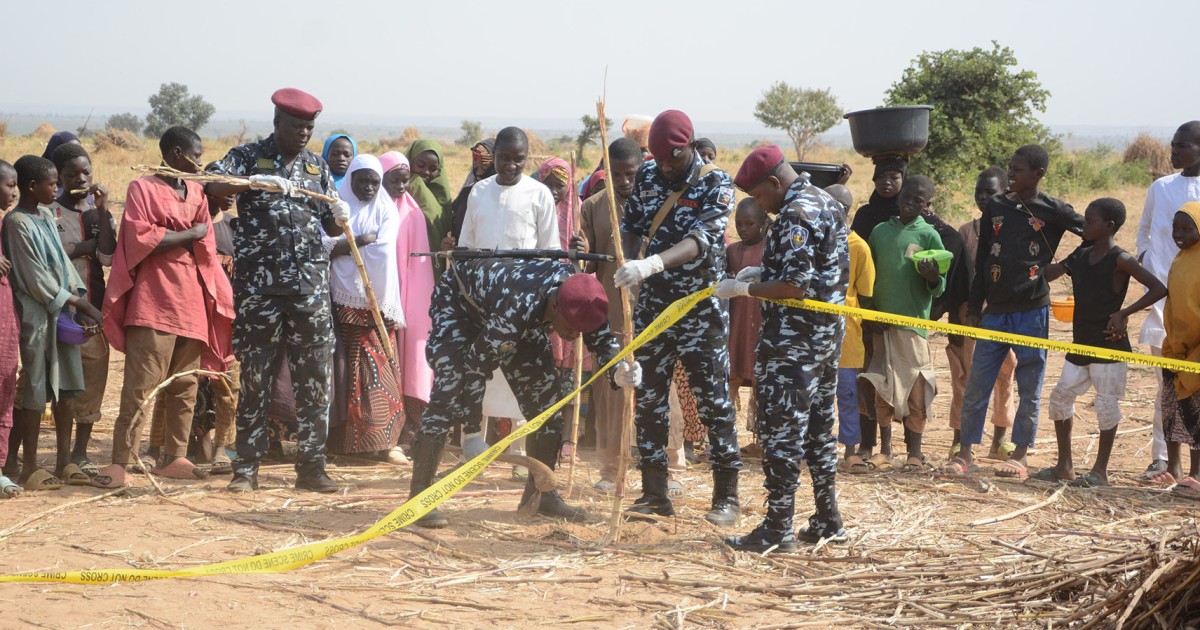
Local media reports indicated a significant explosion in the village of Habo on Christmas night, although Reuters has yet to confirm any casualties resulting from the incident. Nigeria’s government has acknowledged its approval of the airstrike initiative, with Foreign Minister Yusuf Tugar stating that the nation engaged in collective action with the United States, emphasizing that no specific religious group was targeted.
“Nigeria is a multi-religious nation, and we are collaborating with partners like the United States to combat terrorism and ensure the safety of lives and property,” Tugar remarked in an interview with Nigeria’s Channels Television.
Trump’s Ultimatum to Nigeria
Nigeria, home to over 230 million people, has a population nearly evenly split between Christians in the south and Muslims in the north. Last month, Trump warned he might deploy U.S. forces to Nigeria unless local authorities acted against what he described as the persecution of Christians.
While Nigeria grapples with security issues in the north — including violence and kidnappings linked to Islamic militants — the government vehemently denies the existence of systematic persecution faced by Christians. In response to Trump’s threats, Nigerian officials stated their commitment to cooperating with Washington against extremist groups while rejecting the notion that Christians were disproportionately at risk.
Kabir Adam, managing director of Beacon Security and Intelligence Limited, reported to Reuters that diplomatic discussions occurred following Trump’s comments. “After the president’s threats, a Nigerian delegation visited the U.S. Subsequently, a deal was forged, and we learned about U.S. surveillance missions focusing on terrorist locations,” he noted.
Participation in such operations could heighten perceptions that the Nigerian government is endorsing Trump’s rhetoric, which could exacerbate sectarian tensions — a delicate topic throughout Nigeria’s historical context.
“Trump’s statements seem to cater to the motivations of domestic evangelical groups, feeding into the narrative of ‘Christian genocide,'” Adam added.
Root Causes of Violence in Northwestern Nigeria
The area where the airstrikes were executed has been experiencing escalating violence attributed to the Raqlawa sect, a radical Sunni Islamist group claiming ties to the Islamic State since 2024. Originally formed as a vigilante organization, this group has transformed into a jihadist movement, implementing strict Islamic laws across hundreds of villages. Earlier this year, Nigeria designated this group as a terrorist organization.
Confidence McHarry, a senior analyst at SBM Intelligence, indicated that this group is likely what Trump referenced regarding military actions in Nigeria. “They are also involved in large-scale cattle theft, with many of the stolen animals making their way to markets along the Nigeria-Niger border,” he explained.
However, Adam raised concerns regarding the effectiveness of the airstrikes, highlighting that the villages targeted were not previously recognized as strongholds for militants. “The Nigerian government appeared to endorse the airstrike, but there’s no evidence of any insurgent presence in Jabo,” he said.
