


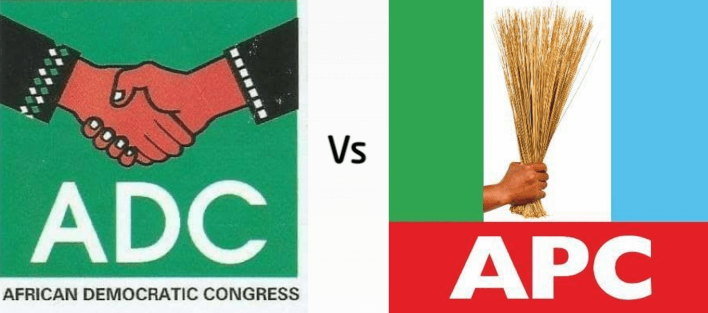
Judiciary’s Intervention Deepens Crisis for the United Front Against APC
The hopes of the United Front, a coalition challenging Nigeria’s ruling All Progressives Congress (APC), have been significantly undermined following a recent judicial ruling on the African Democratic Congress (ADC). The Federal High Court’s intervention in the party’s internal leadership dispute has not only stalled the ADC’s operations but has also highlighted the fissures within Nigeria’s broader opposition landscape, especially as the 2027 general elections draw near. The divisions among the Peoples Democratic Party (PDP) and the Labor Party (LP) are becoming increasingly pronounced.
Court Ruling Disrupts ADC Leadership Structure
In a pivotal ruling that reverberated across Nigeria’s political landscape, Justice Joyce Abdulmalik of the Federal High Court has barred the Independent National Electoral Commission (INEC) from recognizing the state assembly convened by the ADC’s contested interim leadership. This ruling specifically targets David Mark’s faction, preventing the former Senate president from overriding the authority of duly elected state executives.
By affirming that the power to convene state legislatures lies exclusively with the state executive committee, the court effectively dismantled the roadmap for the interim leadership. A lawsuit initiated by Norman Obinna and other aggrieved state chairmen contested the legality of the actions taken by the David Mark-led committee to supersede local party structures. Judge Abdulmalik deemed the plaintiffs’ claims as “worthy,” underlining the necessity for political entities to adhere to democratic principles and their constitutional provisions.
Opposition Faces Existential Threat Ahead of 2027 Elections
The ADC’s recent legal challenges are emblematic of broader fractures afflicting Nigeria’s opposition parties. With the 2027 general elections approaching, key players such as the PDP, LP, and Accord are grappling with significant internal strife. Analysts warn that prolonged discord could hinder the opposition’s ability to present a credible alternative in the upcoming presidential race.
Leadership disputes have created a chaotic environment, illustrated by a competing structure within the LP, pitting supporters of Julius Habre against the caretaker committee. Additionally, accusations of loyalty breaches within the PDP’s national working committee—where some members are said to favor the ruling APC—have exacerbated the trust deficit. The ongoing shift of governors and legislators to the APC has become a common narrative, often seen as a tactic for political survival within the current landscape.
Increasing Judicial Involvement in Political Affairs Raises Concerns
The Federal High Court’s decision to suspend the ADC parliamentary committee highlights the judiciary’s growing role in internal party matters. Justice Abdulmalik acknowledged that while courts generally refrain from intervening in party affairs, intervention is necessary when constitutional or legal violations occur. The reliance of parties such as the ADC, PDP, and LP on judicial intervention for resolving leadership disputes indicates a failure in their internal mechanisms for conflict resolution.
The court dismissed the defense’s argument that the plaintiffs should have pursued their concerns through internal channels. Instead, it emphasized that violations of both the 1999 Constitution and the internal rules of the party provided the plaintiffs with the legitimacy to pursue legal action. As factions within the opposition splinter into smaller, contentious groups, the APC’s consolidation of power appears to continue unabated. The Labor Party’s earlier momentum from 2023 now seems to be waning as it struggles to transform public enthusiasm into effective organizational unity.
Party Leaders Brace for Ongoing Legal Battle
Despite the setbacks faced, ADC candidate Terbel Sirsha Atsal from the Ushongo/Kwande Federal Constituency in Benue State asserted that the party is well aware of its legal standing. He clarified that the recent court ruling did not invalidate the party’s convention; rather, it reaffirmed the current term of the state executive, which is still in effect. Atsal emphasized that claims suggesting the judgment nullified the ongoing convention are misleading.
Moving forward, Atsal indicated that the ADC plans to appeal the ruling. He reiterated a call to resist any drift towards a one-party state, asserting that preserving democratic choice is a collective responsibility for not only the opposition but for all Nigerians who aspire for a resilient future.
Legal Experts Critique Judicial Overreach in Party Affairs
Legal analysts have raised concerns about the judiciary’s recent encroachment into party leadership issues. Falana and Abubakar Marshall from the Falana Chamber of Commerce and Industry criticize this trend, arguing that such judicial interventions contravene the stipulations of the 2026 Election Law, which assigns the resolution of internal party matters to the political entities themselves. Marshall stressed the importance of upholding established legal precedents regarding party autonomy.
The legal representative for the ADC, Realwan Okpanachi, contended that the recent ruling violates the Supreme Court’s established doctrine, indicating that the court has overstepped its bounds by making rulings related to governance and leadership disputes that have traditionally been outside judicial purview. He reaffirmed that mechanisms for redress through appellate review remain accessible, emphasizing that mistakes can be corrected by higher courts.
As the legal landscape continues to evolve, the Supreme Court is poised to make a significant ruling on two politically sensitive appeals concerning the leadership contest between the ADC and PDP this Thursday.
