


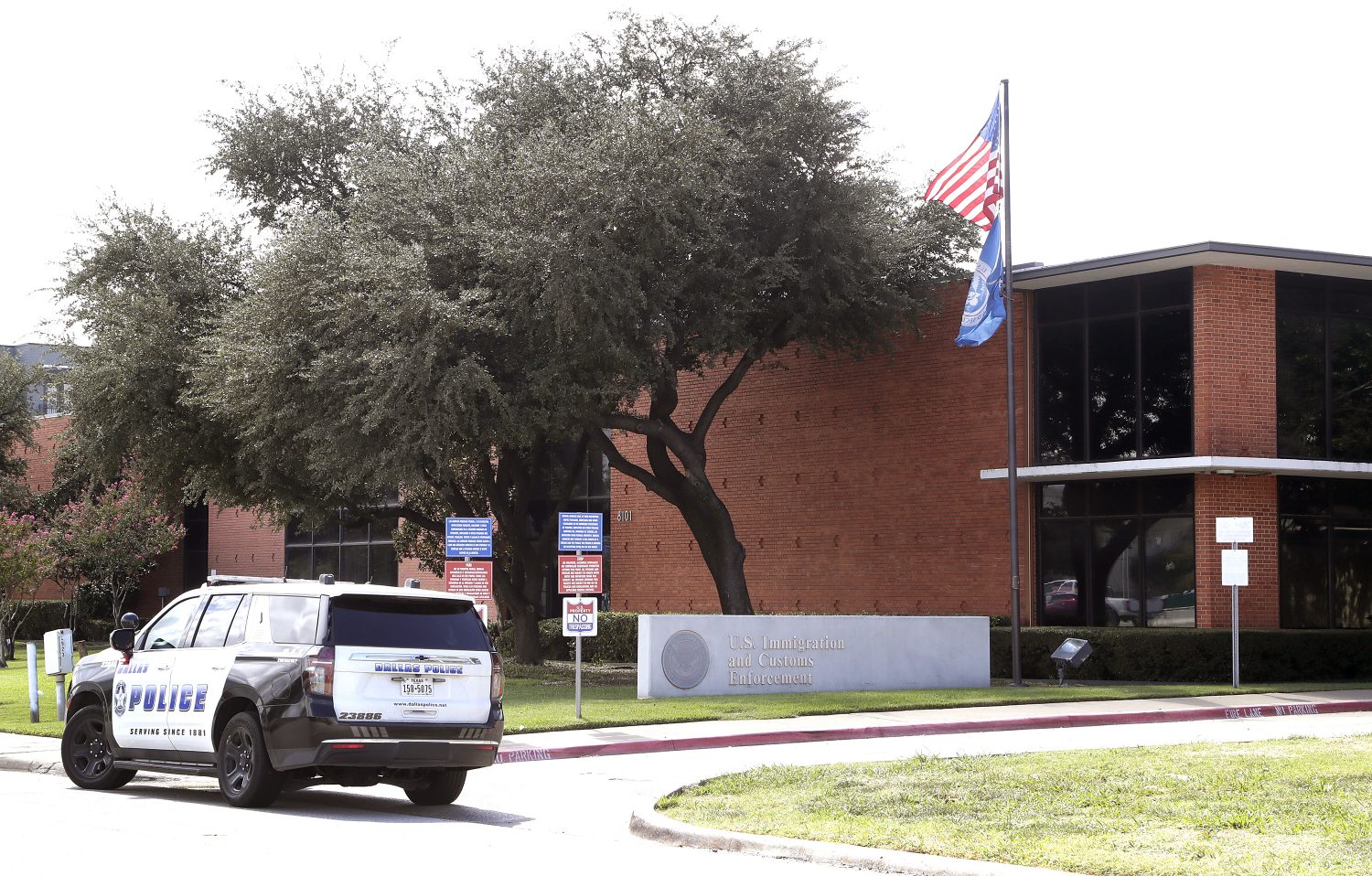
New Texas Law Set to Allow Local Law Enforcement to Arrest Detained Immigrants
A Texas law passed in 2023, which enables local law enforcement officials to arrest individuals suspected of unlawfully entering the country, is poised to take effect next week. Senate Bill 4 will classify illegal border crossings as a misdemeanor, thereby allowing local authorities to act even if an individual’s immigration status is unclear. Traditionally, immigration enforcement has been within the purview of federal authorities.
The law could officially come into force on May 15, barring any intervention from the courts. Senate Bill 4 was approved by the state Legislature during a special session three years ago in response to a dramatic increase in unlawful border crossings. However, it quickly fell into legal limbo after being signed into law by Governor Greg Abbott. Recently, the conservative 5th Circuit Court of Appeals in New Orleans lifted a previous injunction that had blocked the bill.
This legal decision has sparked both applause from conservative leaders in Texas and outrage from advocacy groups focused on immigrant rights. Texas Attorney General Ken Paxton hailed the ruling, stating that the law underscores the state’s right to arrest undocumented immigrants and maintain order. “This is a significant victory for public safety and law enforcement,” he declared.
Simultaneously, the American Civil Liberties Union of Texas has filed a class-action lawsuit aimed at securing a temporary restraining order to stop SB 4 from being enacted. Critics warn that the law could result in family separations and foster an environment of racial profiling. The ACLU specifically calls for the repeal of provisions that criminalize re-entry into the United States, even under federal permission, and which mandate state judges to issue deportation orders.
In her statement, Adriana Pignon, Legal Director at the ACLU of Texas, expressed deep concerns, saying, “SB 4 would turn police and judges into immigration officers, threatening the lives of our neighbors who have deep ties to their communities and even those with legal status.” She emphasized that immigration enforcement has historically fallen under federal jurisdiction and that no state has attempted to impose the powers Texas seeks.
Implications of SB 4 for North Texas Communities
As the potential implementation of SB 4 approaches, the uncertainty surrounding the law poses challenges for local police departments. Many departments in North Texas, particularly in cities with minimal previous interactions with immigration enforcement, are grappling with how to prepare for the forthcoming regulations.
Further complicating matters, Governor Abbott and Attorney General Paxton have recently threatened to penalize cities such as Houston, Austin, and Dallas for allegedly violating an existing law from 2017 that restricts police departments from adopting policies limiting immigration law enforcement. Such threats have prompted these cities to revise policies aimed at reducing cooperation with federal immigration agents.
As Garland eyes the potential enactment of SB 4, officials have stated they will collaborate with the City Attorney’s Office to assess the law and establish appropriate policies, particularly regarding its application in non-border municipalities. “The Department will monitor court decisions and adjust its approach accordingly,” said a spokesperson.
Similarly, the Irving Police Department is keeping a close watch on developments, including the ACLU’s lawsuit. A spokesperson noted a commitment to serving Irving residents while maintaining compliance with the law and honoring community diversity.
The Arlington Police Department has also expressed its intention to work with various law enforcement agencies to enhance public safety while collaborating to combat violent crime. However, inquiries made to several police departments regarding measures to prevent racial profiling went unanswered. Previous statements from leadership in Dallas and Fort Worth indicated a cautious stance on implementing SB 4 fully, despite affirmations of compliance with the law.
