


World Cup Group Stage Ends Dramatically with Upsets and High Scores
The group stage of the World Cup, originally expected to lack drama, concluded with unexpected twists. Algeria initially took the lead, but Sasa Karadzic equalized in the 96th minute, enabling Austria to secure a 3-3 draw and advance to the knockout rounds.
This climax exemplified the stark difference between expectations and the thrilling realities present in World Cup matches. Algeria and Austria had drawn goalless at one point, yet they went on to score six spectacular goals, adding to a growing tally of memorable moments.
A record 215 participants highlights this year’s group stage, attributed not solely to the increased number of matches but also to a remarkable scoring average of 2.99 goals per game—the highest since the 1950s. The tournament showcased a wealth of talent and excitement.
Returning to 32 competing teams aligns with the format observed in the last seven tournaments; however, the newcomers held their ground impressively. They left their mark, often featuring standout performances from emerging superstars.
The moment Curacao equalized against Germany will be etched in football history. Jordan, despite finishing with three losses, managed to score in every game, including a match against defending champions Argentina. Meanwhile, the magical run of Cape Verde persists as they remain unbeaten, facing illustrious opponents like Lionel Messi in subsequent rounds.
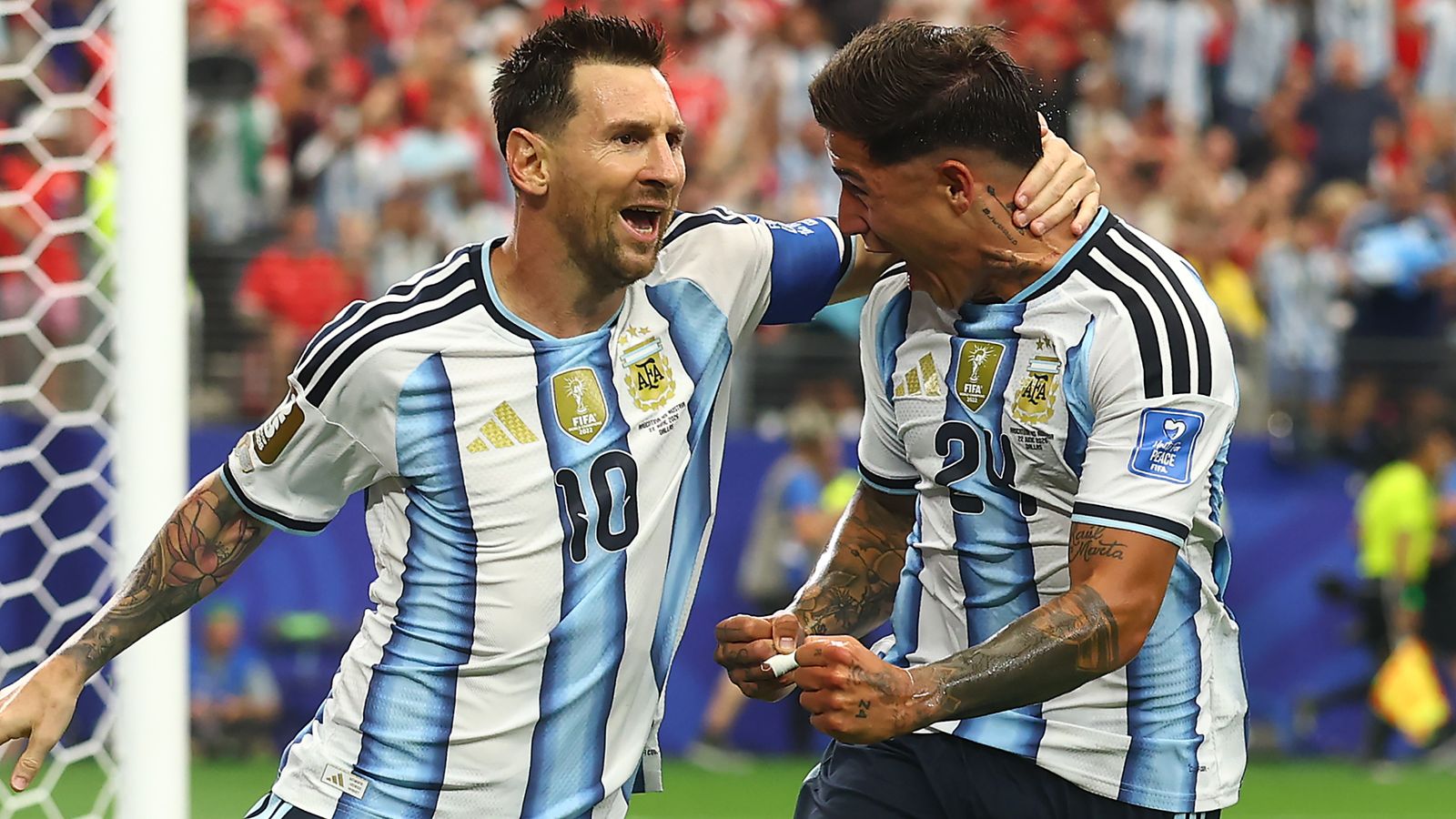
As for Lionel Messi, his hat-trick against Algeria marked a remarkable start, yet he is not alone in his quest for the Golden Boot. Stars such as Vinicius Junior, Ousmane Dembele, Erling Haaland, and Kylian Mbappé are in contention, each contributing to a festival of goal-scoring prowess.
Despite whispers of inflated statistics, the numbers speak for themselves. Historical comparisons show that this World Cup remains a unique spectacle; it differs notably from Paolo Rossi’s legendary hat-trick in the 1982 semi-finals, which propelled him to the Golden Boot.
Cristiano Ronaldo found the net twice against Uzbekistan, while Messi’s effort contributed to a narrow victory over Jordan. Notably, Haaland and Mbappé both found the back of the net twice against an Iraqi team that managed to qualify under unique circumstances.
The challenges presented by this format include the surprise elimination of traditional powerhouses. Uruguay’s failure to win a single match stands out as a significant upset, while Tunisia was the only African team among ten to be eliminated before the finals. Yet, compared to their Asian counterparts, the players from Africa performed admirably, despite several early departures.
Ultimately, this World Cup has involved vastly more games than any previous editions, yet claims of dilution do not capture the essence of this tournament. Even with adjustments, it remains a spectacle to cherish.
