


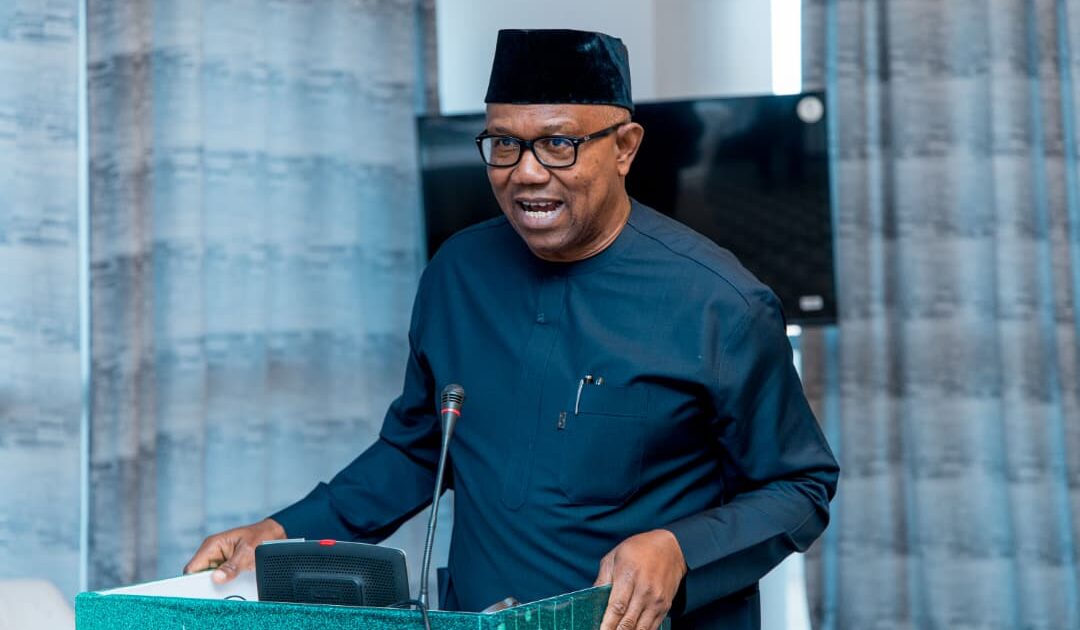
Peter Obi Accepts Nomination with Visionary Reform Agenda
Peter Obi, the presidential candidate for the Democratic Federation of Nigeria, officially accepted his nomination on Saturday, unveiling a bold reform agenda designed to confront Nigeria’s escalating security issues, economic stagnation, and infrastructure shortcomings. Central to his plan is a commitment to boost electricity generation to 10,000 megawatts over the next four years.
Gratitude and Leadership
In his acceptance speech delivered in Abuja after being named the party’s flag bearer, Obi expressed his gratitude to party leaders and delegates, recognizing their confidence in his leadership. He stated, “I accept the role of the presidential candidate of our party with deep humility,” reinforcing his appreciation for the support he received from both the leadership and the Nigerian populace.
Addressing Nigeria’s Challenges
Obi portrayed Nigeria as being at a critical juncture, plagued by insecurity, economic distress, and a waning public trust in governance. He acknowledged the widespread disillusionment affecting various sectors and communities but posited that the country could still recover if the right leadership choices were made.
A Call for Optimism
“Businesses are struggling, communities are struggling, and an alarming number of people have lost faith in the very concept of governance,” Obi remarked. However, he emphasized his optimism and faith in the resilience of the Nigerian people, asserting, “I firmly believe that a new Nigeria is possible.”
Security Concerns and Historical Context
Turning to the pressing issue of security, Obi noted that Nigeria’s challenges have worsened in recent years, mentioning the nation’s troubling global standing as one of the countries most severely impacted by terrorism. He highlighted an alarming trajectory in the Global Terrorism Impact Assessment, where Nigeria ranks eighth in 2022, sixth in 2024, and fourth in 2026.
Commitment to Security Reform
Despite these challenges, Obi contrasted the current climate with Nigeria’s historical reputation in international peacekeeping, where the military once garnered global respect. He vowed that his administration would prioritize security reforms, stating, “No country can prosper as long as its citizens live in fear. The government’s primary responsibility is to ensure the protection of life and property.” His proposed approach includes an intelligence-driven, technology-supported security framework that addresses immediate threats and underlying causes such as poverty and unemployment.
Healthcare and Energy Initiatives
On the healthcare front, Obi pointed out Nigeria’s alarming statistics, particularly regarding infant mortality and low health insurance coverage. He committed to doubling health insurance coverage to over 20% within four years, noting Nigeria’s current rate stands at a mere 10%. Turning to energy, he labeled Nigeria’s electricity crisis as a significant barrier to development, highlighting that the nation generates and distributes only 4,000 megawatts of electricity for a population exceeding 200 million. He reaffirmed his commitment to increasing electricity generation by at least 10,000 megawatts over the next four years.
Youth Employment and Economic Strategies
Moreover, Obi addressed the issue of unemployment, challenging the accuracy of official statistics that underreport the labor market crisis in Nigeria. He proposed targeted support for small and medium-sized enterprises, as well as initiatives aimed at fostering youth-led businesses. By pledging to implement reforms designed to reduce corruption and governance costs, Obi seeks to create a more conducive environment for economic growth and job creation.
