


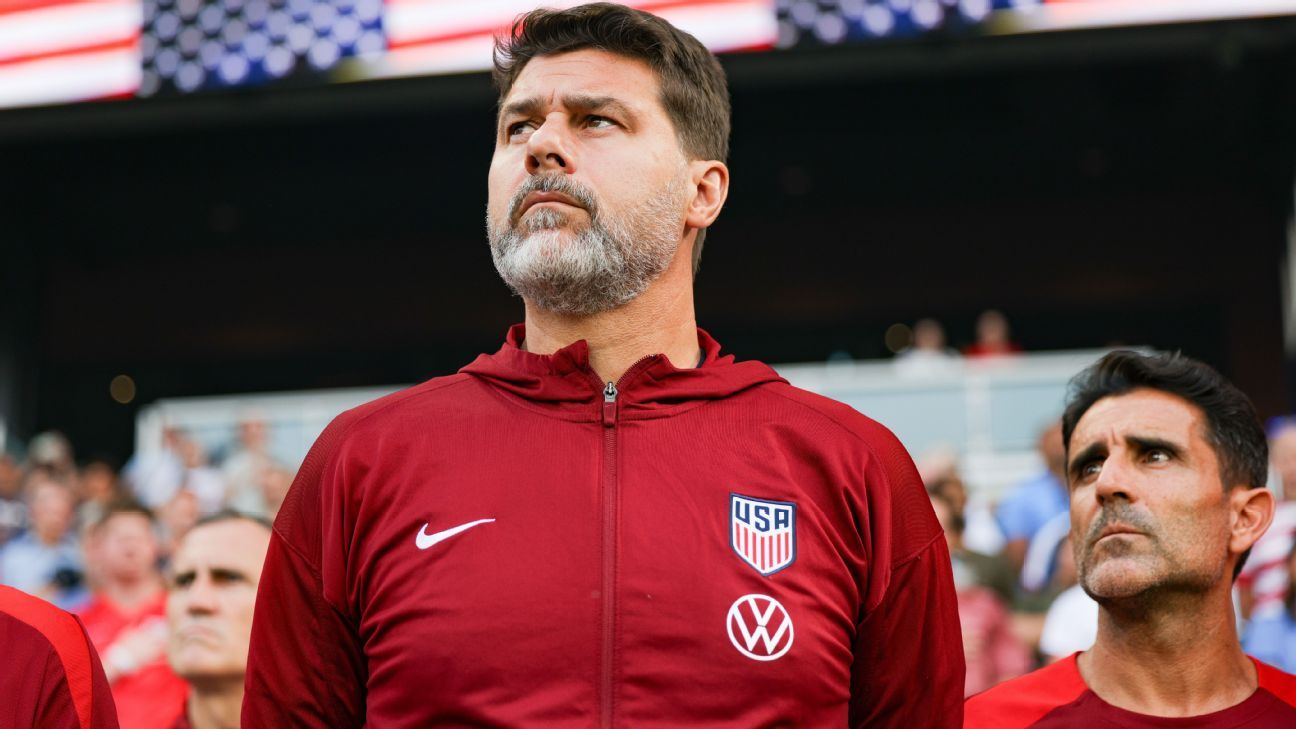
Once, it seemed that bringing in a coach of Mauricio Pochettino’s caliber was merely a distant dream for the U.S. Soccer Federation, viewed as overly ambitious and financially unfeasible. However, his recent appointment has shifted this perception dramatically.
Pochettino’s arrival has been enabled by a significant philosophical transformation within the federation. By leveraging diverse funding sources—including private donations and heightened commercial revenue—the federation has elevated its aspirations, making it possible to attract a high-quality coach to guide the U.S. Men’s National Team (USMNT).
There’s now a pressing question: has the standard for U.S. soccer been permanently elevated? Will the federation maintain its new ambitious trajectory, or is Pochettino’s recruitment merely a short-term strategy tied to the upcoming FIFA World Cup, which the U.S. is co-hosting?
When I posed this question to U.S. Soccer CEO JT Batson, he affirmed that this is indeed a lasting change. He stated, “Our entire leadership team has been successful in attracting world-class talent, not only for our sports organization but for our broader initiatives. Our expectations are rising regarding the caliber of talent we draw and nurture within U.S. Soccer, aligning with our goal to achieve world-class status.”
Heightened Expectations Following Key Resignation
The urgency of this inquiry has intensified in light of Athletic Director Matt Crocker’s abrupt resignation. Crocker, the architect behind Pochettino’s hiring as well as U.S. women’s national team coach Emma Hayes, leaves behind a significant legacy, including investments in a national training center near Atlanta and initiatives aimed at enhancing player development.
His departure introduces a leadership vacuum. There’s speculation about whether current U.S. Soccer Vice President and Sports Director Oguchi Onyewu will be appointed to fill Crocker’s role or if the federation will consider external candidates. This decision is likely to have implications for the future of the USMNT’s coaching position post-World Cup.
Although it was widely believed that Pochettino would part ways with the team after the tournament, he has hinted at a desire to remain engaged, despite his reservations about American soccer culture compared to that of Argentina. After recent losses to Belgium and Portugal, he addressed the lack of U.S. players in the top 100 worldwide insights—a point that resonates yet may contradict his own arguments advocating for a competitive U.S. team.
While Pochettino’s future remains uncertain, his wish to return to Europe, particularly the Premier League, is evident. Yet, he has not completely ruled out continuing with the USMNT. During a recent media interaction, he remarked that if both he and the federation are satisfied, he would consider extending his tenure.
Exploring Future Options for USMNT Coaching Position
With Pochettino’s position mired in uncertainty, speculations regarding potential successors have surfaced. Notably, France’s national team coach Didier Deschamps is set to depart after the World Cup. Could he be the right fit for the American squad’s next chapter? Similarly, Gareth Southgate, despite facing criticism, led England to major finals and could be enticed by this opportunity.
The USSF may lean toward domestic candidates, with former LAFC manager Steve Celandro considered a prime contender due to his experience as a USMNT player and his success in Los Angeles. B.J. Callahan, interim coach previously, has also been impressive with Nashville SC and could be in the running.
While there are intriguing options, none may match the excitement that Pochettino brings as a marquee name. One potential candidate could be Manchester City’s renowned manager Josep Guardiola. Though tied to his current club until 2027, there is speculation about his future. Having lived in the U.S. during his managerial stints in Europe, he might be open to a new challenge, making it a tantalizing possibility for the USSF.
Though the idea of Guardiola taking the helm of the USMNT may seem far-fetched, the federation has demonstrated its capability to secure high-profile talent. As the World Cup approaches, how U.S. Soccer navigates this coaching conundrum will be pivotal for its future.
