


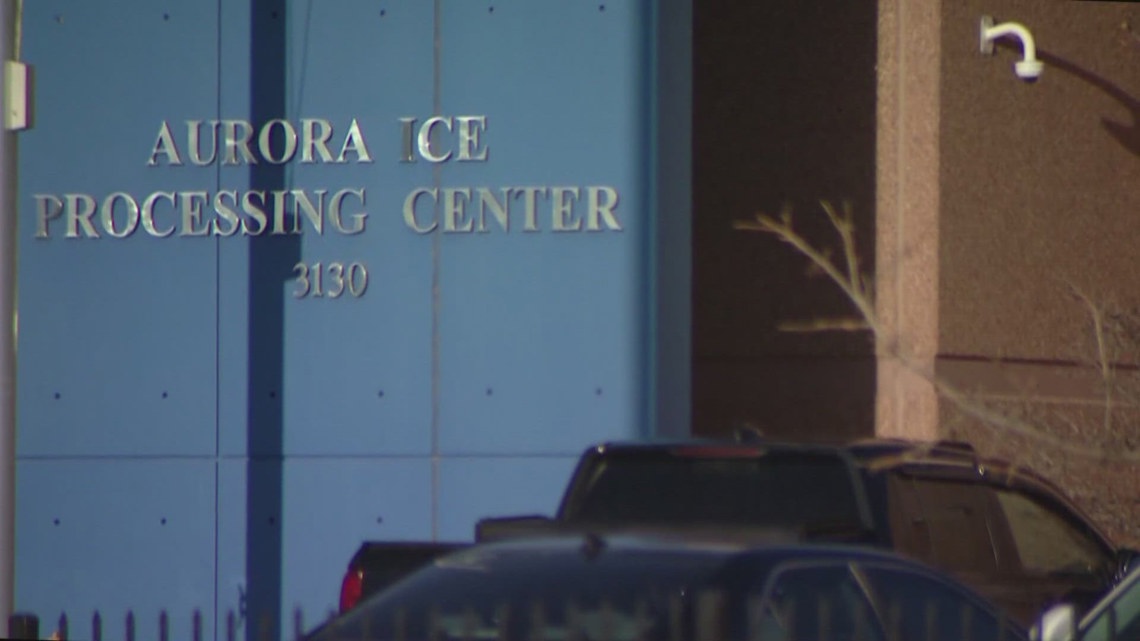
Immigration Bail Delays Raise Concerns
An immigration attorney highlighted that around 80% of his clients granted bail by judges experience delays in their release, often remaining in detention days after their legal release date.
Castillo’s Family Hopes for Justice
DENVER, Colo. — When a federal immigration judge approved bail for Deonisio Castillo earlier this year, his daughter, Joselyn Castillo Flores, believed their struggles were finally over.
Castillo, a Colorado resident for 30 years and father to several U.S. citizen children, was apprehended by Immigration and Customs Enforcement (ICE) on January 14. This occurred after an agent mistakenly approached him at work while searching for a different individual, according to his attorney.
After more than a month of persistent efforts from his family and attorney to secure bail, an immigration judge ultimately approved their request. However, Castillo remained detained for an additional six days post-approval.
Questioning the Delays
Hans Meyer, Castillo’s Denver-based immigration attorney, noted that the bail procedure in immigration court closely resembles that of the criminal justice system—until recent months. Backed by two decades of experience, Meyer stated, “Once bail is posted, release should occur the same day. This is standard in traffic cases.”
Meyer expressed alarm at the current state of affairs, estimating that approximately 80% of clients granted bail by immigration judges encounter delays beyond their approved release dates—sometimes lasting several days or even a week.
“We are witnessing ICE continuously postpone releases for reasons that remain unclear and unaddressed,” Meyer stated. “This not only seems unjust but also unconstitutional. Individuals should not be detained arbitrarily or to impose additional penalties.”
Administrative Hurdles Intensify
Meyer also pointed out a troubling new practice where ICE has begun to defer bond processing for the first 24 hours after receiving a judge’s order. “There is no constitutional basis for this waiting period,” he asserted. “If one is entitled to a bond, it should be accessible immediately.”
Once families manage to navigate the complex process to post bail and receive instructions on how to conduct payments—often via wire transfer—reports indicate that the ensuing processing can take several additional days before release occurs.
Emotional Toll on Families
For Jocelyn Castillo, the anxiety of trying to secure her father’s freedom became an exhausting ordeal from the moment she received the news of his detention. Having lived in the U.S. for over three decades, the sudden apprehension in early January filled her with disbelief and frustration.
“I was shocked and furious; my dad should never have been picked up,” Jocelyn remarked. After a lengthy detention, his lawyer filed a writ of habeas corpus, resulting in an approved bail of $2,500. Despite the court’s decision on Wednesday, Castillo did not receive his release until the following Tuesday, six frustrating days later.
“I felt anxious, constantly refreshing the ICE web page, hoping for an update,” Jocelyn recounted. During this distressing time, she became overwhelmed with guilt, feeling as if she wasn’t doing enough to facilitate her father’s release. “I just cried,” she admitted.
ICE’s Defense and Backlogs
In response to the delays, an ICE spokesperson confirmed that the agency would not intentionally postpone releases after bail is posted but acknowledged that the overall process may take several days. “While many individuals are released quickly, the complete procedure involves essential administrative, security, and coordination steps,” the spokesperson explained.
ICE outlined that various factors such as the time and day of the week when bail is posted, along with facility workload and staffing levels, can influence release timing. However, the agency did not address the discrepancies in processing times compared to the past, specifically before 2025, when releases typically occurred within hours.
Legal and Financial Implications
Meyer dismissed ICE’s explanations, contending that these delays mark a notable departure from two decades of established procedure, carrying significant constitutional implications. He emphasized that unlawful detention beyond legal bounds violates individuals’ Fourth Amendment rights.
Meyer also highlighted the financial burden imposed on taxpayers, noting that ICE incurs a daily cost of approximately $150 for each individual detained in private facilities. For Castillo, that translates to $900 in additional taxpayer-funded costs for days deemed unnecessary by a judge.
For Deonisio Castillo, the ordeal has left a lasting impact. “The process should be fairer, more accessible, and expedited,” he remarked, reflecting on the challenges he faced during his detention.
