


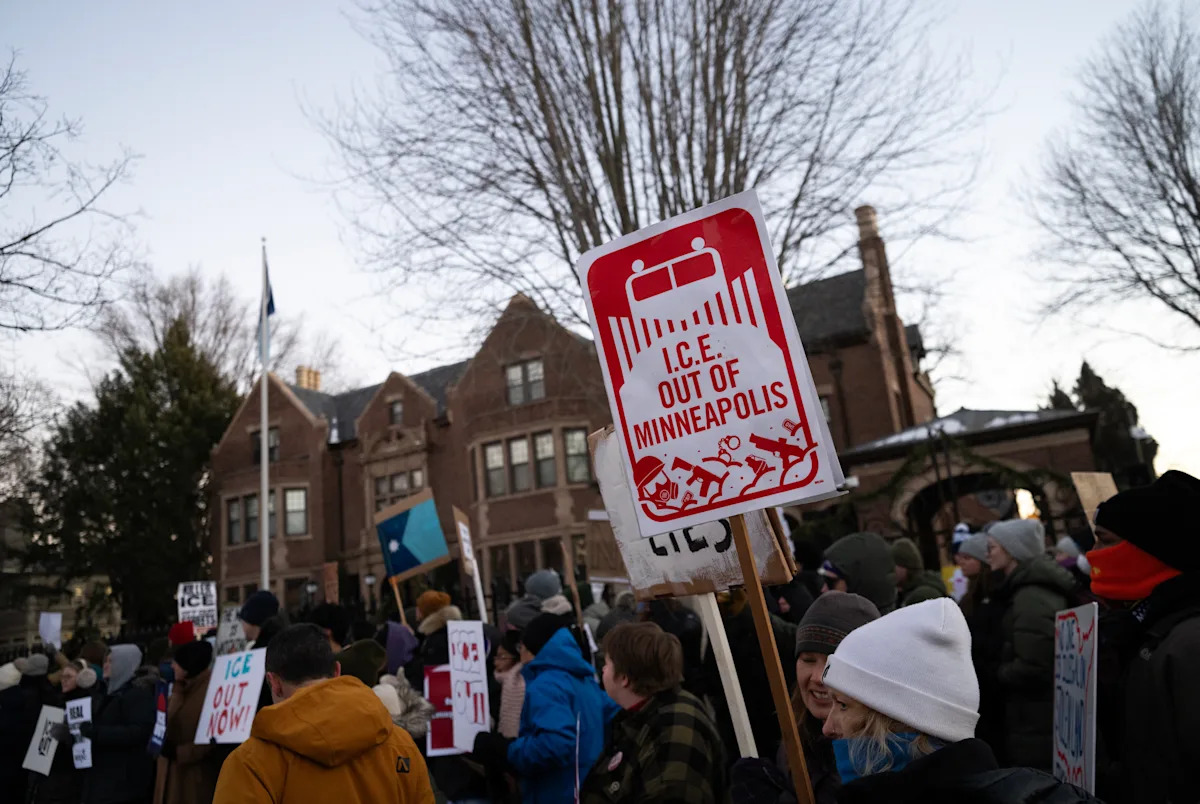
Shift in Immigration Strategy Following Public Backlash
In the wake of public outrage over the deaths of two Americans at the hands of federal agents in Minneapolis, the White House has revised its immigration approach by changing leadership and modifying its rhetoric. However, three months later, many Americans still hold negative views regarding President Donald Trump’s deportation campaign.
Recent findings from a Politico poll indicate that public sentiment has remained largely static, even as the focus shifted from mass deportations to other pressing issues, such as the economy and international conflicts. This consistency underscores the challenges the administration faces in redefining its immigration policies.
The poll, conducted between April 11 and April 14, revealed that half of Americans, including a significant portion of potential voters for the 2024 elections, find President Trump’s approach to mass deportation—including the aggressive deployment of ICE agents—excessively harsh. Approximately a quarter of respondents believed Trump’s stance was appropriate, while 11% felt he should adopt a more aggressive position.
These results serve as a cautionary signal for the Trump administration and the Republican Party, particularly as they aim to rejuvenate their immigration stance ahead of the midterm elections.
The Republican Party’s once formidable advantage over Democrats on immigration is now in jeopardy, weakened by Trump’s stringent enforcement tactics and controversial operations that have made headlines, including the detention of children. These vulnerabilities are especially evident among Hispanic voters, a crucial demographic for Republicans in the upcoming 2024 elections.
A poll commissioned by Third Way and UnidosUS found that although Trump secured 46% of the Latino vote—the highest for a Republican presidential candidate in recent history—a substantial majority of Latino voters disapprove of his handling of immigration (67%) and the economy (66%). This decline is alarming for the Republican Party as they attempt to rebuild support within this key constituency.
Ranae Erickson, senior vice president at Third Way, noted the unexpected magnitude of the decline in support from Latino voters, underscoring that the administration’s recent policies have eroded the gains Trump had made leading up to 2024.
An April POLITICO poll echoed these sentiments, revealing that 37% of Americans disapprove of Trump’s mass deportation efforts—an opinion that has remained largely unchanged since January. Furthermore, over half of the respondents perceive the increased presence of ICE agents negatively, raising concerns about safety in their communities.
Despite these challenging public sentiments, the White House is adamant that its strategies are effective. Press Secretary Abigail Jackson asserted that President Trump was elected to secure borders and remove criminals among the illegal immigrant population, emphasizing ongoing efforts to ensure safety for American communities.
Nevertheless, the political landscape is increasingly complex. Among Trump’s base, those who lean towards the MAGA movement are more supportive of his immigration policies, with a significant majority expressing satisfaction with the current level of deportation efforts.
This internal division has sparked frustration among some prominent Trump supporters. The Mass Deportation Coalition, comprising former administration officials and immigration enforcement advocates, recently urged the administration to achieve one million deportations this year, demonstrating the contentious debate surrounding Trump’s immigration measures.
However, the resultant crackdown has had unintended consequences for Latino communities, which play a crucial role in Trump’s electoral strategy. Labor shortages are now affecting industries in South Texas, prompting concerns among farmers as planting season approaches. Many individuals in urban areas are too fearful to engage in everyday activities, leading to declining sales for businesses in major Latino-populated regions.
Ramiro Cavazos, president and CEO of the U.S. Hispanic Chamber of Commerce, highlighted the severity of the situation, noting a staggering 70% drop in sales for businesses in Minneapolis during Operation Metro Surge, which prompted the launch of a GoFundMe initiative to support struggling small enterprises.
Ireida Flores, a seafood wholesaler in Arizona, estimated that 80% to 90% of Hispanic small businesses have suffered due to immigration enforcement, revealing significant workforce disruptions and declining revenue.
Clarissa Martinez de Castro, vice president of UnidosUS, warned that the waning support among Hispanic voters could provide an opportunity for Democrats in the forthcoming midterm elections, suggesting that Republicans are inadvertently jeopardizing the support they previously secured with Latino constituents.
