


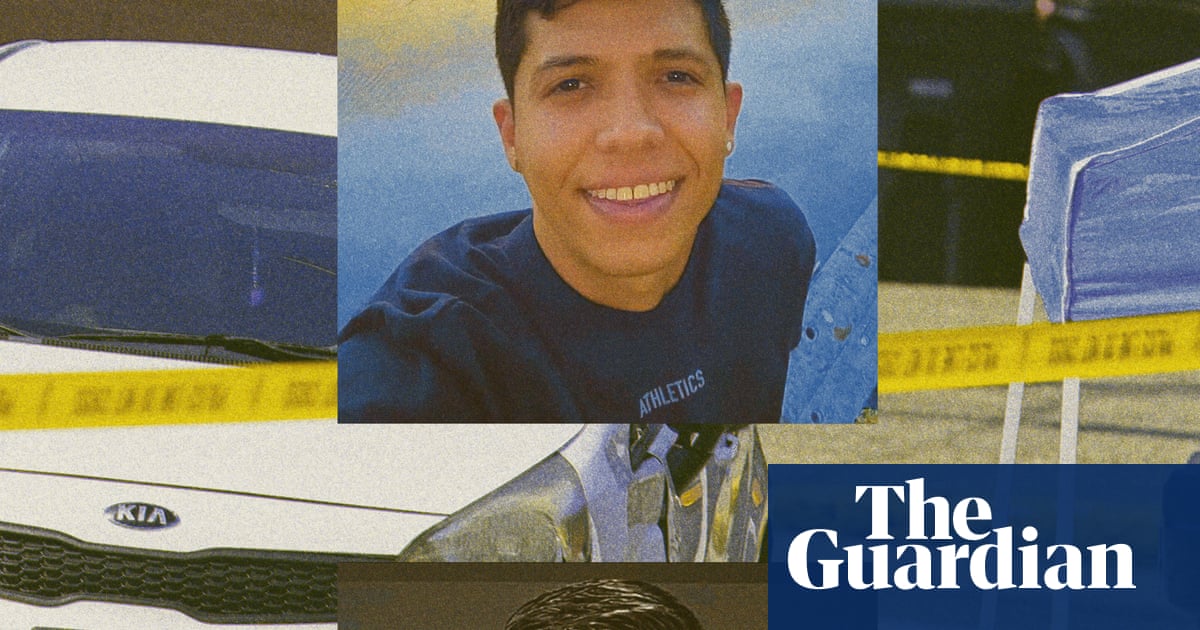
Recent Shootings Highlight Growing Tensions Over Immigration Enforcement
Lorenzo Salgado Araujo, 52, was on his way to work in Houston, Texas, with his brother and two other passengers when immigration officers began tailing his vehicle. They subsequently pulled him over and fired a fatal shot through the open passenger side window.
Just six days later, 26-year-old Joao Sebastian Duran Guerrero was killed in Biddeford, Maine, as he drove through his neighborhood. He was stopped by a police officer at an intersection, mere steps from the laundromat he often visited with his 3-year-old daughter.
These two tragic incidents, separated by less than a week, ignited widespread grief and outrage across the United States. Demonstrators took to the streets in both cities, demanding that the U.S. Immigration and Customs Enforcement (ICE) agents, responsible for executing President Donald Trump’s aggressive deportation strategy, be removed from their communities.
In line with Trump’s promises of mass arrests and deportations, armed immigration agents are increasingly making violent apprehensions in various locales, including during traffic stops, outside department stores, and near schools and churches.
Reports indicate that Salgado Araujo and Duran Guerrero were the 29th and 30th individuals shot by immigration officers since Trump assumed office, according to data from the Trace newspaper. Among those fatalities, eight individuals, including American citizens Renee Good and Alex Preti, lost their lives during an escalated enforcement operation in Minnesota.
This week, another tragic event unfolded in Florida when a man was struck and killed by a truck while fleeing from immigration authorities. The ongoing violence raises alarming concerns, especially given that 22 individuals have died in ICE custody this year, including in detention centers.
Calls for Accountability and Justice
The recent shootings have ignited thousands of protesters, leading to demands for independent investigations from local leaders and civil rights organizations. In Houston, crowds gathered to demand that ICE withdraw entirely from the city and that the local police cease all cooperation with federal immigration authorities. Alongside calls for a thorough city-led investigation, officials are demanding the release of the names of the ICE agents involved and the release of three witnesses who were in Salgado Araujo’s car during the incident.
A week after Salgado Araujo’s death, hundreds rallied outside Houston City Hall, chanting for justice. At the first city council meeting following the tragedy, over 100 residents signed a petition urging Mayor John Whitmire and the City Council to take action.
In Maine, a large crowd gathered in Biddeford, participating in a vigil for Duran Guerrero. However, many friends and community members feared speaking out due to potential retaliation from ICE against the local Latino immigrant community, as reported by the Maine Public. Duran Guerrero’s father, Omar, expressed that his son had high aspirations and dreams for the future.
At memorials for both victims, volunteers distributed “Know Your Rights” pamphlets, underscoring the need for community education about legal protections. Advocates are increasingly confronting the larger issue of ICE’s unchecked power, with immigrant rights organizer Jasmine Kadem Gonzalez stating that her training now includes advice on documenting violations by officers in real-time.
Residents near the scene of Salgado Araujo’s death voiced their concerns about the pervasive violence surrounding immigration enforcement. Joanna Rodriguez, a history teacher focused on the Mexican-American community, remarked on the rising fears among local families, emphasizing that the cycle of violence must end.
Escalating Deportation Strategies Under the Trump Administration
The Trump administration has significantly increased funding for immigration enforcement, rendering ICE the most heavily financed law enforcement agency in the United States. A recent allocation of $70 billion will facilitate ICE’s expanded arrest, detention, and deportation activities.
In recent months, the administration has been hiring an influx of immigration officials, often without thorough vetting. Concurrently, the office responsible for investigating deaths and civil rights violations involving immigration enforcement is being dismantled.
In response to mounting public concern following the shootings of Good and Preti in Minnesota, President Trump signaled a modification in approach. He demoted the controversial Border Patrol official Gregory Bovino and dismissed DHS Secretary Kristi Noem, alongside the departure of Tricia McLaughlin, the former DHS spokeswoman known for misleading statements.
Despite promises of outfitting officers with body cameras, enforcement of this policy remains inconsistent. The officers involved in the shootings of Salgado Araujo and Duran Guerrero were not equipped with cameras. Following Duran Guerrero’s death, the administration called for a moratorium on federal immigration vehicle stops, only to reverse that directive shortly thereafter.
Many recent immigration arrests have been executed by local law enforcement agencies partnering with federal agents, creating confusion for community members regarding the nature of the stops — whether for traffic violations or immigration checks. Although the overt presence of armed immigration officials has decreased, ICE continues its aggressive deportation initiatives, detaining individuals at work, during routine check-ins, near their homes, or at traffic stops.
Witnesses often see arrests unfold with little warning, leaving them helpless to comprehend the situation. “It’s happening so fast that people can’t go out there and observe and record,” noted Gracie Willis, an attorney with the National Immigration Project, describing the impact of such rapid actions on community awareness.
ICE’s operations extend beyond major cities to small towns and rural areas throughout the United States. Significant increases in arrests have been reported in states like Iowa and Wisconsin, where even legal immigrants with work permits are not exempt from ICE’s reach. The New York Times recently highlighted that immigration authorities detained over 10,000 individuals in a span of just five days.
In light of the recent killings, ICE emphasized its focus on arresting serious offenders, yet data reveals that the majority targeted have no prior convictions. Immigration lawyers and advocacy groups brace for more apprehensions as a recent Supreme Court ruling enables the administration to revoke Temporary Protected Status for many immigrants, exposing them to arrest and deportation.
In Houston, community members pledge to continue standing against ICE, vowing to protect families at risk. Jasmine Kadem Gonzalez vehemently declared, “We must not shy away from the truth… ICE is effectively a domestic terrorist organization, claiming lives without hesitation.”
