


Community Reflects on Security and Tragedy at San Diego Islamic Center
SAN DIEGO — Sara Youssef, an elementary school student at the Islamic Center of San Diego in the early 2000s, reminisces about a time when security measures were virtually nonexistent. “I don’t remember guards patrolling or gates,” she said, highlighting a different era before safety concerns became a focal point for the community.
Fast forward to today, Youssef, now a college freshman and leader of a local gun violence prevention group, recalls how comfort was brought by the hiring of security personnel like Amin Abdullah. While his presence provided reassurance, it also sparked unease about the underlying reasons for such measures.
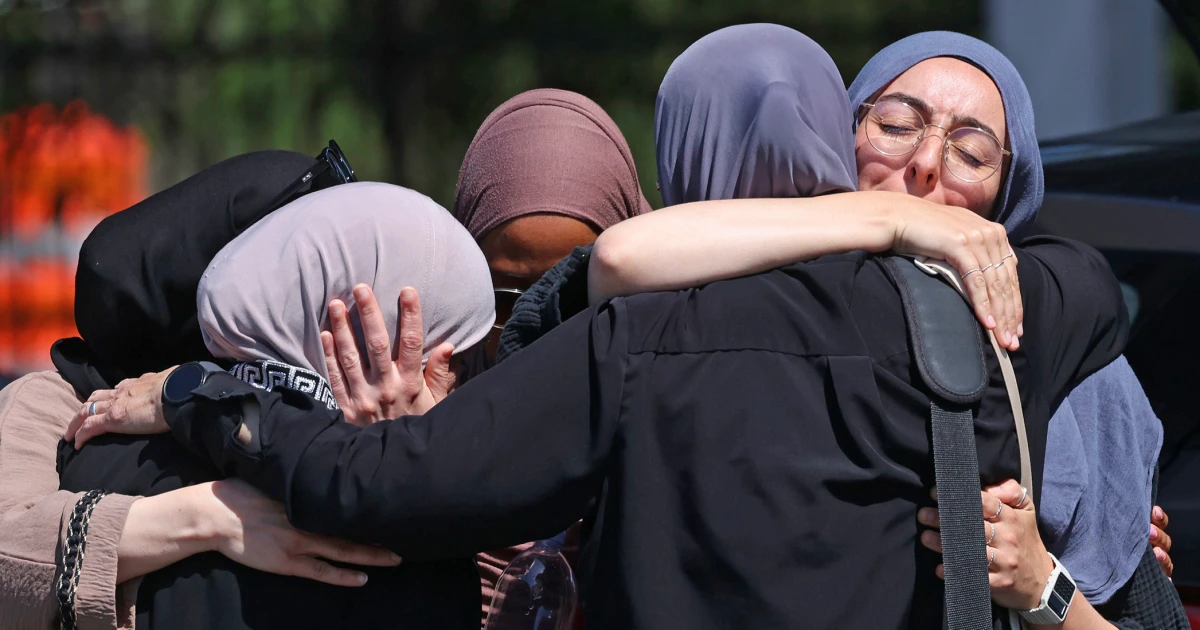
Tragically, the community’s fears were realized when two gunmen attempted an attack on the Islamic center earlier this week. Abdullah, along with Mansour Kaziha, who managed the center’s store, and community member Nadir Awad, bravely intervened. Their swift actions were hailed as acts of heroism, potentially saving the lives of approximately 140 children and many teachers present.
This incident underscores the heightened risks that mosques and places of worship face, particularly as hate-fueled rhetoric continues to rise globally, a sentiment echoed in San Diego. Youssef expressed disbelief that one of the attackers lived just blocks away and had absorbed a distorted view of Islam.
Hate crimes have been a growing concern in San Diego, where recent statistics tell a troubling story. Although the city reported a 64% decrease in race-based crimes and a 46% decline in sexual orientation-based offenses from 2024 to 2025, religiously motivated hate crimes soared by 150% during the same timeframe. This increase has alarmingly transformed the atmosphere in local neighborhoods.
The history of violence against religious communities is stark in San Diego, echoing back to 2019 when a lone gunman killed one person and injured three at the Chabad Synagogue in Poway, only 32 miles from the Islamic Center. The attacker had drawn inspiration from earlier atrocities, including the massacre at two mosques in Christchurch, New Zealand.
As recent investigations reveal, the gunmen in the current attack appear to have been radicalized online, harboring aspirations of creating a white ethnic state. They embraced neo-Nazi ideology and expressed hatred towards Muslims, Jews, and the LGBTQ community in their writings, illustrating the pervasive nature of hate within certain segments of society.
Local residents and religious leaders contend that the gunmen’s extremist views are symptomatic of a broader trend where hateful rhetoric, especially online, is increasingly normalized. Youssef stated that this barrage of anti-Muslim sentiment contributes to an insidious internalization of hatred, asserting that “no one is born with hatred.”
@Hassam Ailush, CEO of the California chapter of the Center for American-Islamic Relations, emphasized that such violence can happen anywhere. He stated, “None of us are immune. None of us are safe,” while noting the growing Islamophobia and anti-Muslim hostility that shapes the current national discourse.
The Islamic Center is now under increased security measures, having been inundated with hate flyers recently. Abdullah’s daughter recalls her father’s concerns about safety and the lengths he went to protect both the center and his family. “He was very careful about protecting the masjid and his children,” she shared.
Islamophobia remains rampant across the nation, with reports indicating that the Council on American-Islamic Relations received a staggering 8,683 complaints in 2025, marking the highest level since 1996. In San Diego County, anti-Semitic incidents surged following Israel’s military actions in Gaza, reflecting the complex interplay of regional conflicts impacting local communities.
Although national reports document a decline in anti-Semitic incidents, local Jewish leaders maintain that security remains a paramount concern, with substantial investments in protective measures for community buildings. “We now pay taxes to be Jewish in this country,” remarked Heidi Gantwerk, president of the Jewish Federation of San Diego, reflecting a sentiment of vulnerability faced by faith-based communities.
Calls for collaborative efforts to combat hate and violence have been made, yet local Muslim leaders feel overlooked, expressing frustration at the lack of engagement from city officials. A spokesperson for the mayor assured that discussions with community leaders have taken place, but many in the Islamic Center remain skeptical of the promised support and the ongoing indifference toward anti-Muslim hatred.
In their quest for safety and security, the community demands action and awareness, echoing the sentiment that hatred in any form must be confrontationally addressed. “As a community, we have felt an increase in Islamophobia for many years,” Youssef noted, while lamenting the absence of effective measures to counteract this troubling trend.
— Alicia Victoria Lozano reported from Los Angeles and Dennis Romero from San Diego.
