


Drug Prices Continue to Climb Despite Promises
President Donald Trump has consistently asserted that agreements with pharmaceutical companies would help reduce prescription drug prices in the United States. However, a recent report from Senate Democrats reveals that prices are not only rising but, in some cases, increasing sharply.
A report released Thursday by Senator Bernie Sanders, the ranking member of the Senate Health, Education, Labor and Pensions Committee, highlighted the issue just ahead of a hearing focused on drug pricing. It indicates that numerous companies that entered drug pricing agreements with the Trump administration have raised the prices of hundreds of medications, with new drugs launching at an average annual cost of approximately $353,000.
Escalating Drug Costs Expose Market Reality
During the hearing, Sanders stated, “Americans continue to pay some of the highest prices in the world for prescription drugs, a reality that predates Trump’s presidency and has arguably worsened under his administration.” Price increases have notably affected expensive gene therapies, cancer medications, and drugs for multiple sclerosis.
The report also claims that companies engaged in agreements with the Trump administration experienced significant profit increases during his second term, with profits soaring to $177 billion in 2025, up from $107 billion the previous year.
Health Secretary to Address Concerns on Capitol Hill
Adding to the ongoing discourse, Health Secretary Robert F. Kennedy Jr. is scheduled to testify in consecutive hearings on Trump’s budget, first before the House Ways and Means Committee and then before the House Appropriations and Health Committee. Questions are anticipated regarding the administration’s focus on lowering prescription drug costs.
Scrutiny Over Drug Pricing Agreements
The findings raise significant questions about the effectiveness of the administration’s “most-favored-nation” agreement, which was touted as a measure to align U.S. drug prices with those in other affluent countries, where medications are often considerably cheaper. While the deal was announced by the White House, specific details remain undisclosed. It is unclear whether the drugs mentioned in the report are part of this arrangement, although all implicated pharmaceutical companies were included.
Lack of Transparency in Drug Pricing Initiatives
Stacey Dusetsina, a health policy professor at Vanderbilt University, expressed frustration over the administration’s lack of transparency regarding these agreements. “The details suggest that the current efforts seem primarily designed to support pharmaceutical companies, rather than assisting patients,” she remarked.
Responses from the White House
In response, White House Press Secretary Khush Desai criticized Sanders’ report, stating it is “meaningless” as it centers on the list prices of prescription drugs rather than actual prices that patients pay at the pharmacy.Washington.
Drug Pricing Trends Amid Discounts
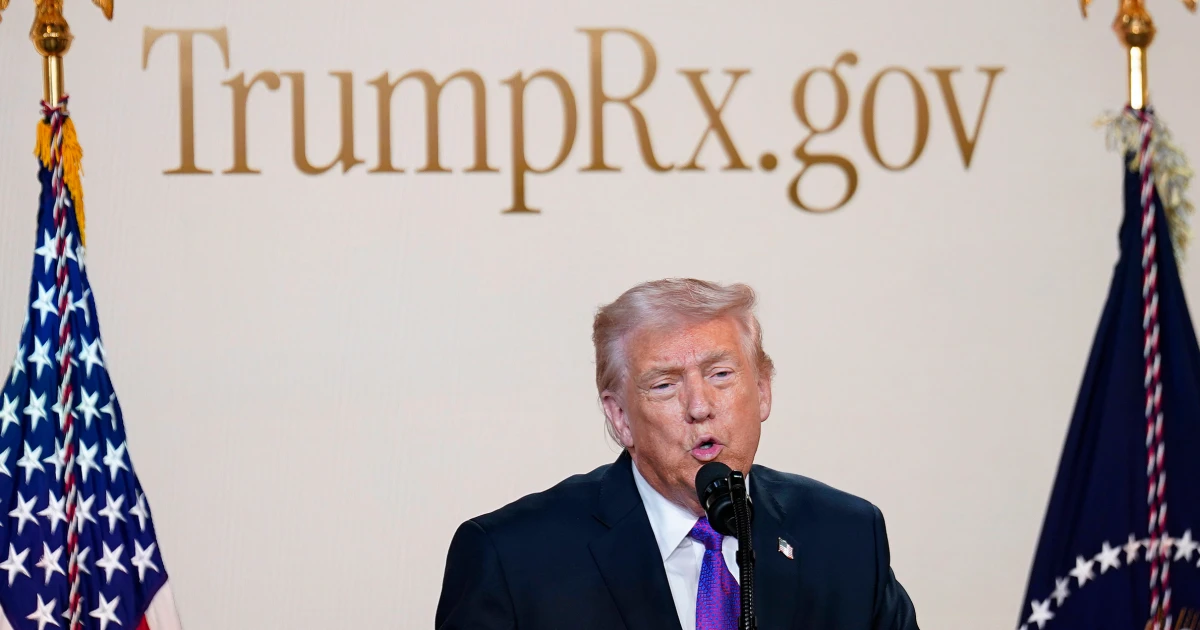
The agreements include provisions for pharmaceutical companies to provide some of their products at discounted rates on TrumpRx.gov, a platform designed for consumers paying with cash instead of insurance. Many of these discounts align with those available on other discount platforms like GoodRx. However, it is essential to note that these discounts differ from the list prices, leading to inflated premiums based on higher list prices.
Notable Price Increases on Blockbuster Drugs
Despite negotiated agreements, the report highlights several blockbuster drugs that have seen significant price increases. For instance, the list price of Merck & Co.’s Keytruda, a popular cancer medication, rose by 6% to about $210,000 annually, which starkly contrasts with its cost in countries like Japan and France. Similar patterns emerged for Novartis’ multiple sclerosis drug Kesimpta, which saw a nearly $10,500 annual increase to $141,000, compared to prices in Germany and Canada.
Additionally, Bristol-Myers Squibb’s immunotherapy Opdivo experienced a 4% price hike, bringing its annual list price to $260,000, significantly higher than in countries such as France and the United Kingdom. When approached for comment, representatives from Merck, Novartis, and Bristol-Myers Squibb did not respond.
Continued Trend of High-Priced Drug Launches
Antonio Ciaccia, CEO of 46Brooklyn, a nonprofit tracking U.S. drug prices, emphasized that companies that signed agreements with the Trump administration have not committed to lowering prices across their product ranges. He noted that for drugs not covered in the deals, it remains “business as usual.” Even though the average list price for branded products dropped for the first time in 2026, this shift appears primarily due to policies implemented by the Biden administration, including Medicare drug price negotiations.
The report further indicates that many companies entering agreements with President Trump have initiated new drugs, particularly in oncology, with staggering prices often reaching six or seven figures. For instance, Johnson & Johnson’s cancer treatment Inrexo launched at approximately $1 million, while other treatments like AbbVie’s Emrelis cost around $719,000, highlighting ongoing concerns about rising costs. Notably, Novartis’ gene therapy Itvisma lists at around $2.59 million, while another product, Zolgensma, increased by nearly $200,000 to exceed $2.5 million per treatment course.
Meanwhile, Pfizer’s lung cancer drug Vidinpro experienced a price increase of about 5%, reaching approximately $208,000 annually. Requests for comments from Johnson & Johnson and Pfizer went unanswered, while AbbVie and AstraZeneca declined to provide statements.
