


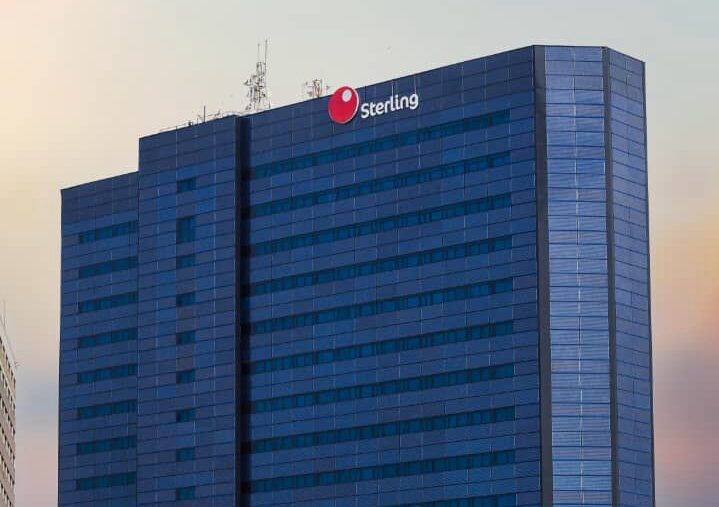
Starling Financial Holdings Executes 10-for-1 Share Consolidation
The recent decision by Starling Financial Holdings to implement a 10-for-1 share consolidation has ignited discussions within capital markets. Analysts and market operators are raising concerns regarding potential impacts on shareholder value, liquidity, and the company’s future market performance.
This resolution, which received shareholder approval during the company’s third annual general meeting held on June 9, 2026, will reduce Starling’s outstanding shares from 68.5 billion to 6.85 billion units, pending regulatory validation and Federal High Court confirmation.
While the management has yet to outline the strategic motivations behind this restructuring, experts suggest that it represents one of the most significant adjustments to the capital structure seen among Nigerian banking groups in recent years.
This announcement coincides with Starling’s initiative to seek approval for raising up to $400 million through a combination of debt and equity instruments, prompting scrutiny of both the timing and broader implications of these corporate maneuvers.
Details from the Recent Shareholders’ Meeting
The resolution from the shareholders’ meeting outlined a substantial restructuring of Starling Financial Holdings’ capital framework, as well as plans for raising new funds. Shareholders will see the consolidation of 68.5 billion common shares into 6.85 billion shares at the specified ratio. Consequently, the issued share capital will decrease to N3.43 billion, comprising 6.85 billion ordinary shares. Those holding fractional shares post-restructuring will have the opportunity to sell them in bulk, with proceeds distributed on a pro-rata basis. The board also received authority to amend the company’s Memorandum and Articles of Incorporation to align with the newly revised capital structure.
For existing investors, the implications are straightforward: for every ten shares owned prior to the restructuring, shareholders will now hold one share afterward.
Understanding Stock Restructuring and Its Effects
A share restructuring, also known as a reverse stock split, typically does not alter the total value of an investor’s holdings immediately after execution. For example, if a shareholder owns 100,000 shares valued at N10 each, following the restructuring, their shares would decrease to 10,000, while theoretically the value per share should increase tenfold. Nevertheless, historical data indicates that post-restructuring stock prices often struggle to sustain these elevated levels.
Analysts argue that the success of Starling’s future prospects will depend more on earnings growth, dividend capacity, and investor confidence than on the restructuring itself. Reducing the outstanding shares from 68.5 billion to 6.85 billion could enhance metrics like earnings per share, and potentially diminish speculative trading that often plagues low-priced stocks, giving a misleading impression of rising stock prices. However, market participants remain cautious, considering past instances where restructured stocks have reverted to their original valuations.
Mixed Reactions from Market Participants
Reactions among capital markets participants regarding Starling’s decision have been varied. Some analysts express skepticism about the potential benefits to shareholders, questioning if management has strategic insights not immediately evident. Chief Blakey Okwudiri Ijeji, founder of Okwudiri Ijeji & Company (CPA), expressed trepidation towards stock restructuring, commenting that while prices may initially increase post-restructuring, they often decline back to performance-based levels. He emphasized that merely reducing the number of shares does not guarantee increased value for investors.
Conversely, Dr. David Walker Ogogo, a pioneer registrar at the Institute of Capital Markets Registrars (ICMR), offered a more tempered viewpoint. He noted that boards typically weigh several strategic factors before approving such significant changes and that the intentions behind the restructuring might relate to broader, undisclosed objectives.
Financial Performance Amidst Controversy
This structural change unfolds against a backdrop of robust financial results from Starling Financial Holdings. For the financial year 2025, the company reported a profit before tax of N86.78 billion, marking an 89.2% increase from N45.86 billion in 2024, alongside a 74.7% increase in profit after tax to N76.33 billion. Despite these gains, the company opted not to declare a dividend for the 2025 fiscal year, citing regulatory considerations and capital adequacy mandates. Consequently, their stock price dropped from N8.95 in late February to N7.80 on June 16.
Historical Context and Future Implications for Investors
Historical precedents in the Nigerian market suggest that restructured share prices necessitate strong operational results to maintain elevated valuations. GTI head of research, Abiodun Ogunniyi, referenced the restructuring efforts of Wema Bank and Transcorp as successful cases where share consolidation was effectively managed. Wema Bank’s consolidation from approximately 38.6 billion to 12.9 billion shares was conducted primarily for technical purposes, allowing for improved market perspective without altering fundamental shareholder value.
As investors digest the implications of Starling’s recent decisions, focus is likely to shift from the restructuring specifics to the company’s ability to uphold strong earnings momentum and convert improved per share metrics into lasting shareholder value.
