


Law Enforcement Leaders Push for Enhanced Participation in 287(g) Agreement
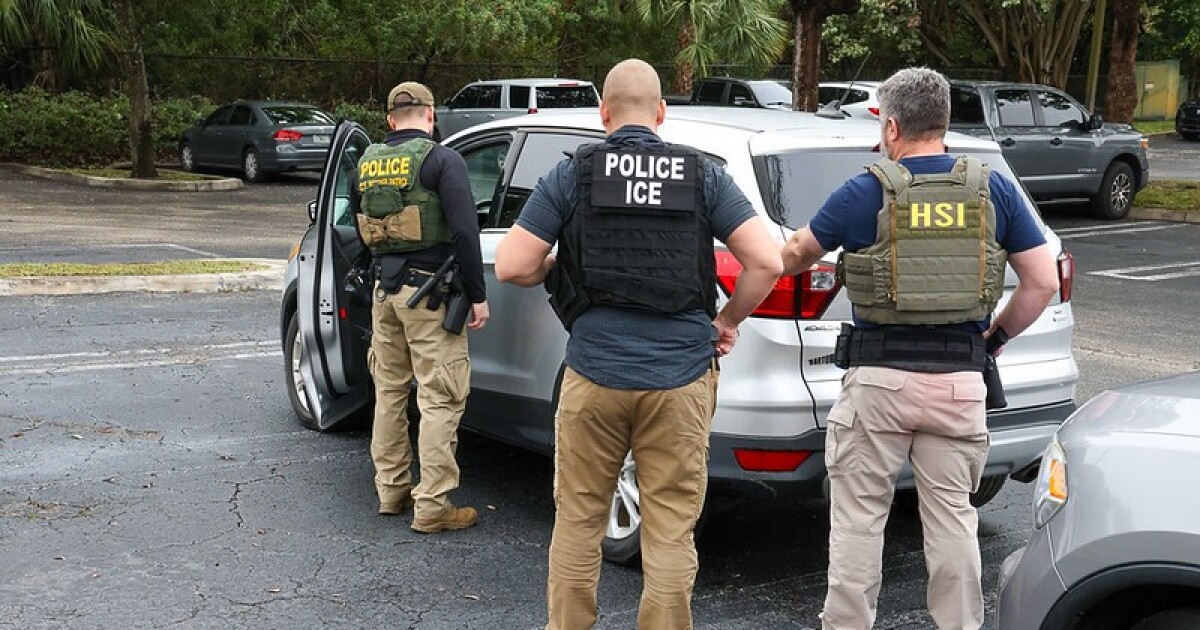
During last week’s State Immigration Executive Council meeting, law enforcement officials indicated plans to encourage local agencies to fully engage with the 287(g) agreement. This formal arrangement between local law enforcement and U.S. Immigration and Customs Enforcement (ICE) enables local officers to perform fundamental immigration enforcement duties.
Florida’s Dominance in 287(g) Agreements
Florida leads the nation in the number of signed 287(g) agreements, largely stemming from a state law mandating county sheriff’s departments to participate. While signing this agreement is not obligatory for police departments, many choose to do so under pressure from state authorities.
Concerns Over Compliance and Effectiveness
At the June 30 meeting, council members expressed dissatisfaction with compliance levels among local institutions. According to a council summary, only 272 of the 394 agencies in the state possess 287(g) special duty officer agreements. Alarmingly, 109 of those agencies—approximately 40%—reported making no arrests under this framework.
Training and Operational Support for Local Agencies
Pinellas County Sheriff Bob Gualtieri described the situation as an “authority issue,” particularly after the Florida Department of Law Enforcement confirmed to ICE that there were no delays related to contracting or officer certification. Once agencies enter the agreement, selected officers undergo training to become Designated Immigration Officers (DIOs).
ICE Referrals and Agency Responsibilities
Even in the absence of trained personnel, local law enforcement agencies can still refer individuals with outstanding immigration warrants to ICE. A representative from the St. Petersburg Police Department noted that while officers do not receive training on immigration matters, they can call a nearby DIO to address immigration warrants encountered during law enforcement operations. If the DIO cannot respond within one hour, the individual is released.
Impact of Local Enforcement on Immigration Arrests
Since August, the St. Petersburg Police Department has come into contact with 26 individuals labeled as “suspected illegal aliens,” according to the State Immigration Executive Board’s dashboard. Meanwhile, the Florida Department of Highway Safety and Motor Vehicles oversees approximately 1,729 DIO-certified officers, representing nearly 95% of its workforce. The agency has recorded over 9,300 encounters since August, leading all state agencies in this regard.
Community Concerns and Legal Perspectives
Florida has garnered the second-highest number of immigration-related arrests since intensifying enforcement during President Donald Trump’s second term. Amid these developments, Leo Gonzalez of the Tampa Bay Immigrant Solidarity Network has called for the cessation of local agencies’ contracts with ICE, citing a lack of political courage. An investigation by Suncoast Searchlight revealed how local law enforcement collaborates with ICE to facilitate arrests, with incidents involving ICE arrests from local jails tripling compared to the previous year during Trump’s administration.
Implications for Victims and Community Trust
Hillsborough County immigration attorney Ahmad Yakzan expressed concern that utilizing 287(g) agreements in this manner could deter violence victims from seeking help. He emphasized the importance of building trust between law enforcement and the community, arguing that arresting victims due to their immigration status undermines this essential relationship. Yakzan’s law firm has experienced significant growth in cases, reflecting the rising complexities surrounding immigration law in Florida.
