


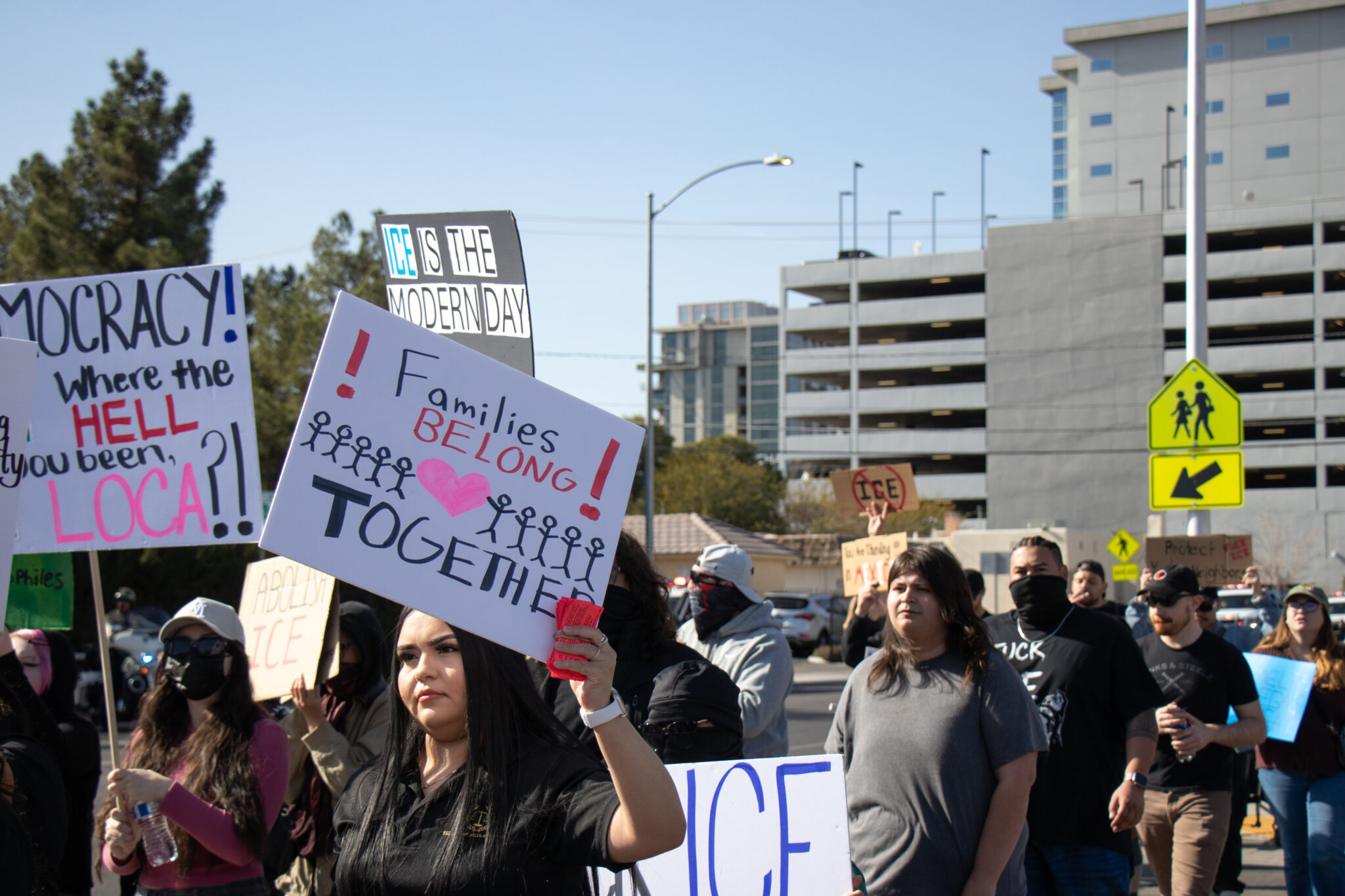
Civil Rights Advocates Urge Stronger Protections Against Federal Immigration Enforcement in Nevada
Civil rights attorneys and immigration advocates are calling on Nevada lawmakers to enhance protections for sensitive locations such as hospitals, courthouses, and schools from being targeted by federal immigration agents. The past 18 months of heightened enforcement and detention practices have left many residents fearful of leaving their homes for essential activities, including church attendance, medical care, and education, as reported by the state Legislature last week.
Failing Efforts at the Federal Level
Attempts to curtail the actions of U.S. Immigration and Customs Enforcement (ICE) at the federal level have largely faltered amidst a Republican-controlled Congress. During a recent meeting of the Interim Governmental Affairs Committee, members from the Nevada Immigration Coalition, including the ACLU of Nevada, UNLV Immigration Clinic, and Make the Road Nevada, discussed how state lawmakers could respond to the rising tide of deportations and detentions.
Legislative Recommendations for Enhanced Protections
Noe Orozco, coordinator of the Nevada Immigration Coalition, emphasized that while immigration issues are primarily federal, state and local authorities can still play a significant role in shaping the enforcement environment. Among the recommendations put forth were restrictions on local law enforcement’s ability to enter 287(g) detention agreements, increasing legal resources for affected individuals, safeguarding medical and educational facilities from immigration enforcement without a judicial warrant, and banning federal employees from wearing masks while enforcing immigration laws.
Upcoming Legislative Actions
Democratic state senator Edgar Flores, who chairs the committee, confirmed that several bills are under consideration that reflect community recommendations regarding immigration policy. The committee is scheduled to vote in August on which proposals will be proposed as draft legislation for the 2027 Legislative Session, set to commence on February 1.
Impact of Immigration Enforcement on Communities
Prior to the coalition’s presentation, public comments revealed disturbing accounts of individuals disappearing unexpectedly after arrest and challenges faced in locating family members in immigration detention. One attendee recounted the tragic story of a mother of two who died after being released in a remote area. Orozco highlighted that fear pervades the community, affecting everyday activities like schooling and accessing healthcare.
Concerns Over Lack of Accountability from Federal Authorities
Athar Hasseebullah, executive director of the ACLU of Nevada, criticized the current enforcement and detention policies, asserting they not only infringe on civil liberties but also disrupt community cohesion. He remarked on the distressing stories of families uncertain about the whereabouts of their loved ones, emphasizing that this behavior is far from a normative approach to law enforcement.
Community Engagement and the Role of Federal Agencies
The committee had extended invitations to representatives from the Department of Homeland Security and CoreCivic, the private prison operator of the Southern Nevada Detention Center; however, Flores exited the meeting unexpectedly, raising concerns about the absence of these key stakeholders. Flores expressed that the lack of attendance from enforcement agencies hinders meaningful dialogue essential for transparency and accountability. He urged DHS officials to participate in an upcoming hearing to discuss the ramifications of their policies.
Ongoing Challenges and Need for Legal Oversight
In light of increasing arrests since 2015, advocates are scrutinizing the extent of collaboration between state and local governments and ICE. Hasseebullah noted that access to crucial data from law enforcement remains challenging, as public records laws impose hefty fees for information. Concurrently, the ACLU’s recent lawsuit against the Nevada Department of Surface Transportation has faced significant delays and redactions regarding ICE cooperation records, raising alarms over the state’s transparency. Advocates are calling for legislation to hold government agencies accountable while proposing to limit police participation in 287(g) agreements, which allow local law enforcement to detain individuals beyond their release dates for federal custody.
Federal Compliance with Judicial Orders Under Scrutiny
Hasseebullah and Michael Kagan, director of the UNLV Immigration Clinic, voiced criticism of federal immigration authorities for not complying with federal court mandates. Judge Richard Boulware of the U.S. District Court for the District of Nevada recently ruled against federal policies that hinder detainee bail applications. He highlighted that the government’s actions represent a grave constitutional crisis, calling attention to the ongoing challenges in obtaining legal compliance from federal agencies.
State Oversight on Immigration Facilities
While it is true that states cannot dictate federal immigration policy, Christian Gonzalez Perez, lead attorney for Make the Road Nevada, argued that the Nevada Legislature holds the power to oversee the operations of detention facilities. He reiterated that these centers require state permission to function, providing lawmakers with an avenue to enforce oversight on conditions and abuses affecting detainees.
