


U.S. Men’s National Team Faces Unique Training Challenges
The U.S. Men’s National Team was enthusiastic when it first encountered its training facility for the FIFA World Cup in Irvine, California. However, their excitement was tempered by one unexpected feature: a large balloon. The Great Park Balloon, which resembles a giant mandarin orange, offers breathtaking views from 400 feet in the air. For soccer professionals, though, such a spectacle poses serious concerns about privacy and potential spying.
Concerns of Espionage Loom Over Training Sessions
While casual fans may dismiss the notion of spying in soccer as sporadic, it remains a pressing issue among elite teams. Prior events, including recent incidents at the Olympic Games and training camps, have fostered a climate of suspicion. Conversations among players, coaches, and staff in the lead-up to the World Cup underscore this reality, revealing a collective anxiety about being observed during practice.
Whether It’s Spying or Worrying About Spies
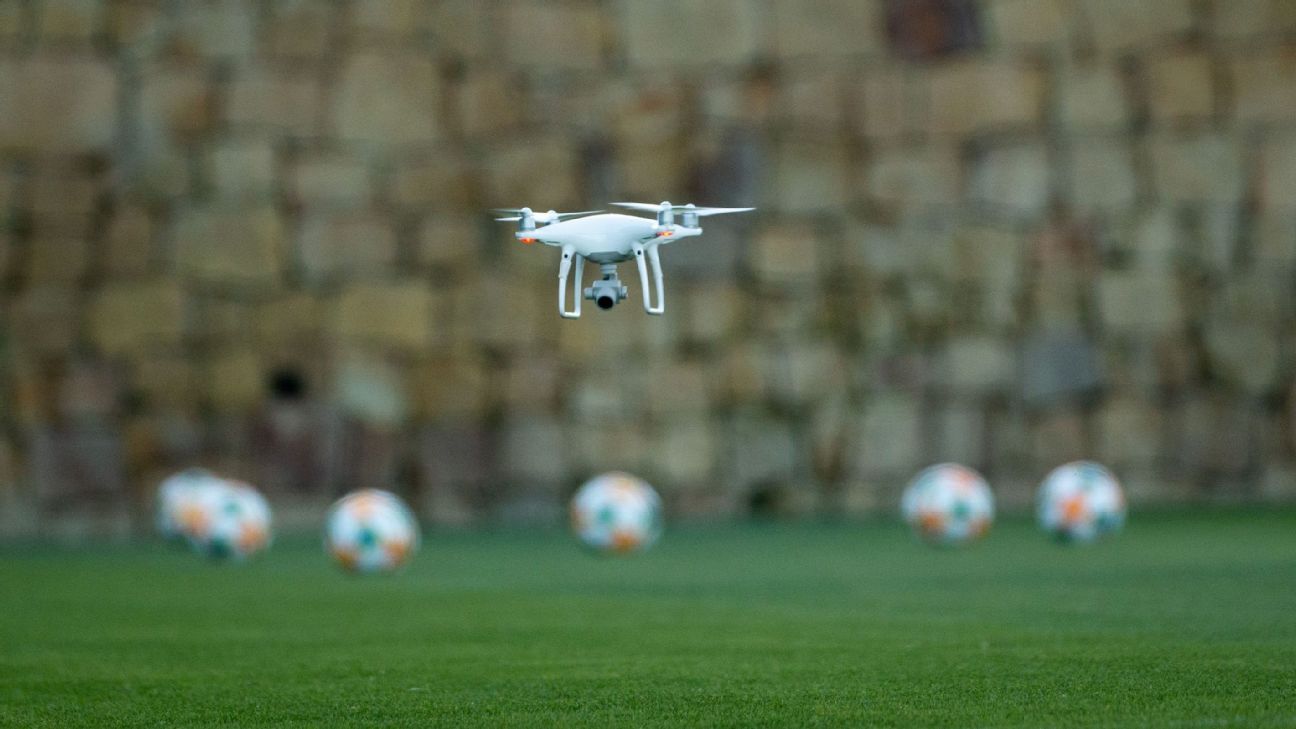
Within the soccer community, the sentiment is clear: Many individuals are either engaged in espionage or fret that others might be. A notable incident involved Mexican authorities neutralizing an unidentified drone during a South Korean training session, just days after U.S. manager Mauricio Pochettino captured footage from a hillside, humorously referencing the need for privacy. As he stated, “We are in the age of spies.”
High-Profile Incidents Demonstrate the Espionage Culture
Past episodes highlight the lengths to which teams will go to gain an advantage. For instance, Southampton faced scrutiny for spying on opposing training sessions, and a Swedish scout was arrested for using a telescope to spy on South Korea during the 2018 World Cup. Such actions have become common enough that some argue every team engages in at least some form of surveillance.
Modern Tools and Traditional Tactics in Surveillance
Drones are the latest instruments of espionage in soccer, yet technology has long been employed for reconnaissance. For instance, U.S. officials frequently set up cameras during World Cup qualifying matches, while players recall hidden cameras being discovered in various stadiums. A former staff member recounted instances of GoPros installed in unobtrusive locations, making surveillance a routine part of the game.
Cultural Differences Shape Attitudes Toward Spying
Espionage in soccer is not merely a tactical choice; it reflects a broader cultural perspective. Coaches and teams from South and Central America often accept spying as a norm, while North American and European counterparts may be more surprised by it. Regardless of cultural attitudes, paranoia about potential surveillance transcends geographical boundaries, prompting teams globally to establish protocols to safeguard their practice sessions.
Investigating Espionage in a Complex Landscape
As the World Cup draws near, the U.S. Soccer Federation is implementing stricter security measures to reduce the risk of spying. Yet questions linger about the true value of observing an opponent’s training session. Many experts argue that most tactical insights are already gleaned from past matches, questioning whether the effort to spy is truly justified. In a sport characterized by its fluidity, the concrete benefits of spying often remain ambiguous.
